
Decathlon Germany hit revenue of 1.273 billion euros in 2025, up 8.8 percent from 2024. Add 105 stores, around 6,000 employees, and a target of 150 stores by the end of 2027. Right in the middle of the tech stack sits WhatsApp.
Decathlon has been using WhatsApp in Germany for years. There's a dedicated service number, a WhatsApp chatbot called Sporty, and internationally a multichannel logic that, according to a 2022 Diginomica report, drove over 61 percent of all Decathlon UK customer service conversations through messenger channels. That's a serious number. What stands out in the DACH market: Decathlon's WhatsApp ends roughly where the interesting marketing effects begin for most D2C brands.
This article looks at what Decathlon currently does with WhatsApp, where the marketing levers sit unused, and which building blocks become relevant for DACH brands of any size. With real numbers, honest trade-offs, and a clear take on where tools like Chatarmin fit in. If you want the D2C counterpart in the same cluster, you'll find it in our Snocks WhatsApp analysis.
Who is Decathlon and why look at their WhatsApp strategy?
Decathlon is the world's largest sports retailer. Founded in France in 1976, owned by the Mulliez and Leclercq families. 1,902 stores worldwide in over 80 countries, more than 65 in-house brands including Quechua, Domyos, Kalenji and Van Rysel. In 2025, the group sold 1.23 billion products globally, with group revenue of 16.8 billion euros.
In Germany, Decathlon reached 105 stores by the end of 2025, with around a third of them modernized in the same year. Online makes up a growing share of total revenue, while physical expansion continues. That makes Decathlon a genuine omnichannel player in retail: large enough for any tech stack, decentralized enough per market to stay agile.
This mix of scale and decentralization makes Decathlon a useful brand to study. When Decathlon tests a channel early, it carries weight. Where Decathlon only half-uses a channel, you can see clearly where even well-equipped retailers in 2026 still have headroom.
What Decathlon actually does with WhatsApp today
If you search "decathlon whatsapp" in Germany, you land in the help center. The service page lists a WhatsApp number for direct customer contact: 06202 97 81 100. Availability according to Decathlon: Monday to Friday, 9 a.m. to 5 p.m. Alongside that, customers get a live chat, a contact form, and a phone line.
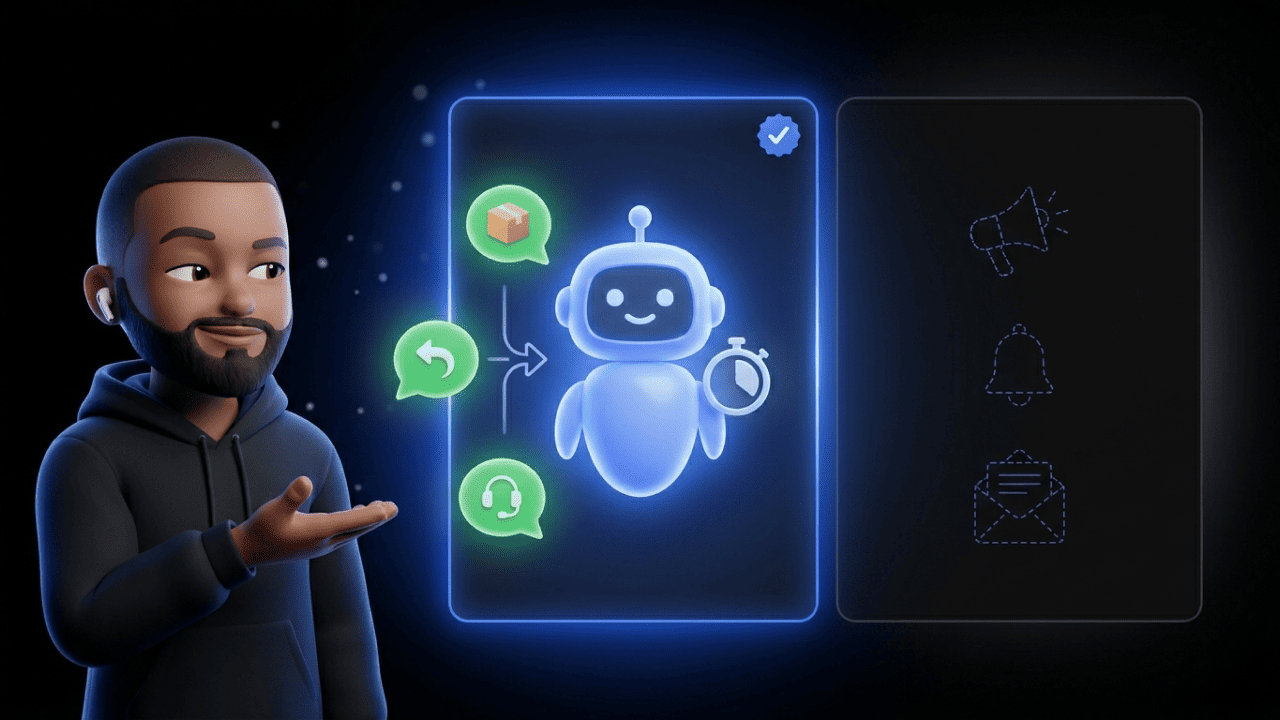
Behind the WhatsApp number sits a chatbot called Sporty. Sporty runs on the website and inside the WhatsApp channel, handling routing, simple requests, and qualification. The setup has been documented since at least 2022 and was later extended with a phone bot that pulls the order number before routing the call to a service agent. That makes Decathlon one of the largest DACH retailers running WhatsApp as a productive customer service channel. A useful reference point for anyone currently thinking about WhatsApp support.
Internationally, Decathlon went a step further early on. In the UK, according to the 2022 Diginomica report, over 61 percent of all customer service conversations ran across messaging platforms including WhatsApp, Facebook Messenger and Instagram. Decathlon UK built dedicated teams per channel instead of routing all requests through one centralized service team. That kind of channel specialization is one of the best-practice elements smaller brands tend to underestimate.
What this setup measurably delivers: high service volume with shorter average handling time, a clean digital escalation path before the phone, a low barrier for questions before and after the sale. Exactly the foundation that, in modern WhatsApp Marketing, counts as a clean service base before marketing layers go on top.
Where Decathlon leaves WhatsApp on the table: the marketing gap
Now the honest part. On decathlon.de, there's currently no publicly visible opt-in flow for a WhatsApp newsletter. No popup, no checkbox at checkout, no clear entry point. Whatever WhatsApp activity Decathlon runs beyond the service channel is hard to see from the outside. Compared to D2C brands like Snocks, who actively run WhatsApp as a marketing channel with their own newsletter logic, Decathlon looks rather quiet on the marketing side.
Three gaps stand out from a customer perspective:
No visible WhatsApp newsletter for drops and launches. Decathlon launches new collections under in-house brands like Van Rysel or Domyos on a regular basis. A WhatsApp newsletter with early access to launches or targeted restock alerts on specific sizes would be a natural fit for the sports community. Right now, as far as you can tell from the outside, launch communication runs mainly through classic email newsletters and paid channels.
No visible automations along the customer journey. Cart abandonment reminders, post-purchase sequences, reactivation flows after 60 or 90 days of inactivity: standard in D2C setups, demonstrably worth millions in revenue at Snocks. At Decathlon Germany, none of this is visible from the customer side.
No store-to-online bridge via WhatsApp. Decathlon has 105 stores with high footfall, and many customers shop both in-store and online. An opt-in mechanism right after the receipt at the till ("Get exclusive drops and restock alerts on WhatsApp") would be one of the simplest lead-gen levers a retailer of this size could pull. This is exactly where smaller DACH brands with far fewer stores can catch up, because the effort-to-impact ratio is manageable.
The real insight for other brands: even a corporate with Decathlon's maturity on the service side hasn't lifted the marketing potential of WhatsApp. For DACH shops thinking about their first WhatsApp channel, that's a fairly reassuring message. You don't have to start perfect. You just have to start earlier than the giants.
Why WhatsApp marketing would suit retailers with Decathlon's profile
Three reasons sports and lifestyle retailers with similar product DNA could move disproportionately more revenue through WhatsApp marketing. The logic transfers one-to-one to fashion, outdoor, pet, home & living and beauty. In short, to a large chunk of the DACH e-commerce landscape.
High repeat-purchase frequency in the assortment. Running shoes, performance underwear, swim goggles, yoga mats, water bottles. Many of these categories are consumables with clear repurchase cycles. WhatsApp flows can map those cycles: "Your favorite running shoes lose their cushioning after about 800 kilometers. Time for a new pair?" That's utility communication. Exactly the format WhatsApp was built for.
Event-driven demand. Decathlon has seasonal peaks: ski season, running season, outdoor summer, indoor winter. Plus the yearly launches of in-house brands. Event-driven WhatsApp lists with pre-sale access or restock alerts bundle demand in a channel with around 85 percent open rates. Email, by comparison, sits at 18 to 25 percent depending on industry. The difference is structural.
Mobile-first buyers. Sports shoppers shop on their phones. They check sizes in-store, compare online, ask friends for recommendations. WhatsApp is exactly the channel where all of that already happens. Marketing placed in that context has a different kind of attention than a banner in an app people open less often.
None of this matters if the setup doesn't hold. Which brings us to the actual playbook.
A possible playbook: what WhatsApp marketing could look like for a retailer with Decathlon's profile
If you transfer the Decathlon logic to your own brand, five building blocks are worth looking at. You can set them up independently, but they work better in the right sequence.
1. Opt-in funnel across three touchpoints
Always-on, event-based and in-store. Three parallel paths, each capturing its own audience.
- Always-on in the shop: footer banner and exit-intent popup with a clear incentive. Example: 10 percent off the first purchase in exchange for an opt-in to WhatsApp drops and restock alerts.
- Event-based on landing pages: for pre-launches of in-house brands or new collections, a dedicated opt-in form that promises exclusive access. Scarcity is the trigger here.
- In-store at the till: a QR code at the cash register and in fitting rooms that runs directly into the WhatsApp opt-in flow. With microcopy like "We'll ping you when your favorite model is back in your size."
Each list has its own occasion. That makes segmentation easier later and protects frequency from oversaturation.
2. Segmentation by assortment, location and purchase history
Decathlon has a huge product advantage: 65 in-house brands, 70 sports categories, 105 stores in Germany. The principle works at any assortment depth. Someone buying running gear doesn't want a newsletter about snowboard drops. Someone shopping in Berlin-Mitte isn't interested in a local event in Stuttgart.
Clean segmentation runs along three axes:
| Axis | Decathlon examples | Transfer to other brands |
|---|---|---|
| Assortment interest | Running, Cycling, Outdoor, Water Sports | Categories like Women / Men / Kids, Skincare / Make-up, Mains / Sides, Dog / Cat |
| Location | 105 German stores | Store clusters, ZIP regions, delivery zones, or simply DACH country |
| Lifecycle | New customer, returning, reactivation | Identical for every shop |
More on segmentation and lifecycle logic in the WhatsApp CRM guide.
3. Automations along the customer journey
The most valuable WhatsApp setups run on trigger-based WhatsApp flows rather than manual campaigns. For a retailer with a combined store and online footprint, four flows are particularly valuable:
- Cart abandonment: reminder 30 minutes and 24 hours after abandonment. Plus optional discount code on the second touchpoint.
- Post-purchase: delivery status, usage tips for the purchased product, cross-sell recommendation matching the category. Example: three weeks after a running shoe purchase, recommend matching performance socks.
- Reactivation: after 90 days of inactivity, a trigger with a personalized recommendation based on the last category.
- Restock alert: customer activates "Notify me when it's back". WhatsApp pings automatically once the size in the requested color is back in stock.
4. WhatsApp newsletter as a drop channel with its own logic
A common pattern with brands introducing WhatsApp: WhatsApp gets treated like an additional email distribution list. Same content, same sending schedule, only a different channel. The result is list fatigue and unsubscribes.
WhatsApp works differently. Frequency per segment of two to three messages per month maximum, every message tied to a clear occasion. Drops, restocks, exclusive pre-sale windows for opt-ins. Ignoring this risks burning the list faster than it grew. More depth in the WhatsApp newsletter guide.
5. Tech setup: WhatsApp Business API instead of the app
Scaling requires the WhatsApp Business API with professional software behind it. Beyond a few thousand contacts on the list, the WhatsApp Business App stops being viable. Required parts of the stack:
- Template governance for marketing messages
- Segmentation and personalization based on CRM data
- Campaign tracking via UTM parameters and coupon codes
- Incrementality measurement via holdout groups
- GDPR-compliant opt-in flow including double opt-in
Conversational commerce: where service and marketing come together
Decathlon currently keeps service and marketing strictly separate. Service runs through Sporty, marketing runs through other channels. That separation is understandable, often even organizationally required. Still, WhatsApp as a channel is exactly the place where both worlds reasonably come together.
An example: a customer asks in the service chat whether a particular model is available in another size. Answer: currently out of stock. Instead of ending the conversation there, the bot can ask: "Want me to let you know once the size is back?" One click, opt-in for the restock alert, marketing asset won. That's conversational commerce in a real use case: a service request turns into a marketing opportunity without feeling like a sales pitch.
This bridge is often easier to build for smaller DACH brands than for corporates. If you run service and marketing through the same WhatsApp inbox, you capture every service touchpoint as a potential marketing lever. A shared omnichannel inbox is the natural setup for this.
Typical mistakes when building a WhatsApp strategy
The most common pitfalls for brands getting started.
Too many messages in the early phase. A fresh WhatsApp list runs hot, and the temptation to send a lot is real. Anyone sending more than two messages per week in the first four weeks burns engagement faster than they built it.
Email templates mirrored onto WhatsApp. Long copy, big images, lots of links. Works in email, falls flat in WhatsApp. A WhatsApp message is 3 to 5 lines of text with one clear CTA. That's the ceiling.
No tracking, no ROAS, no argument for the C-level. If you don't track WhatsApp cleanly, you can't prove contribution internally. Consequence: budget stays small, the channel doesn't scale. Fix: UTM on every campaign, every conversion fed back into the CRM as a server-side event.
Service and marketing on separate tools. Classic mistake in larger structures. Service uses tool A, marketing uses tool B. The customer doesn't see the difference, but the bot reacts inconsistently. Most retailers get further with a single omnichannel inbox for both teams than with split stacks.
GDPR setup not properly documented. WhatsApp marketing in Germany only works with double opt-in and clean data protection documentation. Setting that up in a sprint creates a legal problem later. Plan it properly from the start.
GDPR and WhatsApp marketing: what brands in Germany need to comply with
WhatsApp marketing is doable in a GDPR-compliant way in Germany, with a clean setup. Required elements:
- Double opt-in: the user confirms the opt-in twice, once at signup and once via a confirmation message.
- Transparent information: which data is stored, why, and for how long. Visible before opt-in.
- Data processing agreement with the tool provider.
- Unsubscribe option in every marketing message.
- Separation between service and marketing conversations for GDPR purposes.
As a corporate, Decathlon has a dedicated data protection team and processes. Smaller DACH brands work this out with their tool provider. More implementation detail in the WhatsApp GDPR guide.
What can be taken from Decathlon's WhatsApp strategy
Six observations that translate to brands of any size.
- Service setup first, marketing layer second. Decathlon shows this at scale: a WhatsApp marketing push without a service foundation creates requests that never get answered. Sporty first, marketing optional. The same order applies to a 10-person D2C team.
- Multichannel specialization per team. Decathlon UK runs dedicated teams per channel. Reasonable in mid-sized companies once WhatsApp volume reaches three- to four-digit conversations per week.
- Bot before human, human behind bot. Sporty handles the first requests automatically, more complex cases go to service staff. With the right setup, up to 56 percent of tickets can be solved automatically. That saves tickets and protects CSAT.
- Physical retail is an opt-in lever. Brands with stores have a lead channel pure online brands can't copy. QR code at the till is all it takes to start.
- WhatsApp newsletter works with a clear occasion. Frequency is hygiene. Two to three messages per segment per month is a healthy corridor. More burns the list, less puts it to sleep.
- Separate service and marketing in the workflow, not in the inbox. Shared inbox for both teams, different routing rules. That keeps the customer view consistent.
Conclusion: what this means for your shop
Decathlon shows clearly that WhatsApp works in retail. Sporty has been running for several years, the multichannel logic in the UK is notable, the service foundation is solid. Where the sports giant hasn't pulled the lever is on the marketing side: newsletter, drops, reactivation, store-to-online bridge. For brands starting now, that's good news. You don't have to start at corporate scale. You can begin with two touchpoints, one list and a welcome flow, and be further along in six months than some big-name retailers.
If you want to take WhatsApp marketing seriously, the order is: service setup, opt-in funnel across two or three touchpoints, segmentation by assortment and lifecycle, then automations along the journey. That's a structured build over six to nine months with measurable contribution per quarter.
Over 450 brands run on Chatarmin for exactly this kind of setup. If you want to see what it could look like for your shop, book a demo. 30 minutes, concrete numbers for your shop, no slide show.
FAQ on Decathlon's WhatsApp strategy
Does Decathlon offer WhatsApp customer service?
Yes. Decathlon Germany offers customer service via WhatsApp on the number 06202 97 81 100. According to Decathlon, the service is available Monday to Friday, 9 a.m. to 5 p.m. A chatbot called Sporty handles simple requests automatically behind the number and routes more complex cases to service staff.
What's Decathlon Germany's WhatsApp number?
The official Decathlon WhatsApp number in Germany is 06202 97 81 100. The Decathlon help center lists it as a direct contact channel alongside live chat, phone and the contact form. The number primarily handles service requests around orders, shipping, returns and marketplace topics.
Does Decathlon send a WhatsApp newsletter?
Not visibly in Germany right now. There's no recognizable opt-in flow for a WhatsApp newsletter on decathlon.de. So far, Decathlon uses WhatsApp mainly as a service channel. For marketing communication, the company continues to rely on email newsletters, paid ads and social media. That sets Decathlon apart from D2C brands like Snocks, who actively run WhatsApp as a marketing channel with their own newsletter logic.
What is Sporty at Decathlon?
Sporty is Decathlon's WhatsApp and onsite chatbot. It handles the first layer of conversation with customers, answers standard questions on order status, shipping and returns automatically, and routes more complex cases to human service staff. Sporty is part of a broader conversational AI strategy that Decathlon has had documented in production since at least 2022. Internationally, the setup was extended with a phone bot.
How does Decathlon scale WhatsApp internationally?
Decathlon UK is the most-cited benchmark. According to the 2022 Diginomica report, around 61 percent of all customer service conversations there ran across messaging platforms including WhatsApp, Facebook Messenger, Instagram and Twitter. Decathlon UK built dedicated teams per channel instead of routing all requests through a single central service team. The specialization delivers higher efficiency and a more consistent customer experience per channel.
Which tools does Decathlon use for WhatsApp?
Decathlon doesn't publicly disclose its exact tech stack. What's documented is that the Sporty chatbot was originally built by an external agency and has been in production for several years. For e-commerce brands looking to set up something comparable without an in-house dev team, specialized tools like Chatarmin now combine WhatsApp marketing, customer service and AI chatbots in a single platform.
What can smaller e-commerce brands learn from Decathlon's WhatsApp strategy?
Three core points. First: service setup first, marketing on top. Second: bot as the first escalation layer, human only when needed. Third: channel specialization instead of service generalists. These three principles work regardless of brand size. What smaller brands can do better than Decathlon: actively use WhatsApp as a marketing channel, rather than only reactively for service.
Does WhatsApp marketing pay off for retailers in physical retail?
For retailers with recurring purchase cycles, event-based launches or pronounced seasonality: yes, clearly. Open rates on WhatsApp sit around 85 percent, compared to 18 to 25 percent on email. The channel is particularly strong for drops, restocks, store-to-online bridges and service-triggered cross-sells. The requirement: a professional setup with WhatsApp Business API, clean segmentation, and GDPR-compliant opt-in.