






























Returns Management: 60 to 80% Automated

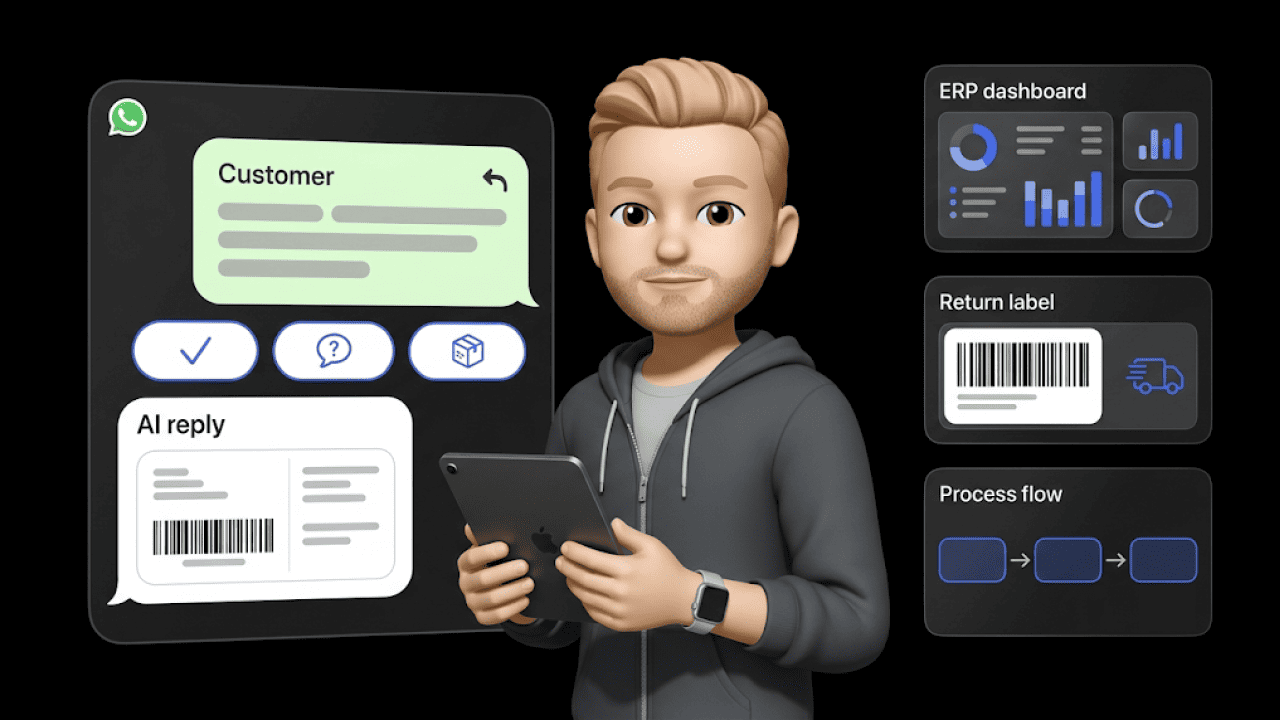
armincx handles returns from request to label end to end: capture the reason, create the return in your ERP, send the label, communicate the refund. In under 30 seconds instead of 10 to 20 minutes per case.

Returns Management: 60 to 80% Automated
aheadbillanissanmarcopoloholyenergyvitamomentprepmymealairupbipabauhausarajaeger-fishingbedropjustspicesnahundfrischnaturtreumanikonew balancemetroolakalapegadorglow25vitaformpergoluxmoonlight mansionroastmarkett1tandoonailsfarbenloewekavalioewaliamaschenfeingeschenke-online

Returns Cost You Twice: The Product and the Process

There is little you can change about the product. About the process, almost everything.

10 to 20 minutes per return

10 to 20 minutes per return

Look up the order, ask for the reason, create the return in the ERP, generate the label, send it, trigger the refund. Every manual return is a chain of small tasks across all your systems.

The waiting loop breeds follow-up tickets

The waiting loop breeds follow-up tickets

In a manual process, days often pass between return request and label. In that time the customer asks again, gets impatient, and one return turns into three tickets.

Every return used to be revenue

Every return used to be revenue

A share of your returns is avoidable: wrong size, open product question, uncertainty. Without advice in the return moment, you lose revenue that an exchange could have saved.

Why Automated Returns Management Works Twice

The return is the most underrated loyalty moment in e-commerce. How easy the return feels decides whether the customer comes back. A label in under 30 seconds leaves a different impression than three days of waiting, and exactly this difference is what armincx automates: 60 to 80% of returns run through without any agent, from captured reason to refund update.

The rate deliberately sits below the 85 to 95% of order status requests, because returns are the more complex case: goodwill decisions and edge cases stay in human hands, and that is a feature.

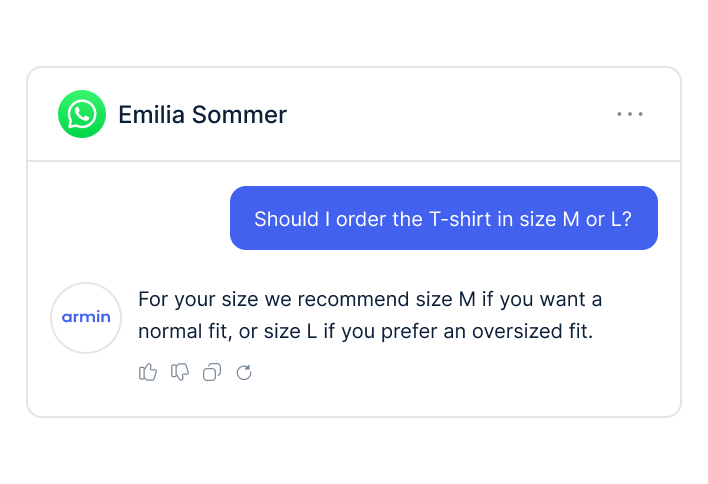
The second lever is less obvious and at least as valuable: the AI advises in the return moment. Whoever picks "doesn't fit" as the reason gets the right size offered as an exchange before the refund runs. Whoever has an open product question gets the answer that saves the purchase after all. Every return averted this way keeps the revenue and saves the entire process and logistics costs on top. Returns handling turns into a tool that lowers the return rate itself.
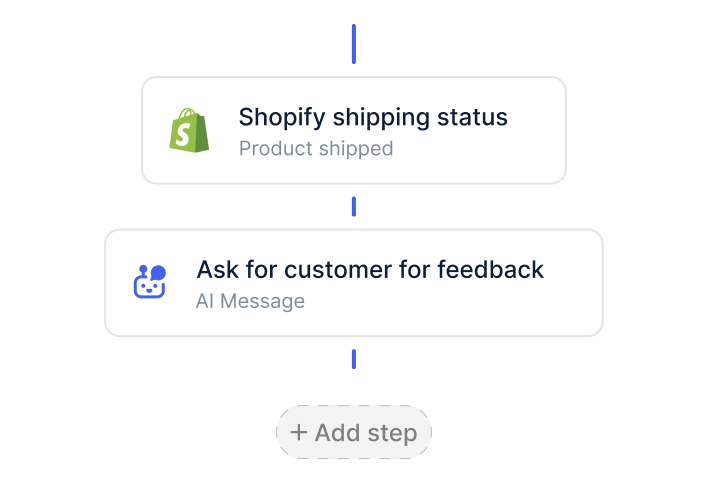
How a Return Runs Through Without Your Team Touching It

Three steps from return request to label with refund update.

Recognize the request, match the order, capture the reason

The AI recognizes the return request on every channel, matches the order via customer profile or order number and captures the reason with structured quick replies: doesn't fit, defective, don't like it, wrong product.

Recognize the request, match the order, capture the reason

Return in the ERP, label from the carrier

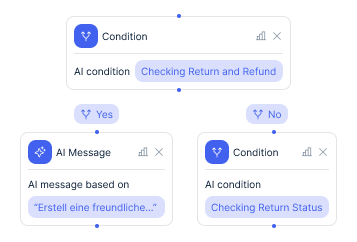
armincx creates the return automatically in JTL, Xentral, Billbee or Shopify and generates the return label via Sendcloud or DHL. No system switching, no copy-paste, no case left sitting.

Return in the ERP, label from the carrier

Send the label, communicate the refund

The customer receives their label with drop-off instructions right in the chat. As soon as the return arrives, the status update follows with a clear expectation: refund within 3 to 5 business days. The follow-up tickets of the past simply never happen.

Send the label, communicate the refund

Numbers From Real armincx Accounts

Benchmarks from live operations, measured across all industries.

60 to 80%

60 to 80%

of returns handled by armincx fully automatically.

Under 30 seconds

Under 30 seconds

to the label, instead of 10 to 20 minutes per case manually.

24/7 available.

24/7 available.

Return requests arrive on Sunday evenings, too.

What Automated Returns Management Actually Delivers: The Math

Take a store with 300 returns a month. Handled manually, each one costs 10 to 20 minutes, so 50 to 100 hours of team time in total, spread across ERP, shipping portal and inbox. armincx takes over 60 to 80% of that: 180 to 240 returns run through fully automatically, and your team keeps only the cases where goodwill or judgment is required.

Then there is the revenue lever of advice in the return moment. Every return that becomes an exchange instead of a refund keeps the full order value and saves the logistics costs on top. Even a small conversion rate changes the math noticeably: at 300 returns and a cart value of 80 euros, every percent converted from refund to exchange secures 240 euros of monthly revenue, before you even count the process costs.

One practice learning from our accounts pays off especially with high-margin products: for defective goods with low product costs, an automatic replacement can be cheaper than a refund. The customer is happy faster, and the margin stays bigger. You define such rules once, and armincx applies them consistently.

And finally the quiet effect: clear communication (label instantly, refund window named) makes the follow-up tickets disappear that accompany every return in a manual process. Fewer tickets, less frustration, more customers who come back despite the return.

What Brands Automating Their Support With armincx Say

Voices from real armincx accounts.

Finn Fleischer

FarbenLöwe

 FarbenLöwe logo
POV how to scale ecom business to 20M with 2,5 FTE im CS.

Eren Karabacak

vitabay

vitabay  logo
Finally an AI that doesn't hallucinate.

Philipp Riedl

vetain

vetain logo
All channels, one AI, including the ERP integration with billbee. Switching from Gorgias to armincx was a no-brainer for us.

Christoph Lung

Duschbrocken

Duschbrocken  logo
armincx integrates with our entire tech stack and even automates the Asana tickets for our logistics. I’m really impressed by this tool.

Best Practices: How to Automate Your Returns Process Cleanly

Capture return reasons in a structured way instead of free text. The quick reply query (doesn't fit, defective, don't like it, wrong product) creates the most valuable dataset in your store as a byproduct: which product comes back, and why? If size issues pile up for one article, that is a signal for the product page, and your support inbox is just the messenger.

Put advice before processing. The moment between return request and label is your last chance at the revenue: for "doesn't fit", the exchange into the right size belongs in the flow as the first option, and for product questions, the answer that saves the purchase. Only when the customer sticks with the return does the processing run.

Store goodwill rules as automation. From which order value is a return shipment worth it at all? When is a replacement cheaper than a refund? Defined once as rules, armincx applies them consistently, and your team only decides the true edge cases.

Communicate the refund proactively. The named window (3 to 5 business days) in the status update is the difference between a closed case and three follow-up tickets. Expectation management is half the battle in any returns process.

And connect the system where your returns actually live first: the ERP. JTL, Xentral or Billbee first, then shipping (Sendcloud/DHL), then optionally the returns portal. In that order, the flow stands fastest.

For how the order status question before it gets answered automatically, see our page on Where is my Order.

Frequently Asked Questions About Automated Returns Management

The answers to the questions that come up most in our first conversations.

The complete process: recognize the return request, match the order, capture the reason via quick replies, create the return in the ERP, generate the label via Sendcloud or DHL, send it and communicate the refund with a clear window.

Yes, that is the second lever: for "doesn't fit", the flow offers the exchange into the right size, and for product questions it delivers the answer before the return. Every averted return keeps the revenue and saves the logistics costs.

Goodwill decisions, judgment calls and everything you deliberately exclude. That is why the automation rate of 60 to 80% sits below simpler cases like order status requests, and that is by design.

Your existing ones: Shopify or an ERP like JTL, Xentral or Billbee for the return, Sendcloud or DHL for the label. Returns portals like Returnista can be connected on top.

Automatically: when the return arrives, armincx sends the status update with the refund window of 3 to 5 business days. The typical follow-up tickets disappear with it.

Your Next Return Handles Itself

Bring your return rate and ticket volume, and we will show you live what the flow makes of them.