
Everyone's talking about AI Agents for Sales. About autonomous SDRs firing 100 cold calls a day. About AI that never takes a holiday. About teams that put their sales process "on autopilot".
I've been watching this play out for two years now — at Chatarmin, with our customers, with brands scaling their Shopify stores via WhatsApp. And the truth is a lot less sexy than what you read on LinkedIn.
The teams actually making revenue with AI sales agents look different than the hype posts suggest. They don't automate broken processes. They don't bet on the fully autonomous AI SDR running without humans. And they don't blindly copy the US B2B playbook from 11x.ai or Artisan — because that doesn't fit a D2C shop in Europe.
This article shows you what AI Agents for Sales actually mean for ecommerce brands: the definition without the marketing fluff, the five use cases that drive real conversion in 2026, and the places where most projects fail.
What Are AI Agents for Sales? (Short Definition)
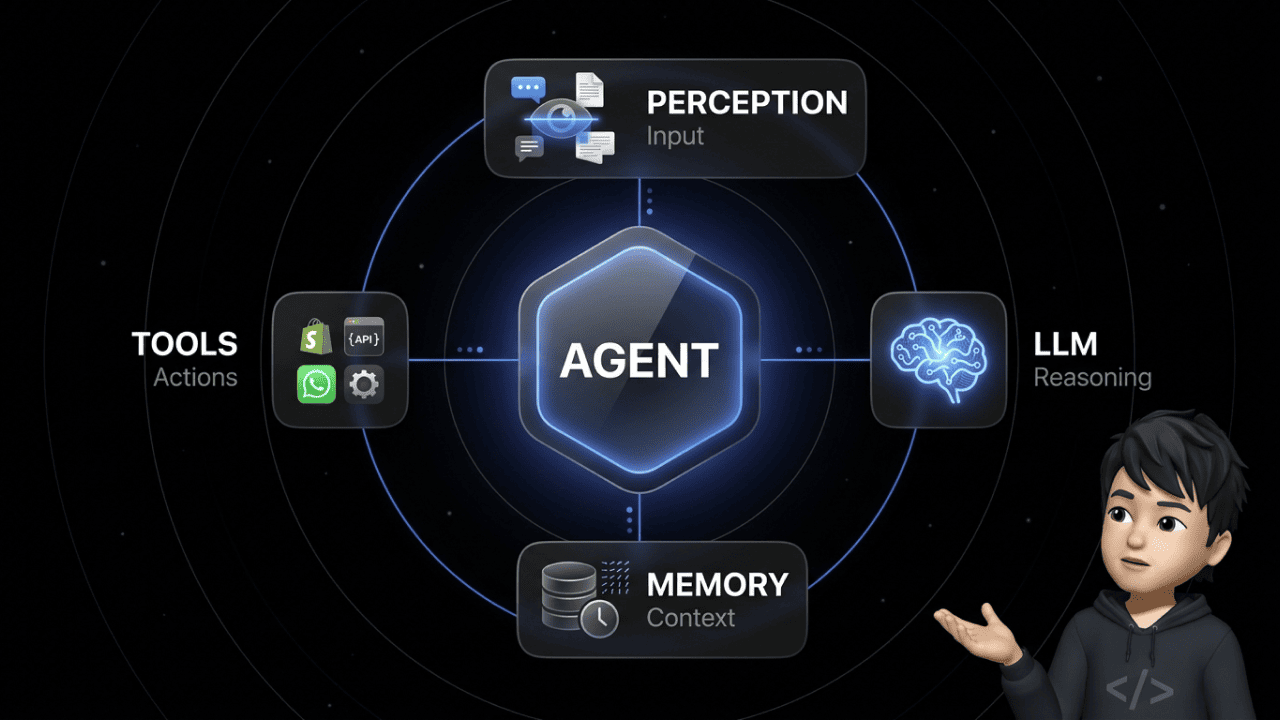
AI Agents for Sales are autonomous AI systems that detect sales signals, make independent decisions, and execute actions across CRM, shop, or messenger — without a human approving every step. Unlike classic chatbots, they don't just respond to questions. They act proactively: recovering abandoned carts, guiding product choices, reactivating dormant customers, and qualifying leads. The foundation is what's called a ReAct loop (Reason + Act): the agent observes an event, decides the next step, executes it, evaluates the result, and adapts.
AI Agents for Sales vs. Chatbot: The Difference That Matters
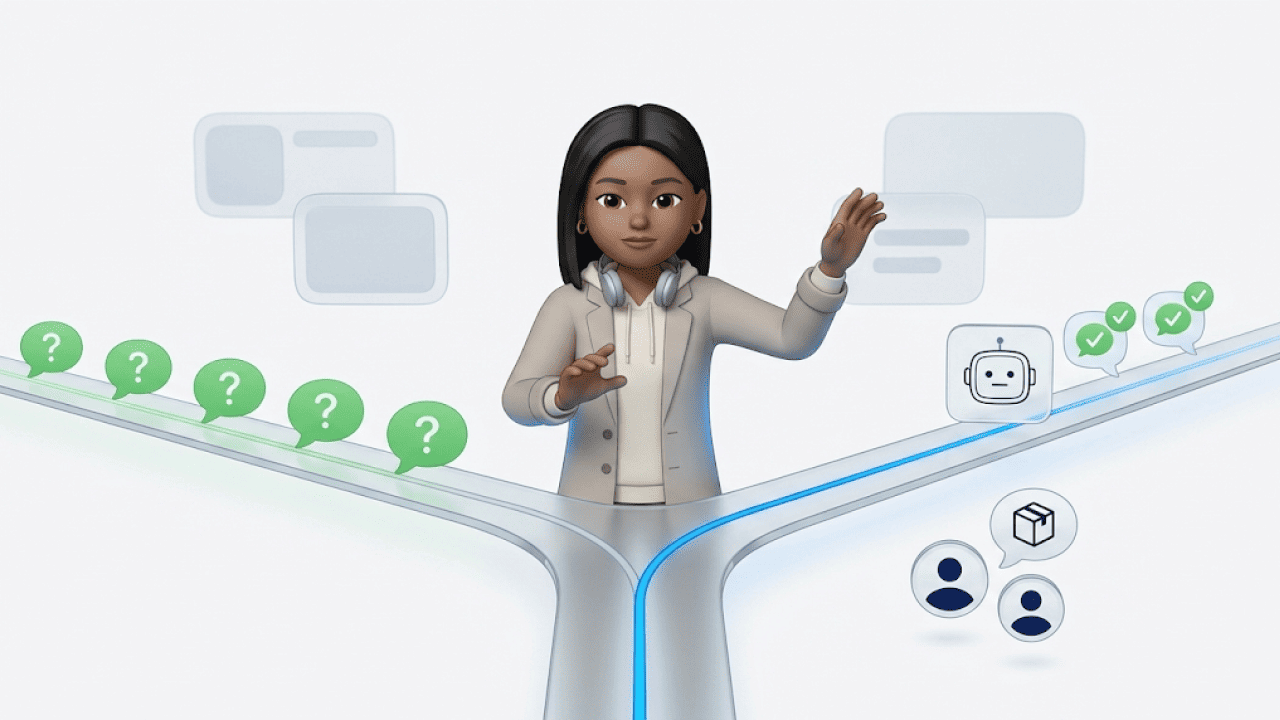
A chatbot answers questions. An AI sales agent makes decisions and takes action. Sounds like semantics — but it's the exact spot where 90% of shop owners get this topic wrong.
Your standard Shopify chatbot can tell you: "Where's my order?" With an API call in its pocket, it delivers the tracking number. Question falls outside its script? It hands off to a human.
An AI Agent for Sales does more: it spots that a lead dropped off a product page. It decides based on cart value whether to send a WhatsApp right away or wait 20 minutes. It suggests a bundle, not just a discount. And when the customer responds, it doesn't escalate to support — it closes the sale.
| Feature | Classic Chatbot | AI Agent for Sales |
|---|---|---|
| Logic | Rule-based, if-then | Goal-oriented, autonomous |
| Actions | Provide answers | Decide + act (CRM, shop, messenger) |
| Context | Single message | Customer journey across channels |
| Limits | Fixed scripts | Learns from results, adapts |
| Example output | "Your package arrives Tuesday." | "You had shoes in your cart. Size 42 is back in stock — 10% off for the next 2 hours." |
The difference sounds like wording — but it hits your conversion rate hard. A chatbot cleans up your inbox. An AI agent chases lost carts and brings in actual revenue.
Market Data 2026: No Longer Hype, Measurable Revenue
The question "does this even work?" got answered in 2026. The Salesforce State of Sales 2026 report has the hardest numbers out there right now:
- 92% of sales teams with AI agents say the agents improve their prospecting
- 89% of sales reps confirm: AI improves their understanding of customers
- Top performers are 1.7x more likely to rely on AI agents than underperformers
- Teams with AI grow 1.3x faster in revenue than teams without
These aren't Gartner predictions for 2030. This is February 2026, from 5,500 surveyed sales professionals (Salesforce State of Sales 2026).
What this means for you as an ecommerce operator: If you ignore AI agents, you're handing your competitor 15–25% more conversion on the same traffic. Not because AI is "disruptive", but because it takes over grunt work that otherwise falls through the cracks: chasing carts, answering questions, writing follow-ups, keeping the CRM clean.
But — and here's the honest flip side — these numbers only hold for teams that have their basics in order. If your customer data lives across three Excel files and a dead HubSpot account, not even the best AI agent gets you a 15% lift.
5 AI Sales Agent Use Cases for European E-Commerce
The US B2B playbook from 11x or Artisan (autonomous outbound SDRs firing cold emails to 10,000 leads) doesn't work for you as a shop owner. Your sales process runs differently: traffic comes in, the customer decides in minutes, and your job is to catch them in that window.
Here are the five use cases that actually drive revenue in European ecommerce in 2026:
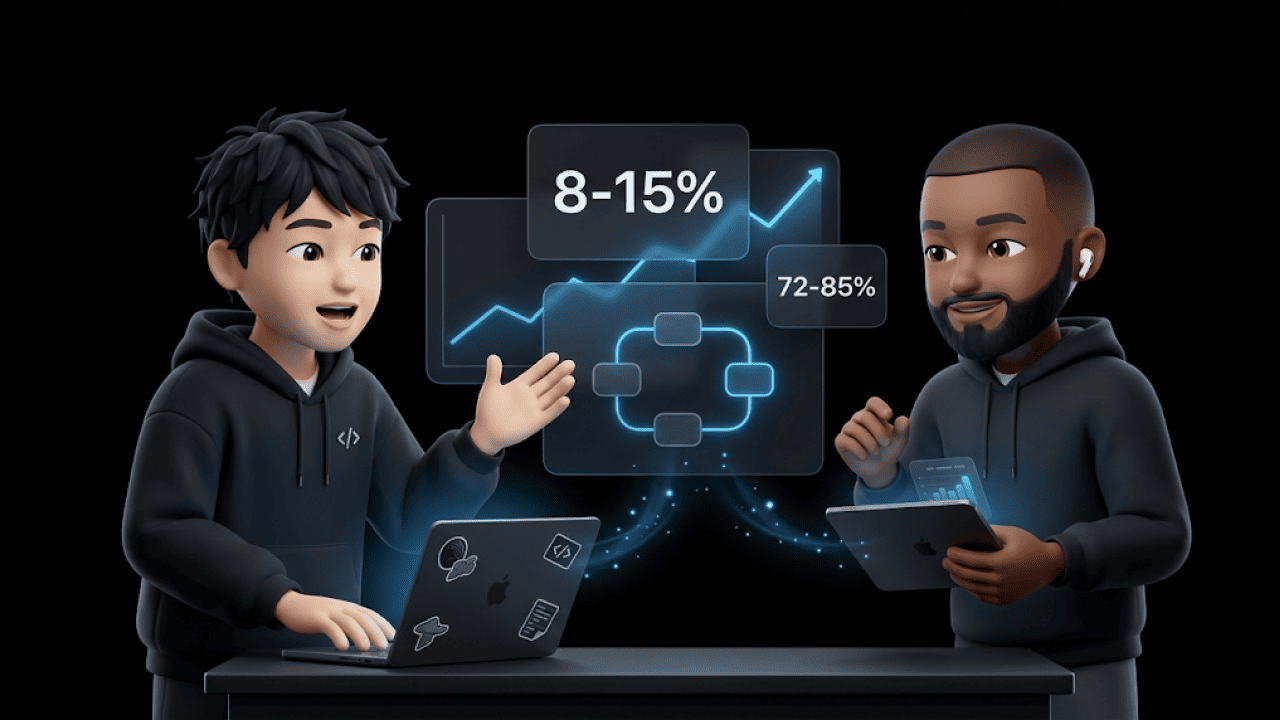
1. Abandoned Cart Recovery The agent detects the drop-off, waits 15–30 minutes, sends a contextual WhatsApp — not "Hey, you forgot something", but with product name, size, image, and a reason to come back. Shop owners on Chatarmin see 8–15% recovery rates. At 2,000 orders per month, that's 160–300 extra purchases.
2. AI Product Advice (Conversational Commerce) "Does size M fit me in your sweater?" — the agent knows size charts, return rates, and customer reviews. It recommends, escalates when uncertain, and closes the sale once the customer's convinced.
3. Welcome Flow with Lead Qualification Opt-in comes in, agent confirms, asks about preferences (men's/women's, style, occasion), sends voucher + curated product selection. No newsletter spamming the same 12 products to everyone.
4. Winback for Dormant Customers The agent spots it: customer hasn't bought in 90 days, last product was sneakers size 42. It auto-triggers a personalized message with a new model or restock — not "We miss you".
5. Post-Purchase Upsell After the sale: which products complement the order? The agent suggests a matching sock for the running shoe — not a winter coat.
More tool comparisons in our overview: The Best AI Agent Tools 2026.
Outbound SDR vs. Inbound Agent: Why European Shops Play Differently
The loud players in the AI sales agent market are called 11x.ai ("Alice"), Artisan ("Ava"), or Clay. All of them build autonomous outbound SDRs — AI that researches leads, writes cold emails, and books meetings. Makes sense for US B2B SaaS. For you as a D2C brand in Germany, Austria, Switzerland, or anywhere in Europe, usually not.
Why? Three reasons.
First — compliance. GDPR requires strict opt-in for any marketing communication. No scraping, no "found your LinkedIn email, let's send something". Starting August 2026, the EU AI Act piles on: AI-generated communication has to be labeled as such. An outbound SDR agent firing 5,000 cold emails per day is a legal minefield in Europe.
Second — buying behavior. In ecommerce, the funnel runs differently. Your customer isn't at a desk closing an enterprise deal. They're scrolling Instagram on the sofa, clicking your ad, loading the cart — and you have 48 hours to bring them back before they forget you. Outbound gets you nothing here. Inbound responsiveness gets you everything.
Third — channel. Email: 18–22% open rate. WhatsApp: 72–85%. If you pick a channel to run your AI agent on, pick the one your customers actually read — not the one that ends up in spam.
What this means concretely: Don't build an 11x clone for your Shopify store. Build an inbound agent on the channel with the highest response rate — and in European ecommerce, that's WhatsApp. The technical breakdown: Autonomous AI Agents.
Why Projects Fail: Fix the Process First, Then Automate
Gartner predicts: by the end of 2027, 40% of all agentic AI projects will be cancelled. Not because of the tech. Because of the basics nobody set up first.
Three reasons AI sales agent projects fail in ecommerce:
1. Broken data quality. Your AI agent is only as good as your data. If your Shopify order data, Klaviyo lists, and customer service all live in separate silos, the AI can't build a clean customer context. Result: generic messages no one reads. 51% of sales leaders say, per Salesforce, that tech silos slow down their AI initiatives.
2. Automating a bad process. If your manual abandoned cart flow converts at 1%, AI on top of that gets you slightly more than 1%. Fix the process first, then automate: look at where your flows drag today — personalization? Timing? The offer? Solve that first. Then scale with AI.
3. Full autonomy as the goal. The misconception that the agent runs without humans. The reality: the best AI sales agents in 2026 work single-task with strict guardrails and a human in the loop. The agent does 80% of the work — but the shop owner sets the tone, the offer limits, and the escalation paths. Let the agent run free and you get embarrassing messages and burned brand trust.
The uncomfortable consequence: If you don't have a working abandoned cart flow via email today, start there — before layering on the AI agent. AI multiplies what's already there. Including bad processes.
How to Measure Whether Your AI Sales Agent Actually Delivers
What you track determines whether your AI agent brings revenue or becomes another line in your tool stack. These five KPIs separate working agents from expensive gimmicks:
- Recovery rate (abandoned cart): share of recovered carts. European ecommerce benchmark with Chatarmin: 8–15%
- Conversion rate on AI touchpoint: share of addressed customers who buy. Warm leads: 15–25%. Cold opt-ins: 3–5%
- Average Order Value (AOV) with vs. without AI upsell: measures incremental revenue per order — not just the raw count of purchases
- Response rate: share of customers who reply to the agent's message. WhatsApp benchmark: 30–50%
- Ticket deflection: for product advice agents — share of queries resolved without human support. Chatarmin customers: 56% in Q4 2025
The most important rule: track incrementality. Would the customer have converted without the agent? Only A/B tests with a control group show you the real uplift — not the raw recovery rate on your dashboard.
How Chatarmin Runs WhatsApp-Based AI Sales Agents
At Chatarmin, we don't build SDR robots firing 10,000 cold mails per day. We build AI sales agents that run on WhatsApp, fit the customer journey, and cover the basics that drive revenue in European shops.
Here's what that means concretely:
- Abandoned Cart Agent: detects drop-off, follows up — 8–15% recovery
- Product Advice Agent: answers size, material, compatibility directly in chat
- Welcome Agent: qualifies leads at opt-in, segments instantly
- Winback Agent: triggers on inactivity with a personalized offer
- Post-Purchase Agent: sends relevant upsells based on order history
The Chatarmin AI agent runs on your customer data context — Shopify, JTL, Klaviyo, your CRM. It uses WhatsApp (72–85% open rate) and falls back to email or SMS when the customer's more reachable there. You set the tone. You set the escalation rules. The agent handles the rest.
Result from a customer case: 56% of incoming tickets get resolved automatically — without human intervention. Measured across all customers in Q4 2025.
More on architecture and how it actually works: Chatarmin AI Agents.
Frequently Asked Questions About AI Agents for Sales
Do AI sales agents replace human sales reps?
No. They take over routine tasks like cart follow-ups, product questions, and handoffs, while human advice stays decisive on complex deals and escalations.
Does an AI sales agent work for small Shopify shops?
No, usually not under roughly 2,000 orders per month. Below that, opt-in potential is too small for setup and running costs to pay off.
Are AI sales agents GDPR-compliant?
Yes, if you work opt-in-based and comply with the EU AI Act's labeling requirement starting August 2026. Inbound agents on WhatsApp carry less legal risk than outbound cold mail tools.
Do I need a dev team to set up an AI sales agent?
No. Modern platforms offer prebuilt flows and native integrations for Shopify, Klaviyo, JTL, and common CRMs — no coding required.
Can an AI sales agent run outbound campaigns?
Yes, technically possible — but legally tricky in Europe (GDPR, strict opt-in). For ecommerce shops, inbound agents deliver better conversion at lower risk.
Conclusion: When AI Agents for Sales Make Sense — and When They Don't
AI Agents for Sales aren't hype anymore. The numbers from Salesforce, McKinsey, and Deloitte are clear: teams that set it up right grow faster, convert better, and save 2–5 hours per week.
But they're also no silver bullet. If your shop is under 2,000 orders per month, the effort usually doesn't pay off — too little opt-in potential, too little data. If your processes are broken, fix them first. Automation on a bad process = a bad process, at speed.
My recommendation for ecommerce brands in 2026:
- Start inbound, not outbound. Your customer's already on your site — catch them there before you unleash 11x clones on LinkedIn.
- One channel, done right. WhatsApp for European brands. 72–85% open rate beats every email campaign.
- Single-task, not full autonomy. One abandoned cart agent that delivers. Not a 10-in-1 miracle tool.
- Human in the loop. You set the rules. The agent does the work.
- Fix the process first, then automate. Always in that order.
Take this seriously and in 2026 you get what Salesforce promises: 1.3x faster revenue growth, 15–25% more conversion on existing traffic. Without the hype. Without the fails.
Want to see what a WhatsApp AI sales agent looks like for your shop? Book a demo with Chatarmin — in 20 minutes we'll show you which three flows to turn on first.