
80% of so-called "AI agents" on the market are glorified chatbots. Rebranded, polished, slapped with a new label — but nothing new under the hood. No autonomous action. No real decision-making. No access to your systems.
The problem: If you pick the wrong tool in 2026, you're investing resources into a chatbot with agent branding. And the ROI? Zero.
This comparison shows you the 10 best AI agent tools in 2026 that actually work autonomously — sorted by category, with clear strengths, weaknesses, and use cases. No marketing fluff. Just what matters for your e-commerce business.
What Sets AI Agents Apart From Chatbots in 2026
This distinction is critical. If you don't understand the difference, you'll buy the wrong thing.
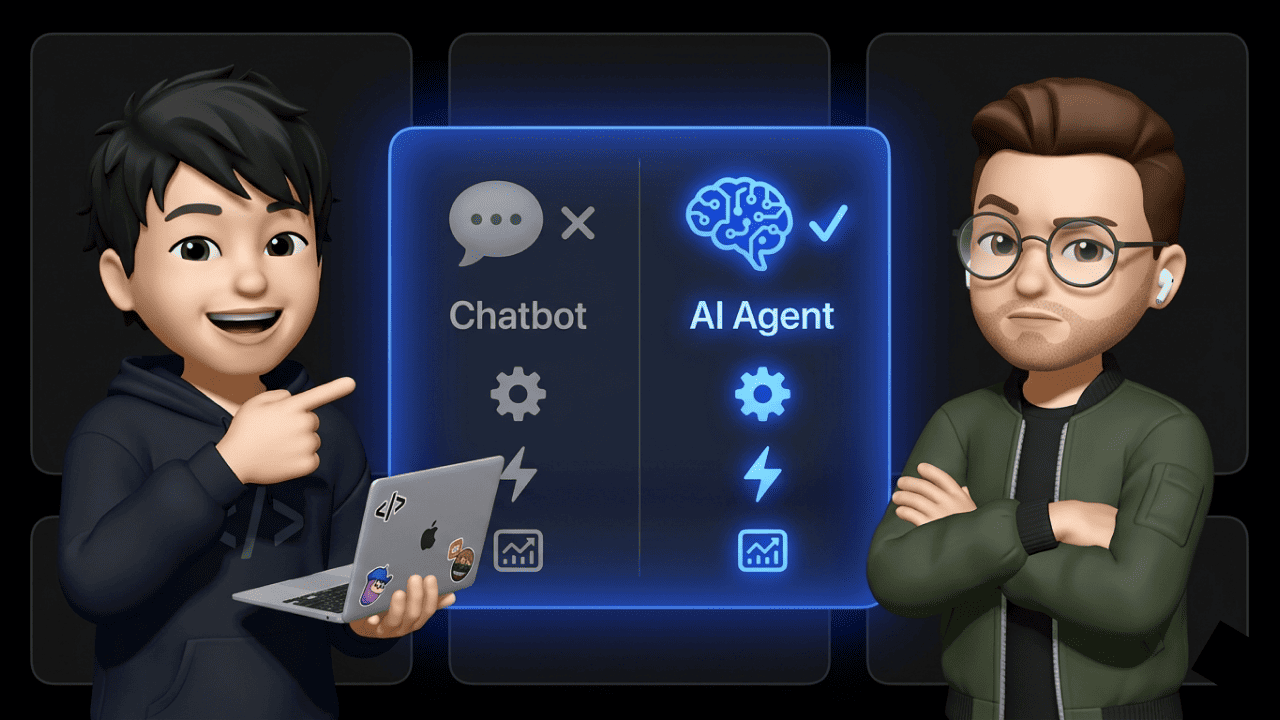
Traditional chatbots operate on the so-called "Read Path." They analyze, summarize, answer pre-defined questions. That's it.
AI Agents operate on the "Write Path." They execute workflows, make decisions, access CRM, email, and third-party systems — and act without constant human oversight.
| Feature | Chatbot | AI Agent |
|---|---|---|
| How it works | Rule-based, reactive | Autonomous, context-aware |
| Tasks | Pre-defined dialogues | Multi-step processes |
| System access | Limited API connections | Real-time access + actions |
| Decisions | None of its own | Makes independent decisions |
| Typical use | FAQ bot, lead form | Returns processing, pipeline management |
The agentic AI market is estimated at $12 to $15 billion in 2026. And the trend is moving toward multi-agent orchestration — specialized agents collaborating like departments within a company.
Read more about the fundamental difference in our article AI Agents vs. Chatbots: The Key Difference.
The Reality Check: Why 89% of AI Agent Projects Fail in 2026
71% of companies are already deploying AI agents in 2026. Sounds like a success story. It's not.
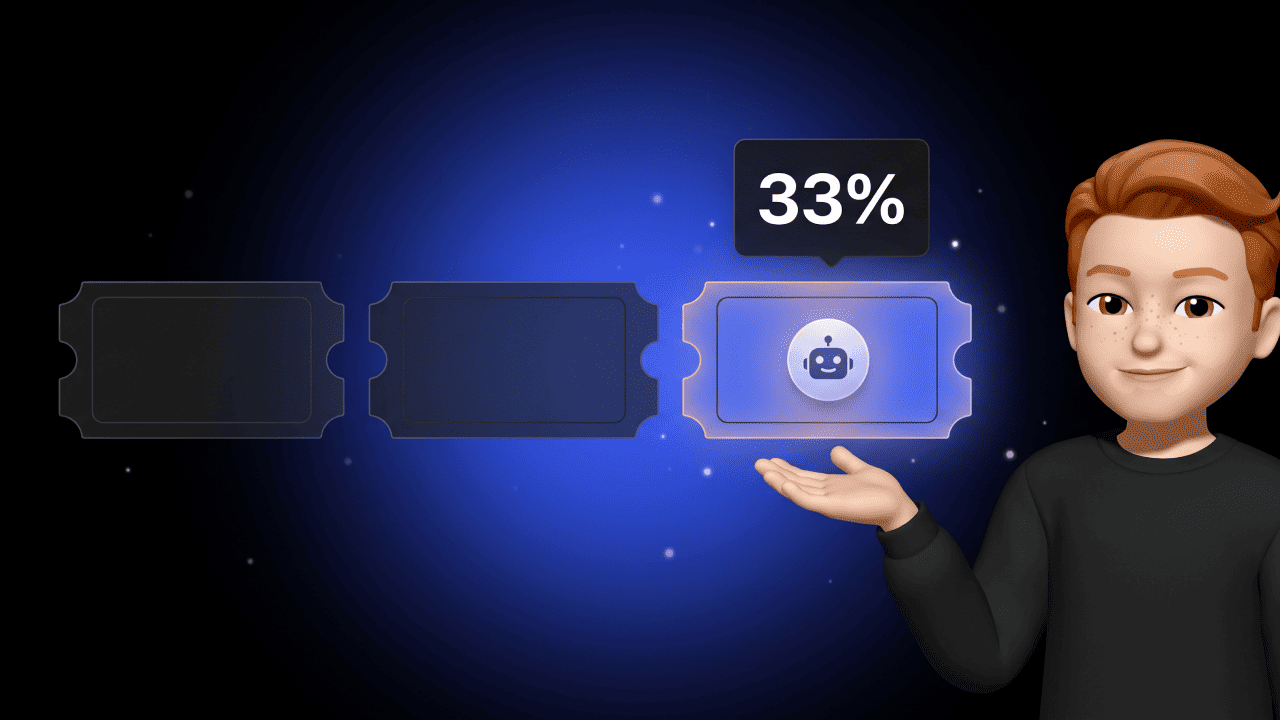
According to the Camunda State of Agentic Orchestration Report 2026, only 11% of these projects reach production. The rest? Stuck in pilot mode, delivering no measurable results, or quietly killed.
The reason is the "Orchestration Bottleneck." Companies average 50 different software endpoints per process — CRM, shop backend, helpdesk, ERP, shipping providers, payment processors. An isolated agent that can only access one system fails against this reality. Without real orchestration across system boundaries, every agent is an expensive experiment.
Then there's the "Last Mile" problem: According to Wiz Research 2026, AI agents perform reliably 90% of the time on sharply defined tasks. But give them tasks that are too broad without clear guardrails — "handle customer service" instead of "process return requests for orders under $100" — and they produce errors. And errors in customer interactions cost you trust.
The solution: Human-in-the-Loop. Successful B2B setups don't hand the AI the steering wheel blindly. For business-critical workflows — high-value refunds, contract questions, escalations — a human approves the process. The AI prepares autonomously, the human decides. That's not a step backward — it's the difference between a pilot project and a system that runs in production.
What this means for this comparison: For each of the 10 tools in this article, we evaluate not just what the agent can do — but also how well it can be orchestrated and whether human-in-the-loop mechanisms are built in.
The Data in 2026: What the Market Actually Says
No vibes without facts. Here are the numbers you need to know:
Gartner (2025): By 2026, 40% of all enterprise applications contain task-specific AI agents. Not as experiments. As standard features.
IDC Forecast: Global spending on agentic AI will rise to over $1.3 trillion by 2029 — at an annual growth rate of 31.9% (CAGR).
McKinsey 2025 AI State Report: Multi-agent systems deliver a 3x higher ROI than single, isolated agents.
What this means for you: AI agents in 2026 aren't a "nice-to-have" or an innovation project. They're infrastructure. The question isn't whether you'll deploy them — it's which tool fits your stack.
And that's exactly where the wheat gets separated from the chaff. Most comparisons list tools without telling you why one works for your use case and another doesn't.
The Protocol Revolution: Why Integration Actually Works in 2026
Until 2025, the main problem with AI agents wasn't the AI itself — it was integration. Every agent spoke its own language. Every connection was custom work. That changes in 2026 with three standards you should know:
| Protocol | Developer | Function |
|---|---|---|
| MCP (Model Context Protocol) | Anthropic | Agent-to-Tool: Gives agents direct access to enterprise databases, CRM, and APIs |
| A2A (Agent-to-Agent) | Google / Linux Foundation | Horizontal multi-agent collaboration: Agents from different vendors communicate with each other |
| ACP (Agent Communication Protocol) | IBM | Lightweight REST messaging between agents — low barrier to entry |
Why this matters: According to IBM Research, using standardized protocols reduces agent integration time by 60 to 70%. In concrete terms: What was a three-month project in 2024 is up and running in two to four weeks in 2026.
The W3C and the Linux Foundation are aggressively driving the standardization of these protocols right now. For e-commerce brands, this means: The era of expensive custom integrations is over. Agents plug into Shopify or Zendesk via MCP out of the box — without your dev team spending weeks building connectors.
In practice: An AI agent in customer service (e.g., armincx by Chatarmin) accesses your Shopify backend directly via MCP and communicates with a separate returns agent via A2A — no custom integration, no middleware chaos.
Evaluation Criteria: What Matters in AI Agent Tools
Not every tool fits every company. That's why we evaluated each of the 10 tools against five criteria:
| Criterion | What we assess |
|---|---|
| Autonomy level | How independently does the agent work? Does it need constant babysitting? |
| Integration capability | Connection to existing systems (CRM, Shopify, ERP, helpdesk) |
| Industry focus | Generalist or specialist? Does it fit e-commerce? |
| Orchestration | Can the agent collaborate with other agents? |
| Time-to-value | How quickly do you see results? Days, weeks, months? |
A tool can look great on paper. If implementation takes six months and requires three consultants, it's worthless for a D2C brand with 15 employees.
The best AI agent tools in 2026 are the ones that match your company size, your stack, and your use case.
Category 1: Enterprise & CRM Automation
Salesforce Agentforce
What it is: Salesforce built Agentforce as a system that integrates autonomous AI agents directly into the CRM. Sales, service, marketing — the agents manage processes across the entire Salesforce ecosystem.
Strengths:
- Deep CRM integration without middleware
- Multi-agent orchestration within the Salesforce platform
- Enterprise-grade compliance and data protection
Weaknesses:
- Requires an existing Salesforce stack — without it, Agentforce is pointless
- High implementation effort, long ramp-up time
- Often oversized for SMBs and D2C brands
Best for: Enterprise companies with an existing Salesforce ecosystem looking to automate their CRM processes.
Ruh AI
What it is: An "AI Workforce Platform" with pre-configured AI employees. Ruh AI delivers ready-made agents — for example, "AI SDR Sarah" for lead qualification — that collaborate through a unified knowledge base.
Strengths:
- Pre-configured agents for specific roles (SDR, support, onboarding)
- Unified knowledge base for genuine multi-agent orchestration
- Faster start than enterprise solutions like Salesforce
Weaknesses:
- Still a young product — the ecosystem is growing
- Less customization than self-built agents
- Limited integrations with niche e-commerce stacks
Best for: B2B companies with clear, repeatable sales and support processes that want to launch quickly.
Category 2: Software Development (Coding Agents)
Cursor (Anysphere)
What it is: The AI-native IDE dominating the market in 2026. Cursor isn't an extension for VS Code — it's a completely separate development tool, built for AI agent workflows. Valuation: nearly $30 billion.
Strengths:
- Extremely fast, context-aware code generation
- Understands your entire codebase, not just individual files
- Huge developer community, constant updates
Weaknesses:
- Code-focused — not a business tool for e-commerce teams
- Requires technical understanding for meaningful use
- High dependency on a single vendor
Best for: Developer teams looking to boost coding productivity. Relevant for e-commerce if you have an in-house dev team.
Devin (Cognition AI)
What it is: The first autonomous AI software developer. Devin plans projects, writes code, tests, and deploys — independently, from briefing to finished feature.
Strengths:
- End-to-end autonomous workflow: Planning → Code → Test → Deployment
- Can handle multiple tasks in parallel
- Reduces dependency on senior developers for standard tasks
Weaknesses:
- Hits limits with complex business logic
- Code reviews by humans remain mandatory
- High resource commitment for teams that only develop occasionally
Best for: Startups and scale-ups that need to ship features fast without building a large dev team.
Windsurf
What it is: An IDE specialized in agentic workflows. The key differentiator: "Arena Mode," where different AI models compete against each other (A/B testing for code generation), plus deep parallel agent collaboration.
Strengths:
- Arena Mode: Compare different models in real time
- Parallel agent collaboration for complex projects
- Strong focus on agentic workflows (not just autocomplete)
Weaknesses:
- Smaller community than Cursor
- Learning curve for Arena Mode
- Fewer third-party integrations
Best for: Developer teams that want to experiment with different LLMs and get the best result per task.
Category 3: Customer Experience & Support
Sierra
What it is: Founded by tech veterans, specialized in autonomous customer service. Sierra handles complex tasks — returns, authentication, account adjustments — even in heavily regulated industries.
Strengths:
- High autonomy: handles complex CX processes independently
- Strong in regulated industries (finance, healthcare)
- Deep integration into existing support infrastructure
Weaknesses:
- Enterprise focus — high implementation effort for smaller D2C brands
- No native WhatsApp integration
- Setup requires a dedicated project team
Best for: Large companies with complex support processes and high ticket volume.
Chatarmin (armincx)
What it is: The AI agent by Chatarmin, specialized in WhatsApp-based customer service for e-commerce. armincx resolves support tickets autonomously via WhatsApp — the channel your customers actually use. No new tool for the customer. No app. Just WhatsApp.
Strengths:
- Native WhatsApp channel: Customers write where they already are — no channel switching
- E-commerce specialist: Integrates with Shopify, Shopware, Klaviyo, Gorgias, and other systems
- Fast time-to-value: No months-long enterprise setup — live in days, not quarters
- GDPR-compliant: Built for the European market, data processing in the EU
Real-world example: MARC O'POLO uses Chatarmin's AI "Mika" to handle the majority of all incoming customer inquiries in real time — directly via WhatsApp. The result: a hybrid model of AI automation and human service, where agents only step in for complex cases. MARC O'POLO gained over 15,000 WhatsApp subscribers in a short period with significantly higher open rates than email marketing. Across the Chatarmin ecosystem, Black Week 2025 generated over $3.3 million in revenue in a single day — at a 44.1x return on spend.
Weaknesses:
- WhatsApp-focused — not an omnichannel agent for phone or email
- Primarily built for e-commerce and D2C, less suited for B2B enterprise
Best for: E-commerce brands that want to automate customer service via WhatsApp — without months of onboarding.
Learn more about AI agents in customer service in our Deep Dive: AI Agents in Customer Service.
Category 4: Knowledge, Legal & Search
Glean
What it is: The leading enterprise search agent. Glean connects fragmented enterprise systems (Drive, Confluence, Slack, Notion) and takes actions based on search intent — not just search, but action.
Strengths:
- Connects dozens of data sources into a unified search layer
- Acts on search intent (e.g., "Create a summary of all Q4 reports")
- Strong privacy controls at the document level
Weaknesses:
- Needs a certain data volume and system landscape to deliver value
- High implementation effort — rarely worthwhile for small teams
- Focused on internal knowledge processes, not customer-facing
Best for: Mid-size and large companies with a fragmented knowledge landscape (many tools, many teams).
Harvey
What it is: The number one for legal AI agents. Harvey analyzes contracts, identifies risks, and automates complex legal workflows — specialized for law firms and legal departments.
Strengths:
- Deep legal understanding, trained on legal data
- Automates contract analysis and due diligence processes
- Used by major international law firms
Weaknesses:
- Extremely specialized — only relevant for legal teams
- Not a tool for operational e-commerce processes
- Availability and customization for local legal frameworks still limited
Best for: Law firms, corporate legal departments, and legal tech companies.
Category 5: Agentic Automation & RPA
UiPath Agentic Automation
What it is: UiPath combines classic Robotic Process Automation (RPA) with AI agents. The result: Bots that don't just execute processes blindly, but make their own decisions when exceptions occur.
Strengths:
- Combination of proven RPA + AI-powered decision-making
- Massive ecosystem of pre-built automations
- Strong for repetitive processes with occasional exceptions (invoice processing, data reconciliation)
Weaknesses:
- RPA legacy: Many workflows are still rule-based, not truly agentic
- Complex licensing structure
- Requires internal know-how or an implementation partner
Best for: Companies with high volumes of repetitive back-office processes that want to introduce more autonomy step by step.
Developer Frameworks vs. No-Code Builders: A Quick Guide
Beyond the ten SaaS tools in this comparison, there are two other paths to building AI agents. Depending on your team and technical capability, one may be a better fit:
For Developers: Frameworks
If you have a dev team and need full control, go with open-source frameworks:
- LangGraph: State-based graphs for complex, multi-step agent workflows
- Microsoft AutoGen: Multi-agent conversations — agents discuss among themselves until they reach a solution
- CrewAI: Role-based agent teams — you define roles (Researcher, Writer, Reviewer), the agents collaborate
The upside: Maximum flexibility. The downside: You need developers to build and maintain the setup.
For Business Users: No-Code/Low-Code Builders
If you want to automate fast without writing a single line of code:
- Lindy: Drag-and-drop builder for AI agents with pre-configured templates
- Zapier: The classic automation tool, now with agent capabilities
- Make (formerly Integromat): Visual workflow automation with AI building blocks
The upside: Fast to launch, low barrier to entry. The downside: You'll hit limits with complex processes.
For most e-commerce brands, the best approach is a middle ground: Specialized SaaS tools (like the ones in this comparison) for clearly defined use cases — and no-code builders for everything else that needs automating.
More on this in our guide How to Build AI Agents: Step-by-Step.
Comparison Table: The 10 Best AI Agent Tools in 2026 at a Glance
| Tool | Category | Autonomy Level | E-Commerce Fit | GDPR Focus | Time-to-Value |
|---|---|---|---|---|---|
| Salesforce Agentforce | Enterprise CRM | High | Medium | Yes | Months |
| Ruh AI | AI Workforce | Medium-High | Low | No | Weeks |
| Cursor | Coding | High | Indirect | No | Days |
| Devin | Coding | Very High | Indirect | No | Weeks |
| Windsurf | Coding | High | Indirect | No | Weeks |
| Sierra | CX & Support | High | High | Limited | Months |
| Chatarmin (armincx) | CX & Support (WhatsApp) | High | Very High | Yes | Days |
| Glean | Enterprise Search | Medium | Low | Limited | Weeks |
| Harvey | Legal AI | High | None | Limited | Months |
| UiPath | RPA + Agents | Medium-High | Medium | Yes | Months |
Which AI Agent Tool Fits Your E-Commerce Business?
The honest answer: It depends on your use case. But not in the "no idea, figure it out yourself" sense. Like this:
You're a D2C brand on Shopify with 2,000+ orders per month? Your biggest lever is customer service. Sierra or Chatarmin. If WhatsApp is your primary customer channel — and for many D2C brands it is — then armincx by Chatarmin is the most obvious choice.
You have a dev team and want to ship features faster? Cursor or Devin. Cursor for daily workflow, Devin for autonomous projects.
You're an enterprise with a complex CRM? Salesforce Agentforce — if you're already in the Salesforce ecosystem. Otherwise: steer clear.
You're drowning in internal documents and knowledge fragments? Glean. But only if you have enough data sources to justify the resource allocation.
You want to automate back-office processes? UiPath — step by step, not big bang.
For a general overview of all types of AI agents, check out our Pillar Article: AI Agents 2026.
The End of "Per-Seat" Pricing: How AI Agents Are Changing Software Markets
An effect most tool comparisons ignore: AI agents are shifting how software gets priced.
The classic model — X dollars per user per month — works as long as humans are the users. But when an AI agent does the work of three support reps, does each agent pay for a "seat"? Of course not.
The market is therefore moving toward outcome-based models: billing per resolved ticket, per qualified lead, per completed workflow. Or hybrid approaches — a base fee plus a performance component.
What this means for you: Don't compare AI agent tools by license fees. Compare them by ROI per process. How many tickets does the agent resolve per month? How much time does it save your team? How quickly does the investment pay for itself?
That's the more honest comparison. And it's exactly what you should demand from every vendor — including us.
Global Trust Factor: Agentic AI Goes Mainstream
If you still have doubts about whether AI agents are "ready" in 2026: Germany's Federal Ministry for Digital and Government Modernization (BMDS) launched its "Agentic AI Hub" in 2026 — with 18 pilot projects across German municipalities.
When the German government — not exactly known for rushing into new technology — deploys AI agents, the technology is past the proof-of-concept stage. Market readiness is here. The question is no longer "if" but "where first."
For e-commerce brands globally, the takeaway is clear: Regulatory frameworks are maturing, customer acceptance is growing, and the infrastructure (GDPR-compliant hosting, EU data processing options) keeps improving. The barrier to entry has never been lower.
Honest Assessment: What AI Agent Tools Still Can't Do in 2026
No comparison would be complete without the truth most tool vendors won't tell you:
AI agents don't replace teams. They automate sub-processes. An AI agent in customer service resolves 40–60% of tickets autonomously. The remaining 40–60% still need humans. Anyone who tells you their tool automates "everything" is either lying — or defining "everything" very creatively.
Quality depends on your data. An agent is only as good as the knowledge base you feed it. Garbage in, garbage out. That applies to Chatarmin just as much as to Salesforce or Glean.
Multi-agent orchestration is still early. A2A, MCP, and ACP are promising standards. But in 2026, the ecosystem is still fragmented. Plan with what works today — not with what was promised at the keynote.
GDPR compliance is not a feature — it's a requirement. Many US tools advertise "GDPR compliance." Check where the data lives, who has access, and whether the data processing agreement holds up. For the European market, this is non-negotiable.
FAQ: Common Questions About AI Agent Tools in 2026
What are the best AI agent tools in 2026?
The top tools by category: Salesforce Agentforce (Enterprise CRM), Cursor (Coding), Sierra and Chatarmin armincx (Customer Experience), Glean (Enterprise Search), Harvey (Legal), and UiPath (RPA + Agents).
What's the difference between AI agents and traditional chatbots?
Chatbots respond to pre-defined inputs based on rules. AI agents act autonomously, make their own decisions, and actively access external systems like CRM, shop backends, or helpdesks. More here: AI Agents vs. Chatbots.
What AI agent frameworks exist for developers?
The most important open-source frameworks in 2026 are LangGraph (state-based graphs), Microsoft AutoGen (multi-agent conversations), and CrewAI (role-based agent teams). All three require programming skills.
What is the A2A protocol (Agent-to-Agent)?
A2A is an open standard by Google and the Linux Foundation that allows AI agents from different vendors to communicate directly with each other — without custom integration.
How does the Model Context Protocol (MCP) work?
MCP (developed by Anthropic) gives AI agents standardized access to enterprise databases, APIs, and tools. It's the agent-to-tool interface that connects agents with your existing infrastructure.
How is agentic AI changing current software models?
The classic "per-seat" model is losing relevance as AI agents take over the work of human users. The market is shifting toward outcome-based models — billing per resolved ticket or qualified lead.
Can I build AI agents without coding skills?
Yes — with no-code/low-code builders like Lindy, Zapier, or Make. For specialized use cases (e.g., WhatsApp customer service), tools like Chatarmin offer pre-configured agents that go live without coding.
What does multi-agent orchestration mean?
Multiple specialized AI agents work together like departments in a company. Standards like A2A, MCP, and ACP make this possible across vendors in 2026. According to McKinsey, such systems deliver a 3x higher ROI than single agents.
How do e-commerce brands benefit from autonomous agents?
The biggest leverage is in customer service (40–60% ticket automation), lead qualification, and back-office automation (returns, invoices, data reconciliation). Book a demo with Chatarmin to calculate the ROI for your use case.
Has agentic AI already arrived in enterprise and government?
Yes. Germany's Federal Ministry for Digital and Government Modernization (BMDS) launched its "Agentic AI Hub" in 2026 with 18 pilot projects across municipalities. The technology is well past the experimental stage.
What are the risks of AI agents in business?
The biggest risks are uncontrolled actions in third-party systems and hallucinations. Clear orchestration and human-in-the-loop approval workflows drastically minimize these risks.
How do I measure the ROI of AI agents?
ROI isn't measured by hours saved, but by increased process capacity and reduced time-to-resolution. Successful agents scale output without requiring headcount to grow alongside it.
Do I need a dedicated IT department for AI agents?
No — pre-configured SaaS solutions like Chatarmin or Ruh AI can be integrated without developers. Only when building custom agents via LangGraph or AutoGen is deep IT expertise required.
What role does "human-in-the-loop" play with autonomous agents?
It ensures humans act as a control instance for business-critical decisions or unclear data situations. The AI prepares the process autonomously, the human gives the green light.
Are open-source AI agents safe for enterprise data?
Yes, provided they're hosted on company-owned servers or GDPR-compliant European cloud infrastructure. However, the responsibility for security and maintenance lies entirely with the company itself.
Conclusion: The Market Is Huge — Your Use Case Decides
10 tools, 5 categories, 1 truth: The best AI agent tool is the one that solves your specific bottleneck. Not the one with the biggest name. Not the one with the slickest demo. The one that works in your stack, fits your team size, and delivers results in days — not quarters.
For e-commerce brands that want to automate customer service via WhatsApp, there's a clear recommendation:
Book a demo with Chatarmin and see how armincx resolves support tickets via WhatsApp autonomously — integrated into your Shopify or Shopware stack, GDPR-compliant, live in days.