
Gorgias is the go-to helpdesk in the Shopify ecosystem. Around 15,000 brands run on it, and the price list starts at $10 a month. That is where the misunderstanding begins. What actually lands on your invoice at the end of the month often has little to do with that $10. The ticket model, the AI resolutions, and USD-only billing turn a simple list price into a bill with several moving parts. This article breaks down Gorgias pricing for 2026. With the real numbers, and through the lens of an e-commerce operator in the DACH region (Germany, Austria, and Switzerland).
Gorgias pricing 2026: the five plans and what they cost
Here are the official list prices on monthly billing, as of 2026:
| Plan | Price/month | Included tickets | Overage per ticket |
|---|---|---|---|
| Starter | $10 | 50 | $0.40 |
| Basic | $60 | 300 | $0.40 |
| Pro | $360 | 2,000 | $0.36 |
| Advanced | $900 | 5,000 | $0.36 |
| Enterprise | Custom | from 5,000 | $0.32 |
Source: official Gorgias pricing page, list prices in USD.
Annual billing brings the price down. Gorgias throws in two months for free, which works out to roughly 16% off. Basic then starts at $50, Pro at $300, and Advanced at $750 per month.
One thing that matters if you are based in DACH: every price runs in US dollars. There is no euro invoicing. In plain terms: you carry exchange-rate movement on top, plus a typical 1 to 2% foreign-currency fee depending on your card. On top of that, US sales tax can apply depending on your billing address. None of these are huge line items, but they belong in the calculation.
So the list price is the starting point, not the result. The interesting variables sit underneath it.
The ticket model: clever, but with a momentum of its own
Gorgias bills per ticket. The number of agents you add has no effect on the base price. So you can put three or thirty agents into the account, and the base price stays the same. For shops with larger teams, that is an advantage over helpdesks that bill per seat, such as Zendesk.
The catch sits in your growth. You pay per ticket, and as your shop grows, your tickets grow with it. What many merchants underestimate when they budget:
- Black Friday and Cyber Monday: Your volume explodes and the quota is gone fast. Smart operators build extra relief channels before the peak hits.
- Product launches: New collection, new questions, more tickets.
- Return waves: In fashion, the post-holiday period is a classic.
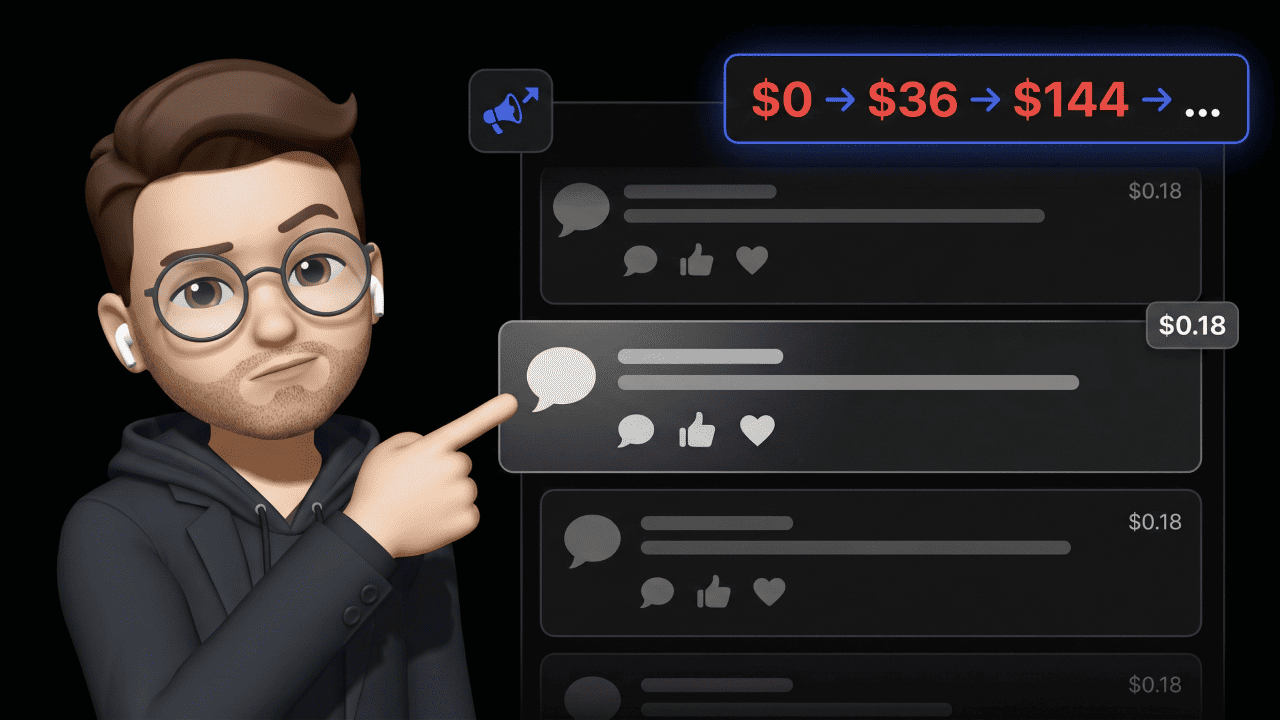
- Social media: If you reply to a comment under your Instagram or Facebook ad through Gorgias, it becomes a ticket like any other channel. With heavy ad spend and an active community, that adds up.
Go over your quota and overage fees kick in: $0.40 per ticket on Starter and Basic, $0.36 on Pro and Advanced. Sounds like loose change. With a few hundred extra tickets in a peak month, you land in three-figure territory on top.
One more detail drives the count: if a customer resurfaces on an old thread after a longer silence, Gorgias can treat it as a new ticket, per its own FAQ. One conversation then turns into two billed tickets.
A fair point in Gorgias' favor: newsletters, spam, and auto-responders get filtered out automatically. You pay nothing for those. Only what receives a real reply gets billed.
Which plan fits which shop size
Let me be direct. 50 tickets on Starter run out fast. The plan is built for testing, not for live operations. The moment you generate real revenue, you are through it in the first week. There is also a detail from the comparison table: Starter is capped at three user seats.
The Basic plan with 300 tickets fits smaller shops with under 500 orders a month and a manageable range. Do the math anyway. 300 tickets on 500 orders means a maximum of 60% of your customers can contact support before overage kicks in. For products that need explaining, like supplements or electronics, that gets tight. During peak season the buffer thins out fast.
The Pro plan at $360 for 2,000 tickets is where most growing shops land. It fits well between 1,000 and 5,000 orders a month. You get revenue tracking, better reporting, and enough headroom not to watch the quota nervously on every ticket.
The Advanced plan at $900 for 5,000 tickets is for shops with real volume, multiple channels, and larger teams.
Enterprise runs on custom pricing. Here you negotiate volume, terms, and implementation individually. Plan for the fact that dedicated onboarding and migration can come as a separate line item. Gorgias does not name a figure for it, so ask about it explicitly in the sales call.
A thought for the DACH region: from our experience, German-speaking customers tend to have a higher contact rate. More questions, more returns, higher expectations on speed. So budget your volume on the generous side.
The AI costs: where the bill gets interesting
Gorgias pushes its AI Agent hard. Automated replies, intent detection, self-service. The tool is good. It just costs extra, and on a model worth understanding.
The AI is billed on outcomes. Every interaction the AI Agent fully resolves without a human costs $1.00 on a monthly contract or $0.90 on an annual contract. And here is the part Gorgias spells out in its own pricing FAQ: each AI resolution also counts as a helpdesk ticket. In other words: for an AI-resolved ticket you pay twice, once for the resolution, once for the ticket.
One important nuance, also from the Gorgias FAQ: if the customer ends up talking to a human agent within 72 hours, the case is billed only as a helpdesk ticket, not additionally as a resolution. So the double charge hits the cleanly automated cases.
Then there is a second tier. Beyond your included AI allowance, each additional interaction costs $1.50. That is the line item almost nobody has on their radar.
A rough calculation for the Pro plan:
- $360 base price for 2,000 tickets
- 300 AI resolutions a month, roughly $270 to $300 extra
- plus possible ticket overages in the peak
You are quickly at $700 or more a month. A different ballgame than the $360 on the pricing page. This is not hidden fine print, Gorgias communicates it. It just is not in large letters on the homepage. My tip: get a sample calculation for your realistic volume in the sales call, including the expected resolutions. Not the best case, the normal month. How AI resolutions get priced and controlled in support is the central cost question for 2026 anyway.
What DACH shops should also weigh
Three points that often go missing in the standard pricing debate, but matter for you as a DACH operator.
First, the seats. Gorgias advertises "unlimited users" in the header. The comparison table, however, names concrete limits: three seats on Starter, 500 from Basic up. For most shops, 500 is effectively unlimited. But if you start on Starter with a small team, the three is a real ceiling.
Second, Voice and SMS. Email, live chat, Instagram, Facebook, TikTok, and WhatsApp are included in the plans. Phone and SMS run as add-ons and are billed separately per ticket, tiered by volume. If phone matters for your support, budget it on top.
Third, and this is a fair plus point: data protection. Gorgias offers EU hosting via Google Cloud and states it is GDPR-compliant. For many DACH merchants that is exactly the knockout criterion with US tools. Here Gorgias can deliver.
Where Gorgias gets weaker for the DACH market is the depth of integration beyond Shopify. The tool is at home in the Shopify world. If you work with JTL, Xentral, or Shopware, the integration thins out. And that is exactly where DACH teams spend a large part of their day.
What an e-commerce operator actually wants from a tool
Let us step back. What do you actually want from a helpdesk?
You want the same questions to disappear. "Where is my order?", returns, invoices. Depending on the shop, these routine questions make up a large share of ticket volume. You want the AI to act, not just write text. Cancel an order, change an address, trigger a return, straight inside the shop and ERP system. You want one inbox where email, WhatsApp, Instagram, and live chat come together, instead of playing Tetris across three inboxes. And you want costs that stay predictable as you grow.
Gorgias covers a lot of that, especially inside the Shopify context and for reactive support. On genuine workflow execution across several DACH systems, and on a predictable cost structure, it gets thinner for merchants here.
These are exactly the gaps we built armincx for, our AI support suite for e-commerce. AI-first, with a workflow engine that executes real actions instead of just inserting text snippets, with native connections to Shopify, JTL, Xentral, and Shopware, and with German-speaking support. We deliberately name no prices here, because that depends on your specific setup. What that looks like for your shop is best worked out in a conversation. Anyone thinking about support and marketing together combines this with WhatsApp marketing into one retention stack, instead of running two siloed tools.
Frequently asked questions about Gorgias pricing
How much does Gorgias cost per month?
Gorgias starts at $10 a month (Starter, 50 tickets) and runs through Basic ($60), Pro ($360), to Advanced ($900, 5,000 tickets). Enterprise is custom-priced. Real costs are usually higher because AI resolutions and ticket overages get added on top.
Is there a free Gorgias plan?
No. There is no permanently free plan. Gorgias offers a 7-day free trial with access to all features, and without entering payment details. After that, a paid plan is required.
How much does the Gorgias AI Agent cost?
Each fully automated resolution costs $1.00 on a monthly contract or $0.90 on an annual contract. Per the Gorgias FAQ, each AI resolution also counts as a helpdesk ticket. Interactions beyond your included AI allowance cost $1.50 each.
How high are Gorgias overage fees?
Additional tickets beyond your plan quota cost $0.40 on Starter and Basic, $0.36 on Pro and Advanced, and $0.32 on Enterprise. In peak months with hundreds of extra tickets, that adds up to three-figure amounts.
Does Gorgias bill in euros?
No. Gorgias bills exclusively in US dollars. DACH merchants should factor in exchange-rate movement and a typical 1 to 2% foreign-currency card fee. Depending on your billing address, US sales tax can apply on top.
Do I pay per agent with Gorgias?
No. Gorgias bills by ticket volume, not per seat. You can add more agents without raising the base price. Note the seat limits from the comparison table, though: three seats on Starter, 500 from Basic up.
Do spam messages count as billable tickets?
No. Gorgias automatically filters out newsletters, spam, and auto-responders. Only tickets that receive a real reply from a team member, a rule, or the AI Agent get billed. A single ticket counts once, regardless of how many replies it contains.
Can I cancel Gorgias monthly?
Yes. On monthly billing you can cancel at the end of any billing period, directly via Settings and Billing in the dashboard. Annual contracts are billed upfront for the full 12 months, in exchange for roughly 16% off.
Is Gorgias GDPR-compliant?
Yes. Gorgias states it is GDPR-compliant and offers EU hosting via Google Cloud. For DACH merchants that matters, because your data can sit in the EU. Still, check the details and the data processing agreement for your specific use case.
Is Gorgias worth it for DACH shops?
It depends. For Shopify shops with reactive support and larger teams, Gorgias is strong, because the Shopify integration runs deep and seats cost nothing extra. For deep JTL or Xentral integration, genuine workflow execution, and predictable costs, a comparison with DACH-native tools is worth it.
Conclusion: is Gorgias worth the money?
Short answer: yes, if you know the real bill.
Gorgias is a strong Shopify helpdesk. The integration sits well, the features are solid, and the ticket model is fairer for teams with many agents than seat-based pricing. But anyone who books the Pro plan thinking $360 is the whole story is budgeting wrong. The variables are the AI resolutions with their double billing, the ticket overages in the peak, and the USD billing.
My take in three points:
- Size your ticket volume on the peak, not the average.
- Have the AI costs broken down concretely before you sign.
- Check whether the integration with your DACH system runs deep enough.
And think beyond the pure helpdesk. A tool that resolves tickets is one half. The other is keeping inquiries from arising in the first place and turning buyers into repeat customers. What a DACH-ready support stack with genuine workflow execution looks like, we are happy to show you on a concrete example.