
ChatGPT can write you an email. Draft a poem. Explain photosynthesis. But it can't create a HIPAA-compliant entry in an electronic health record. It can't review a lease agreement under local tenancy law. It can't run real-time fraud detection across millions of financial transactions.
That's where Vertical AI Agents come in.
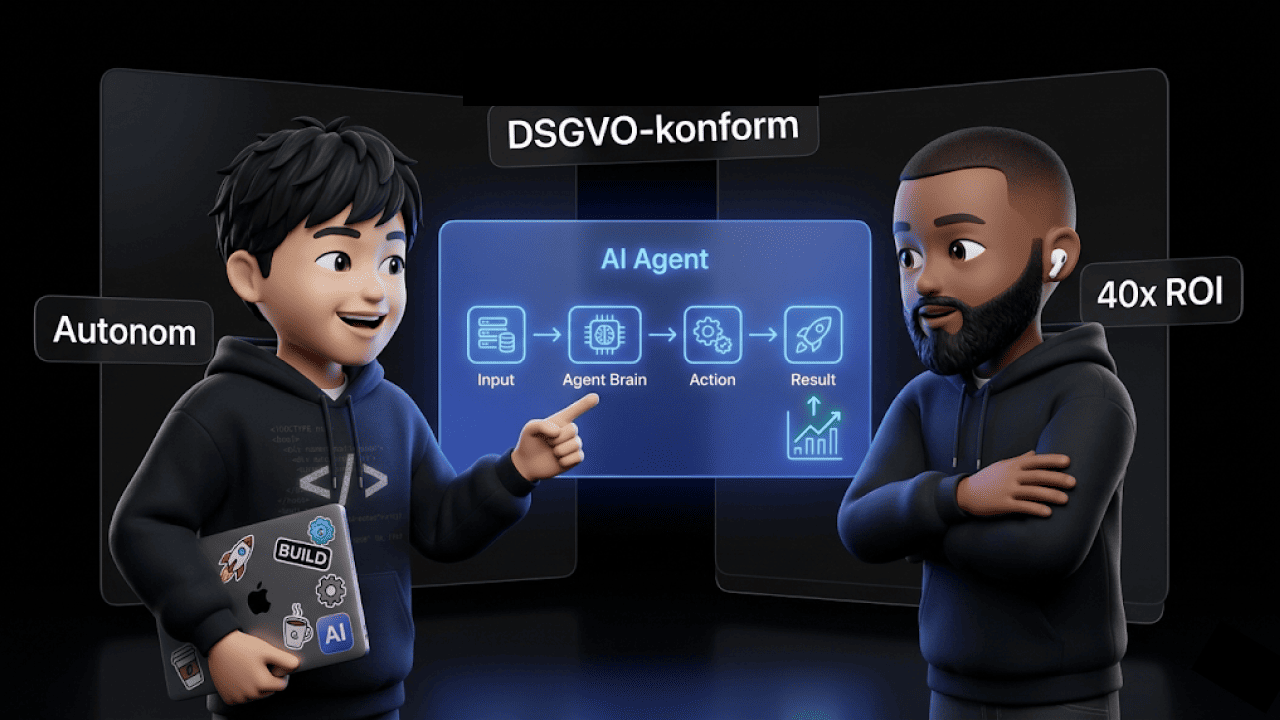
Vertical AI Agents are highly specialized, industry-specific AI systems. Not trained on "a little bit of everything", but on the domain data, workflows, and compliance requirements of a single industry — healthcare, legal, finance, or e-commerce. They know the terminology. The processes. The regulatory boundaries. And they execute tasks autonomously instead of just generating answers.
This isn't a future scenario. According to Deloitte, 25% of companies using Generative AI are already launching agentic AI pilot projects in 2025. And a Google Cloud study shows that 74% of executives achieve a positive ROI within the first year of deploying AI Agents. The shift isn't coming. It's here.
For e-commerce businesses, this gets very real: Vertical AI Agents don't answer FAQs. They manage return processes, qualify leads, and automate reorders — directly inside messaging channels like WhatsApp.
This article breaks down how Vertical AI Agents work technically, where they're already running in production, and why they're putting the traditional SaaS model under serious pressure.
Vertical vs. Horizontal AI: The Cardiologist and the General Practitioner
The difference is best explained with a metaphor: A Horizontal AI Agent is a general practitioner. A Vertical AI Agent is a heart surgeon performing an operation for the 500th time.
The GP knows a little about a lot. They assess common symptoms, write referrals, give general advice. But for a complex heart valve defect, they send you to the specialist. Depth beats breadth when it counts.
| Feature | Horizontal AI (e.g. ChatGPT) | Vertical AI Agent |
|---|---|---|
| Training data | General knowledge, broad corpus | Industry-specific domain data |
| Terminology | Surface-level | Deep, regulatory-compliant |
| Workflow integration | Generic API connections | Embedded in industry software |
| Compliance | Not industry-compliant | GDPR, HIPAA, SOX — depending on sector |
| Output | Text, summaries, ideas | Autonomous process execution |
For e-commerce, that means: A generic chatbot answers questions. A Vertical AI Agent detects from a WhatsApp message that a customer wants to file a return, checks the order status in the ERP, initiates the return, and sends the shipping label. No human involved.
The Technical DNA: RAG, Vector Databases, Fine-Tuning, and Human-in-the-Loop
Vertical AI Agents aren't rebranded chatbots. Their architecture is fundamentally different. Five building blocks make the difference:
1. RAG (Retrieval-Augmented Generation) and Vector Databases
The LLM doesn't just rely on its training data. It pulls real-time information from industry databases, CRM systems, or product catalogs. The technical foundation: Vector databases (Vector DBs). They act as the AI's long-term memory — unstructured enterprise data like product descriptions, support histories, or contract texts are converted into mathematical vectors and stored for real-time, context-aware retrieval.
A Vertical AI Agent in e-commerce knows the current inventory levels, open orders, and individual customer histories. Not the state from six months ago.
2. Fine-Tuning on Industry Data
Generic LLMs speak "internet average." Vertical AI Agents are fine-tuned on industry-specific vocabulary and decision patterns. In legal, the model knows the difference between a cease-and-desist letter and a preliminary injunction after fine-tuning — and when each one applies.
3. Secure API Integrations
Vertical AI Agents don't operate in isolation. They connect directly to a company's core systems through secure APIs and webhooks — ERP, CRM, inventory management, or industry-specific software. In healthcare, that means integration via HL7 FHIR into electronic health records. In e-commerce: direct access to Shopify, Magento, or SAP.
4. Human-in-the-Loop (HITL)
No responsible Vertical AI Agent makes critical decisions alone. The AI prepares, but a human gives final approval when the stakes are high. Return worth over $500? Escalation to an employee. Medical diagnosis? The physician decides, not the AI.
This isn't just best practice — the EU AI Act mandates human oversight for high-risk AI systems. HITL isn't a nice-to-have. It's a legal requirement. Anyone deploying Vertical AI Agents in regulated environments needs to build this into the architecture from day one.
5. Enterprise Security as a Baseline
Industry-specific AI handles sensitive data — customer records, financial transactions, health information. That's why enterprise-grade Vertical AI Agents must meet the strictest security standards: SOC 2 Type II, ISO 27001, or HIPAA (healthcare). Isolated data environments, encrypted communication, and strict access controls aren't optional in B2B. They're table stakes.
Top Use Cases: Vertical AI Agents in Production
Vertical AI Agents aren't a concept from a pitch deck. They're running in production — in industries where mistakes are expensive and compliance is mandatory.
Legal: Contract Review in Seconds, Not Hours
Spellbook works directly inside Microsoft Word, reviewing contracts for risks, missing clauses, and regulatory gaps. Harvey AI helps law firms with deep legal research — searching case databases that would cost a junior associate weeks.
Healthcare: AI as a Medical Scribe
Suki and Abridge listen to physician-patient conversations and automatically create HIPAA-compliant entries in the electronic health record. Directly in systems like Epic or Cerner. Doctors document less. Treat more.
Finance: Real-Time Fraud Detection
Feedzai monitors millions of transactions and identifies fraud attempts in milliseconds. KYC agents autonomously verify identity documents, reducing manual review time by up to 80%.
Real Estate: Tenant Communication on Autopilot
EliseAI answers tenant inquiries, books property tours, and coordinates maintenance requests. Autonomously, around the clock, directly via SMS or chat.
E-Commerce: From Support Tickets to Autonomous Process Control
This is where it gets concrete for online retailers. Vertical AI Agents in e-commerce don't just answer questions — they solve problems: returns processing, reorders, shipping status updates, upselling based on purchase history.
The numbers back it up: According to McKinsey, generative AI in customer service increases resolution rates by 14% and reduces handling times by 9%. And those are averages for generic AI. Industry-trained agents perform well above that.
The cost comparison is even more striking. According to the Presta Report, human call center agents cost between $25 and $40 per hour. Voice AI Agents handle conversations for 10 to 50 cents per interaction — a saving of 60 to 80%. That's not an optimization project. That's a different business model.
More and more of these agents run directly on WhatsApp and messaging channels — because that's where customers already are. No portal login, no ticket system. One message, one outcome.
From Solo Players to Multi-Agent Systems (MAS)
A single Vertical AI Agent is powerful. Multiple specialized agents working together are a force multiplier.
Multi-Agent Systems (MAS) are the next evolution. Instead of one agent handling everything alone, each agent takes on a clearly defined role:
- Agent 1 retrieves customer data and order history
- Agent 2 drafts the response in the right tone and language
- Agent 3 checks compliance and approves the message
The principle: Division of labor. Just like in a human team, where the customer rep doesn't also run accounting and manage the warehouse.
For e-commerce businesses with complex workflows — multiple markets, different languages, varying return policies per region — MAS is the logical next step. A single agent hits limits. An orchestrated team of specialists doesn't.
Why Vertical AI Is Putting the Traditional SaaS Model Under Pressure
Traditional SaaS works on a simple premise: You buy a tool, a human operates it. A CRM stores customer data — but a human qualifies the leads. A helpdesk manages tickets — but a human answers them.
Vertical AI Agents break this model. They don't deliver tools. They deliver outcomes.
| Dimension | Traditional SaaS | Vertical AI Agent |
|---|---|---|
| Delivers | Tool / interface | Result / outcome |
| Requires | Humans to operate | Only oversight for edge cases |
| Pricing model | Per seat / per month | Per action / per outcome |
| Scaling | More users = more cost | More volume ≠ linearly more cost |
The top investors see it the same way. Y Combinator and Bessemer Venture Partners predict the Vertical AI market could become 10x larger than the traditional SaaS market. The logic: Vertical AI doesn't replace $50/month software subscriptions. It replaces labor costs — and that's a fundamentally larger market.
The development costs are more manageable than many expect. According to Riseup Labs, building custom Vertical AI Agents costs between $10,000 and $300,000 — depending on complexity, integration depth, and regulatory requirements. Sounds like a lot? Automate a workflow that previously tied up three full-time positions and you're in the black within months.
For e-commerce businesses, the question isn't whether Vertical AI Agents will change customer service. The question is whether you'll be the one deploying them — or competing against them.
Frequently Asked Questions (FAQ) About Vertical AI Agents
What are Vertical AI Agents?
Vertical AI Agents are highly specialized AI systems built for a single industry that execute processes autonomously and deeply understand industry-specific rules and terminology.
What is the difference between Vertical and Horizontal AI?
Horizontal AI solves generic tasks across industries (e.g. writing text), while Vertical AI uses deep, industry-specific expertise to autonomously handle complex niche processes.
Will Vertical AI Agents replace traditional SaaS?
Yes, experts predict that Vertical AI will displace traditional SaaS, as companies no longer pay for tools alone but for autonomous work outcomes and reduced labor costs.
How do Vertical AI Agents work technically?
The technical foundation typically combines Large Language Models (LLMs), Retrieval-Augmented Generation (RAG) for real-time data access, and deep fine-tuning on industry data.
What does Human-in-the-Loop (HITL) mean for AI agents?
For critical or high-risk decisions, the AI prepares the process, but a human (Human-in-the-Loop) makes the final approval for quality assurance and legal compliance.
Which industries benefit most from Vertical AI?
Highly regulated and data-intensive sectors such as healthcare, finance, legal, real estate, and e-commerce benefit the most from industry-specific AI agents.
Are Vertical AI Agents GDPR-compliant?
Yes, professional Vertical AI Agents can be operated fully GDPR-compliant through isolated data environments, strict access controls, and European hosting.
What is the ROI of Vertical AI Agents?
By automating highly labor-intensive processes, Vertical AI Agents often pay for themselves within months through massive scaling effects and cost savings.
What are Multi-Agent Systems (MAS)?
In Multi-Agent Systems, multiple highly specialized AI agents collaborate to fully automate complex workflows and cross-departmental processes.
How can e-commerce businesses use Vertical AI?
E-commerce brands deploy AI agents to autonomously handle returns, lead qualification, reorders, and personalized support via messengers like WhatsApp.
How much do Vertical AI Agents cost?
Building custom enterprise AI agents typically costs between $10,000 and $300,000, with the investment often paying for itself within the first year through massive operational savings.
How do Vertical AI Agents integrate with existing systems?
They connect via secure APIs and webhooks directly to core enterprise systems like ERP, CRM, or industry-specific software such as electronic health records.
What is the difference between a chatbot and an AI agent?
A chatbot reactively responds to inputs with text answers, while an AI agent autonomously plans, makes decisions, and independently executes multi-step actions in software systems.
What is Agentic AI?
Agentic AI describes advanced AI systems that don't just assist but autonomously complete complex workflows without human intervention in a goal-directed manner.
How do AI agents store company-specific knowledge?
Specialized agents use vector databases as long-term memory, storing unstructured enterprise data for fast, context-aware retrieval in real time.
Do Vertical AI Agents meet enterprise security standards?
Yes, professional Vertical AI systems are hosted in isolated cloud environments and meet the strictest compliance standards such as SOC 2 Type II, ISO 27001, GDPR, or HIPAA.
Conclusion: Vertical AI Agents Are Not Science Fiction
Vertical AI Agents are running in production. In law firms. In hospitals. In banks. In e-commerce, they're at the start of a wave that will transform the entire customer lifecycle — from first contact through purchase to returns.
The key point: Vertical AI Agents need to operate where the customers are. Increasingly, that's WhatsApp and messaging channels. Deploying AI agents directly in the messenger eliminates media breaks, accelerates processes, and creates a customer experience that traditional ticket systems simply can't match.
Chatarmin builds exactly that infrastructure: AI agents that work directly inside WhatsApp — industry-specific, GDPR-compliant, and with Human-in-the-Loop for the cases where a human needs to decide.
👉 Learn more about Chatarmin's AI Agents or book a demo to see how Vertical AI Agents work in your e-commerce setup.