
87% market share. That's how dominant ChatGPT was in the AI chatbot segment at the start of 2025. One year later? Between 64 and 68% (Sources: Statcounter, Similarweb — January 2026). Google Gemini quadrupled from 5.4% to over 18% in the same period. On mobile, ChatGPT's share dropped to 45.3% according to Fortune/Apptopia.
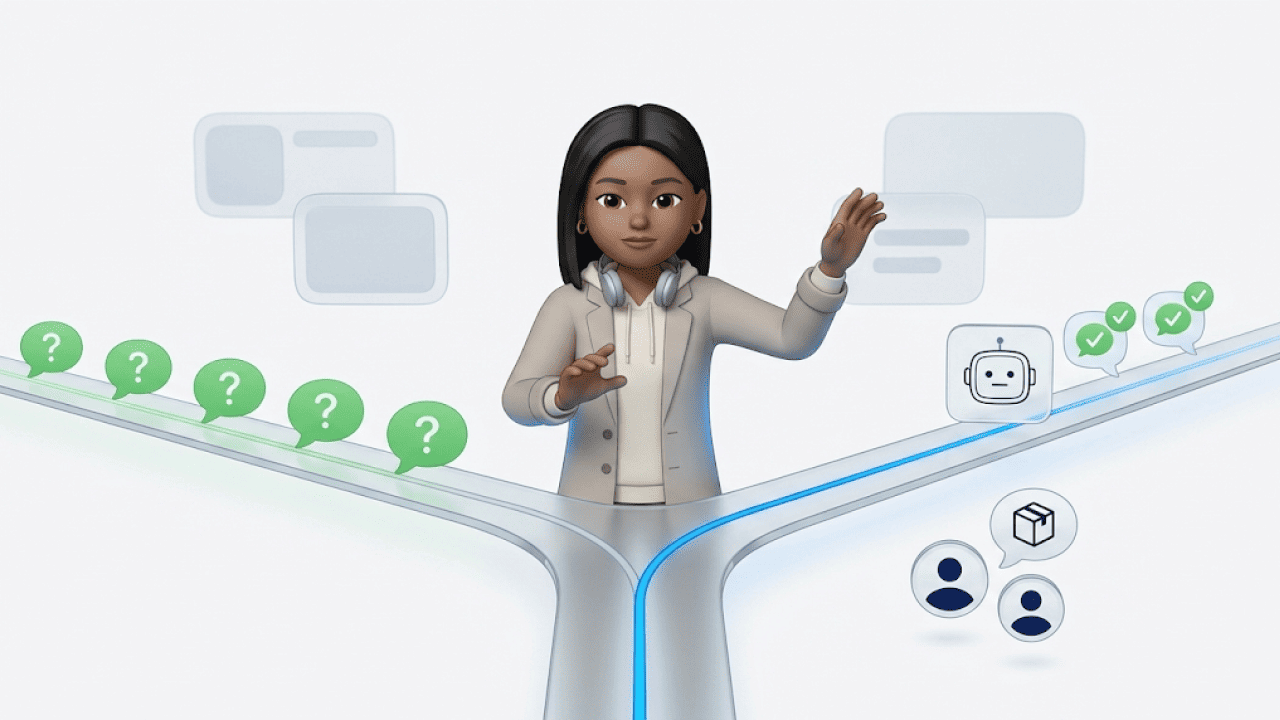
The AI monoculture is dead. If you're searching for the "Ultimate AI Alternative" in 2026, you mean one of two things: a better AI model than ChatGPT — or an alternative to the CX tool Ultimate AI, which Zendesk acquired in March 2024. This article covers both. No fluff. Numbers you can verify. And an honest breakdown of which solution fits whom.
TL;DR: The Ultimate AI Alternatives 2026
- GPT-5.4 leads in Computer Use (75% OSWorld — above human level), Claude 4.6 Opus dominates coding (80.8% SWE-bench) and text quality.
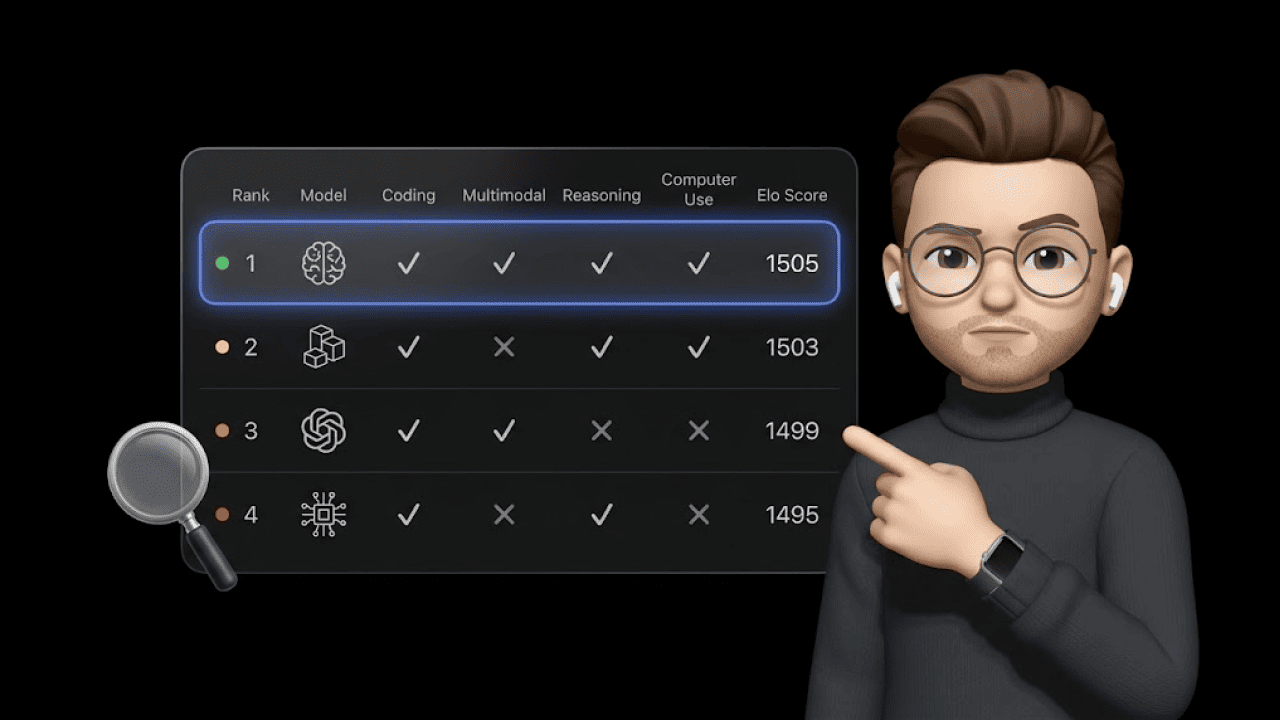
- In the LMSYS Chatbot Arena, Gemini 3.1 Pro (1,503 Elo) and Claude 4.6 Opus (1,505 Elo) lead the field — ahead of every GPT model.
- The global AI chatbot market grows to an estimated $10–11.5B in 2026 (CAGR ~23%). There's no longer "one tool" — there are specialized models for every use case.
- Ultimate AI no longer exists as a standalone product. After the Zendesk acquisition, e-commerce teams complain about per-seat pricing, missing European integrations, and vendor lock-in.
- armincx is the AI customer service alternative for e-commerce in Europe: native Shopify/Klaviyo integration, 100% EU hosting, automated intent routing — no per-seat billing.
| Model | Focus | Benchmark Highlight | Context Window |
|---|---|---|---|
| Claude 4.6 Opus | Coding, text quality, logic | 80.8% SWE-bench, 1,505 Elo (Arena) | 1M tokens |
| Gemini 3.1 Pro | Multimodal, Google ecosystem | 77.1% ARC-AGI-2, 1,503 Elo (Arena) | 1–2M tokens |
| GPT-5.4 | Computer Use, professional work | 75% OSWorld, 83% GDPval | ~1M tokens |
| DeepSeek V3.2 | Open-source, mathematics | 96% AIME, Gold IMO 2025 | 128K+ |
The Ultimate AI Models of 2026: Why ChatGPT Alone No Longer Cuts It
Four models you need to know in 2026 — each with a clear strength profile. No single model wins everywhere. That's exactly the point. Plus Okara AI as a privacy-first edge case.
Claude 4.6 Opus: Coding Champion and Text Perfectionist
Claude 4.6 Opus from Anthropic leads the 2026 benchmarks for software engineering: 80.8% on SWE-bench — the model solves real GitHub issues at a level no other frontier model matches (Source: OpenAI/Anthropic benchmark comparison). In the LMSYS Chatbot Arena, Claude sits at 1,505 Elo, narrowly ahead of Gemini — together they've displaced every GPT model from the top.
If you work with agent tools like Cursor or Claude Code, you're almost certainly using Claude for complex refactorings in practice. The 1M-token context window lets you process entire codebases in a single prompt.
Bottom line: For high-quality text, analytical depth, and programming, Claude is the strongest ChatGPT competitor in 2026.
Gemini 3.1 Pro: The Google Ecosystem Advantage
Gemini 3.1 Pro offers the largest advertised context window on the market: 1–2M tokens. In the LMSYS Arena, it hits 1,503 Elo — practically tied with Claude. Natively multimodal: text, images, audio, and video simultaneously in one prompt.
For teams in the Google Workspace (Gmail, Docs, Sheets, Meet), Gemini is the logical partner. In abstract reasoning (77.1% ARC-AGI-2), Gemini outperforms GPT-5.4 (73.3%).
The trade-off: Gemini's strength unfolds primarily within the Google ecosystem. If you work with Microsoft or standalone tools, the advantage shrinks.
GPT-5.4: First AI Agent with Superhuman Desktop Operation
OpenAI released GPT-5.4 on March 5, 2026. The headline: 75% on the OSWorld benchmark — the first AI model to surpass human experts (72.4%) at autonomously operating desktop applications (Source: OpenAI). Add 83% on GDPval (professional work) and a context window of ~1M tokens via the API.
GPT-5.4 can analyze screenshots, fill out forms, and execute multi-step workflows in software — without a human guiding every step. For autonomous agent workflows, GPT-5.4 is the current benchmark reference.
But: Claude leads in coding (80.8% vs. ~57.7% SWE-bench Pro). And in the LMSYS Arena — the "real-time popular vote" of the AI community — GPT-5.4 ranks behind both Claude and Gemini.
DeepSeek V3.2: Open-Source Price-Performance King
DeepSeek V3.2 shows what open-source can deliver in 2026. The Speciale variant reaches 96% on the AIME benchmark (mathematics) and won Gold at the International Mathematical Olympiad 2025 (Source: arXiv/Introl). Architecture: 685B parameters (MoE), 37B active per token. Trained for roughly $5.6M — Llama 3 405B required 11x more compute.
In short: If you need frontier performance on a minimal inference budget, or you want to run AI on your own servers — DeepSeek V3.2 is the reference point.
Okara AI: Privacy Without Compromise
For B2B teams handling sensitive business data — lawyers, financial advisors, founders — there's Okara AI: over 30 open-source models in one workspace, end-to-end encryption, client-side keys, and a strict no-training-on-user-data policy. For European companies with GDPR requirements, this isn't a nice-to-have — it's table stakes.
The Context Illusion: Why 1M Tokens Isn't Really 1M Tokens
Sounds like a technical detail. It's actually critical for anyone using AI in business.
Claude, Gemini, and GPT-5.4 all advertise context windows of 1–2M tokens. That suggests you can dump unlimited documents in and get perfect results. Reality says otherwise.
Studies and hands-on testing show: error-free performance drops significantly past ~60–70% utilization. For a 1M-token window, the "Effective Capacity" — the token count a model can actually process without degradation — is closer to 600,000–700,000 tokens.
This doesn't change the fact that these models are massively more capable than anything before 2025. But it means: Plan with the Effective Capacity, not the marketing number. If you stuff 800,000 tokens in and wonder why the output is flawed, you didn't pick the wrong model — you misjudged the context window.
The Pivot: If You Google "Ultimate AI", You Might Be Looking for Something Else Entirely
Behind the search term "Ultimate AI Alternative" isn't just the hunt for a better language model. Many e-commerce teams are searching for an alternative to the CX software Ultimate AI — a Berlin-based startup that Zendesk acquired in March 2024.
Ultimate AI was founded in 2017, raised $27M in funding, and automated up to 80% of support requests for customers like Zalando, Finnair, and Lush (Sources: TechCrunch, Zendesk press release). The tool was popular because it didn't just generate text — it executed real backend actions: cancellations, returns, address changes.
What the Zendesk Acquisition Means for Your E-Commerce Team
Since the acquisition, Ultimate AI no longer exists as a standalone product. The technology was folded into Zendesk AI. Three consequences we hear about consistently in our sales calls:
Per-seat pricing instead of flexibility. Zendesk charges per agent. Advanced AI costs an extra $50/agent/month. AI resolutions are billed separately (starting at $1.50/resolution). A 10-person team pays over $1,500/month — without omnichannel add-ons.
US-market focus. Deep integrations with European e-commerce systems like Shopify-specific apps, JTL, Xentral, Billbee, or Shopware? Nonexistent. And no guaranteed EU hosting — for European brands with GDPR requirements, that's a dealbreaker.
Loss of the agile roadmap. Ultimate AI had fast release cycles. Now a US corporation sets the priorities. Features for European e-commerce keep getting pushed down the list.
The result? Since mid-2024, a growing number of e-commerce teams are actively searching for Zendesk alternatives.
armincx: The Ultimate AI Alternative for E-Commerce in Europe
Full disclosure: armincx is our product. But the reasons teams switch are structural differences — not marketing claims.
armincx is an AI-first helpdesk. Not a legacy ticketing system with AI bolted on. The AI isn't the add-on. It's the core.
Automated Workflows Instead of Text Macros
When a customer initiates a return, armincx doesn't just generate a response. The AI creates the return label, updates the order status in the shop system, and sends the confirmation — automatically, via native integrations with Shopify, Klaviyo, JTL, Xentral, and Billbee.
What Zendesk AI can't do natively: read PDFs, attachments, and damage photos. Every solution there requires custom endpoints built by external agencies. armincx processes this natively via AI image analysis: product identified, damage type classified, warranty status checked — before an agent ever sees the ticket. For the full breakdown of how armincx stacks up against Freshdesk and Zendesk, check out our detailed comparison.
Intelligent Routing Based on Intent and Sentiment
| Incoming Request | Routing | Result |
|---|---|---|
| Accident / Urgent | → Claims team (Priority 1) | No tickets stuck in the inbox |
| Standard FAQ (e.g. PIN) | → Auto-response | Zero agent effort |
| Just "Thanks" | → Auto-close | No skewed reopen rate |
The Numbers Behind It
According to the Leafworks/Zendesk webinar (Feb 18, 2026): ~5 minutes handling time per ticket net — roughly 100 tickets/agent/day. With AI enablement: +30–80% productivity (130–180 tickets/agent/day).
Across armincx customers, we measure Average Resolution Time (ART) improvements of 24–91% compared to the previous period (Source: Chatarmin customer dashboards, March 2026). One concrete case: ART reduced to 1h 58m, top agent resolving 450 tickets.
Honesty matters here: armincx isn't the right choice for every company. Global enterprises with 500+ agents and SAP integration are better off with Zendesk. For B2B support with complex SLAs, take a look at Intercom vs. Zendesk. armincx is built for e-commerce teams in Europe with 3–50 agents that want to scale — without doubling headcount proportionally.
100% EU hosting. No per-seat pricing. Done-for-you onboarding with a dedicated CSM.
If you want to go deeper on AI customer support tools, our 9-tool comparison has real pricing and honest trade-offs.
→ Compare armincx directly with Zendesk
FAQs About the Ultimate AI Alternative
What is the best Ultimate AI Alternative to ChatGPT in 2026?
It depends on your use case: Claude 4.6 Opus leads in coding and text quality (80.8% SWE-bench, 1,505 Elo), Gemini 3.1 Pro excels with deep Google Workspace integration and the largest context window, and DeepSeek V3.2 is the open-source price-performance winner with 96% on the AIME benchmark.
Which AI platform offers the strongest data privacy in 2026?
Okara AI provides 30+ open-source models with client-side encryption and a strict no-training-on-user-data policy. Alternatively, you can self-host open-source models like Llama 4 or DeepSeek — no data ever leaves your infrastructure.
What is the best Ultimate AI Alternative for e-commerce customer service?
For e-commerce teams in Europe, armincx is the strongest alternative: native Shopify and Klaviyo integration, automated returns and cancellations directly in the backend, 100% EU hosting — and no per-seat pricing like Zendesk.
Why are teams looking for alternatives to Ultimate AI (Zendesk)?
Since the Zendesk acquisition in March 2024, Ultimate AI no longer exists as a standalone product. The most common complaints: rigid per-seat pricing (over $1,500/month for a 10-person team), missing integrations with European ERP systems like JTL, Xentral, and Billbee, and no guaranteed EU hosting.
What's the difference between an AI chatbot and an AI agent?
An AI chatbot answers questions based on a knowledge base. An AI agent goes further: it autonomously executes actions — canceling orders, changing addresses, creating return labels — directly in the backend, without any human in the loop.
Who leads the LMSYS Chatbot Arena in 2026?
As of early 2026, Anthropic Claude 4.6 Opus (1,505 Elo) and Google Gemini 3.1 Pro (1,503 Elo) dominate the LMSYS Chatbot Arena. Both have displaced GPT-4 models from the top.
What does "Effective Capacity" mean for AI models?
Effective Capacity is the token count a model can actually process without errors. For models with 1M-token context windows, performance drops noticeably past ~60–70% utilization — the real capacity sits closer to 600,000–700,000 tokens.
Which AI is best for programmers?
Claude 4.6 Opus is the top choice for developers in 2026: 80.8% on SWE-bench Verified (real GitHub issues), a 1M-token context window for full codebases, and deep integration with tools like Cursor and Claude Code.
Which AI model is best for deep research?
Perplexity AI and Google NotebookLM are the strongest tools for academic and business research. Both combine real-time web search with validated inline citations — you see exactly where every claim comes from.
Can AI operate a desktop computer?
Yes. GPT-5.4 by OpenAI scores 75% on the OSWorld benchmark for autonomous "Computer Use" — surpassing human expert performance (72.4%). The model analyzes screenshots, fills out forms, and executes multi-step software workflows.
Are open-source LLMs safe for businesses?
Yes — provided you run them on your own servers or in encrypted workspaces. Models like Llama 4 or DeepSeek then operate entirely within your infrastructure. No data flows to external clouds. For European companies with GDPR requirements, this is often the safest option.
How big is the AI chatbot market in 2026?
The global market for generative AI chatbots reaches an estimated $10 to $11.5 billion in 2026 (CAGR ~23%). For comparison: in 2023, the market was still around $5 billion.