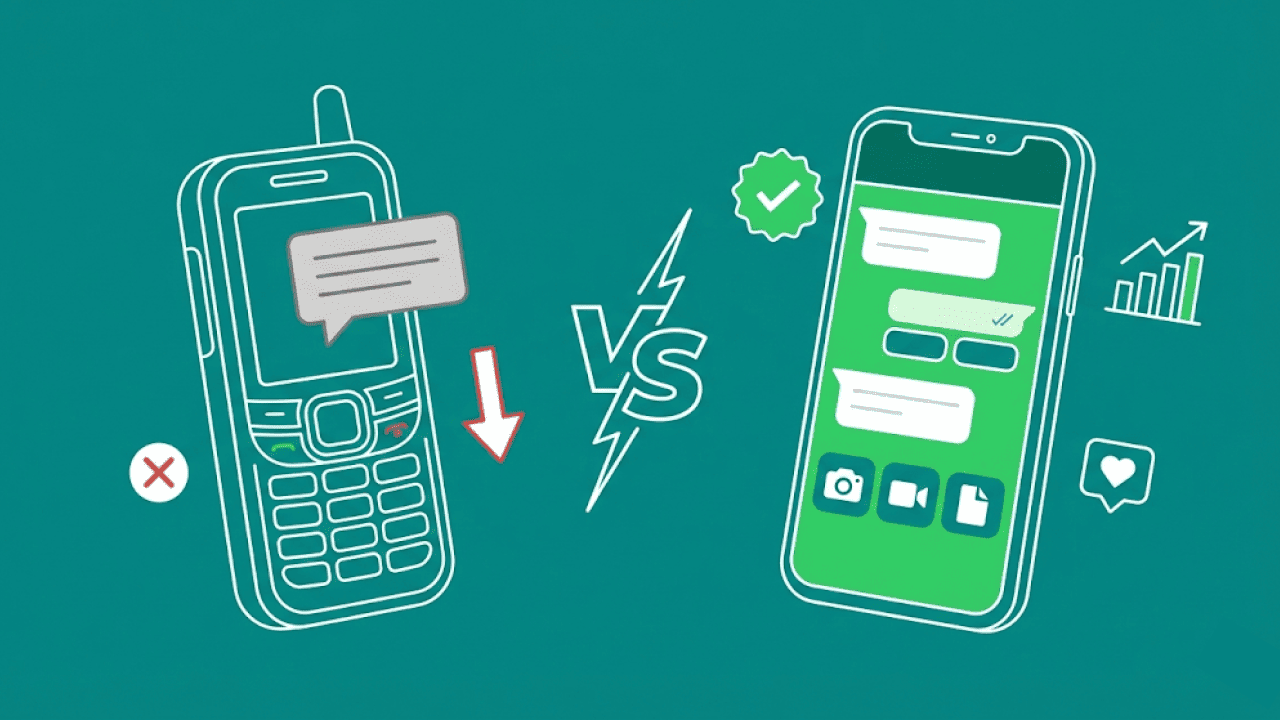

SMS works. Has for 30 years. And that's exactly the problem.
While your customers have long grown accustomed to interactive chats, images, and buttons, you're sending them 160 characters of plain text. No read receipts. No media. No way to interact.
The SMS WhatsApp API debate is no longer a matter of preference in 2026. It's about measurable differences: click-through rates of 1–6% for SMS versus 35–45% for WhatsApp. Companies like waterdrop achieve a 19.3x ROI with WhatsApp. With SMS? No channel built on 1992 technology can deliver that.
This article shows you with concrete numbers where SMS still makes sense, why WhatsApp wins in most cases – and what's really going on with RCS as a supposed competitor.
SMS vs. WhatsApp: The Technical Difference in 60 Seconds
Before we talk strategy, we need to talk technology. Because that's where the core problem lies.
SMS is based on GSM – a protocol from the 1980s. It was designed for voice transmission, not marketing. The limitations are predictable:
- 160 characters (GSM-7) or only 70 characters with emojis (UCS-2)
- No images, no videos, no PDFs
- No read receipts
- No buttons or interactive elements
- Dependent on cellular network
WhatsApp is based on IP – meaning internet. That means:
- Up to 4,096 characters per message
- Images, videos, documents, voice messages
- Read receipts (blue checkmarks)
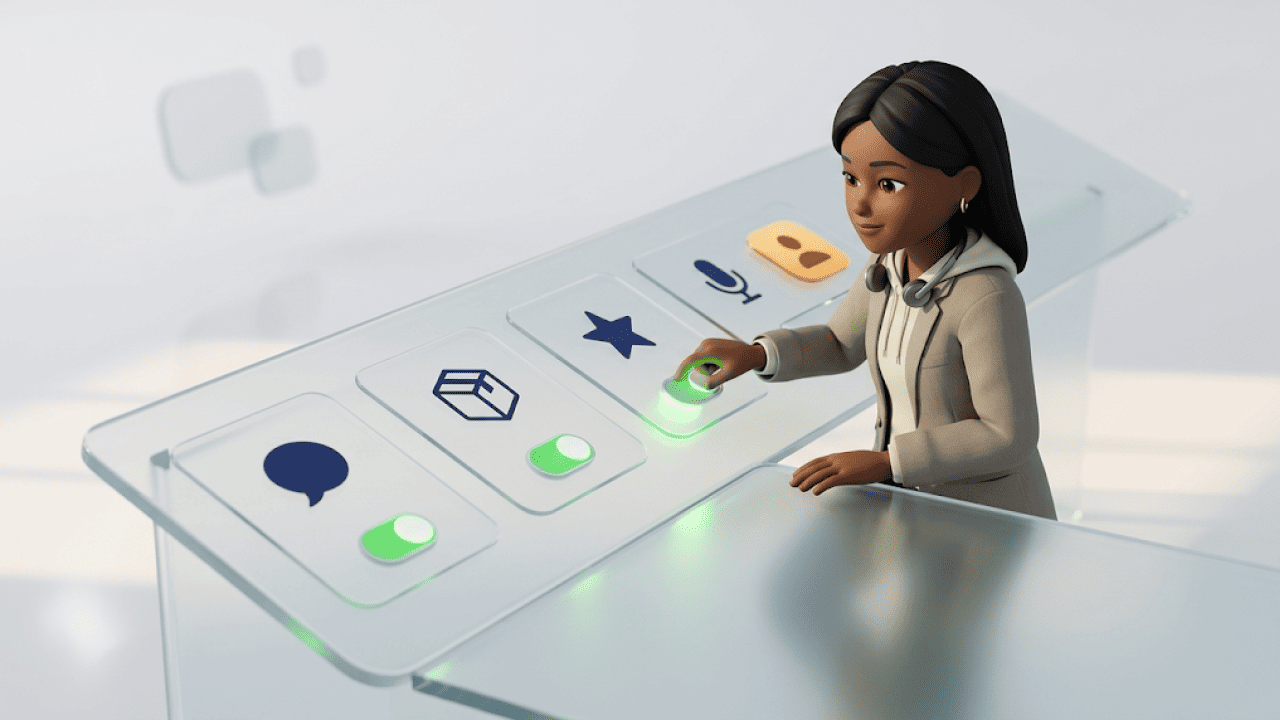
- Interactive buttons and quick replies
- End-to-end encryption
- WhatsApp Flows for forms and bookings directly in chat
The difference isn't incremental. It's a generational leap.
Comparison Table: SMS vs. WhatsApp Business API
| Criterion | SMS | WhatsApp Business API |
|---|---|---|
| Character limit | 160 (GSM-7) / 70 (UCS-2) | 4,096 |
| Media | None | Images, videos, PDFs, audio |
| Interactive elements | None | Buttons, quick replies, flows |
| Read receipts | No | Yes |
| Encryption | No | End-to-end |
| Verified sender profile | No | Yes (green checkmark) |
| Typical open rate | ~98% | ~98% |
| Typical click-through rate | 1–6% | 35–45% |
| Support replies | Every message costs | Free within 24h window |
| Pricing model | Per segment (hidden costs) | Per category (transparent) |
| Spam perception | High | Low |
| Internet required | No | Yes |
Open rates are comparable. But what happens next? With SMS, 1–6% click on a link. With WhatsApp – thanks to interactive buttons – it's 35–45%. That's not a nuance. That's a factor of 6 to 10.
But What About RCS? The Elephant in the Room
Anyone talking about SMS in 2026 also needs to talk about RCS (Rich Communication Services). Google has been pushing it for years as "SMS 2.0." And yes: RCS can do images, buttons, and read receipts – in theory.
The problem in practice:
RCS fails due to fragmentation. Android users with Google Messages? Works. iPhone users? No dice – Apple only started supporting RCS with iOS 18, and even then with limitations. The result: you reach at best a portion of your audience with rich features. The rest get fallback SMS.
WhatsApp, on the other hand, works cross-platform. iOS, Android, web – the same experience everywhere. Plus features that RCS simply doesn't have: WhatsApp Flows for complete mini-applications in chat, verified business profiles with green checkmarks, and an ecosystem with over 2 billion users.
RCS is better than SMS. But WhatsApp plays in a different league.
The 2026 Pricing Model: Why SMS Is More Expensive Than You Think
Many businesses assume SMS is cheaper. That's true – on paper. In practice, it's different.
The SMS Problem: Segments and Hidden Costs
An SMS with 160 characters costs a fixed amount. The moment you write 161 characters, you pay double. At 320 characters, triple. And if you use an emoji? Your limit shrinks to 70 characters per segment.
A "simple" promo SMS with 250 characters and an emoji can quickly cost you 4 segments. Most people don't realize this until the bill arrives.
The WhatsApp Model: Categories and the Zero-Cost Support Hack
Meta restructured the pricing model in mid-2025. Instead of flat conversation prices, there's now a category-based system:
- Marketing Templates: Most expensive category (promotions, sales)
- Utility Templates: Cheaper (shipping confirmations, updates)
- Authentication: For OTPs – now cheaper than SMS in many markets
- Service Conversations: This is where it gets interesting.
The Zero-Cost Support Advantage: As soon as a customer sends you a message, a 24-hour window opens. Within this window, you can send unlimited messages – for free. Images, videos, links, everything included.
With SMS? Every single reply costs. Whether the customer asks or you respond.
This makes WhatsApp the cheapest support channel on the market. Not despite, but because of the pricing model.
Add to that Free Entry Points: If a user comes through a Click-to-WhatsApp ad, the message window is free for 72 hours. SMS doesn't offer that.
The cost structure of the WhatsApp Business API is more complex than SMS, but also more transparent. Those who plan strategically pay less – not more.
Engagement: Why WhatsApp Converts and SMS Doesn't
Open rates are vanity metrics. What matters is conversion. And here, the numbers speak clearly.
The Hard Facts
Click-through rates compared: While CTR for SMS often languishes at a meager 1–6%, interactive WhatsApp buttons regularly achieve 35–45%. The reason: a button is one click. A link in an SMS requires copy-paste or manually tapping a URL.
Conversion through Flows: Studies show that WhatsApp Flows can increase conversion rates by up to 158% compared to traditional web forms. No media breaks, no new app, no new tab – everything happens in the chat.
Real Results from Practice
Luxusbetten24 implemented a WhatsApp Abandoned Checkout Flow:
- €157,000 in revenue
- €42 in WhatsApp costs
- 3,743x return on spend
- 14.5% conversion rate
With SMS reminders for cart abandoners? Industry standard is 1–3% conversion. The difference: WhatsApp allows direct checkout links, product images, and immediate questions in chat.
Statement Clothing during Black Week:
- €98,230 in revenue with 5 campaigns
- 6.4x ROI
- 9.1% click-through rate
SMS campaigns during Black Week? They get lost in the noise. WhatsApp messages land directly in the chat – between friends and family.
WhatsApp Flows: Mini-Apps in Chat
In 2026, WhatsApp is more than a messenger. With WhatsApp Flows, businesses can build complete applications within the chat:
- Appointment bookings
- Product configurators
- Surveys and feedback forms
- Order status inquiries
- Returns processing
All without an app download. All without visiting a website. All in chat.
Automated customer communication via WhatsApp means: the customer stays in the channel they use daily. No media breaks. No friction. And with a 158% conversion increase over web forms, a measurable advantage that SMS can never offer.
Security: Verified Profiles vs. Spam Numbers
SMS has a massive trust problem. And it's not getting better in 2026.
SMS Pumping Fraud is real: scammers generate artificially inflated traffic to defraud businesses. A common problem with SMS gateways. WhatsApp eliminates this risk through its closed ecosystem and verification requirements for business accounts.
On top of that: SMS is not encrypted. Technically, anyone on the cellular network can read along. For OTPs, this is a real security risk – keyword: SIM swapping.
WhatsApp offers:
- End-to-end encryption for all messages
- Verified business profiles with green checkmark
- Visible company name instead of anonymous number
For B2B compliance and brand trust, this isn't a nice-to-have. It's essential.
When SMS Still Makes Sense (Yes, Really)
SMS isn't dead. There are scenarios where the old channel has its place:
1. Fallback When There's No Internet In regions with poor network coverage or for critical deliveries, SMS can serve as a backup. Professional solutions offer automatic SMS fallback functions.
2. Older Audiences Without Smartphones Yes, they still exist. If your core audience is 70+ and doesn't use a smartphone, SMS remains the only option.
3. Hybrid Strategies Smart businesses use WhatsApp as their primary channel and SMS as a safety net. WhatsApp Automation enables exactly this orchestration: WhatsApp first, automatic SMS if delivery fails.
The point is: SMS becomes the exception, not the rule.
Making the Switch: Easier Than You Think
Many businesses avoid switching because they fear technical complexity. The reality: with the right partner, setup takes just a few days.
What you need:
- Meta Business Account and verified phone number
- WhatsApp Business API access through a Business Solution Provider (BSP)
- Template approval from Meta (for marketing messages)
- Opt-in from your contacts (GDPR!)
Migrating existing numbers from SMS providers to WhatsApp is possible. Even landline numbers can be registered for WhatsApp Business.
FAQ: The 10 Most Common Questions About SMS vs. WhatsApp API
Is the WhatsApp Business API cheaper than SMS?
For marketing purposes, WhatsApp is often more expensive per message, but delivers significantly better ROI through click-through rates of up to 45%. For support (free service windows) and OTPs, WhatsApp is actually cheaper than SMS in many markets.
What are WhatsApp Flows?
WhatsApp Flows are interactive mini-applications within the chat that allow users to book appointments, fill out forms, or purchase products – without leaving the app.
Is WhatsApp Business GDPR-compliant?
Yes, when using the WhatsApp Business API through a European provider like Chatarmin, data protection is ensured. A data processing agreement exists, and data processing is GDPR-compliant.
Why do my SMS newsletters often not arrive?
Mobile carriers use aggressive carrier filters to block spam. Legitimate marketing SMS often get caught in these filters. WhatsApp guarantees a delivery rate of nearly 100% when guidelines are followed.
Do I need a Business Solution Provider for the WhatsApp API?
Yes, access to the WhatsApp Business API is provided through official BSPs or software partners like Chatarmin, who provide the technical interface and user interface.
What happens if a customer has no internet?
Professional solutions offer an SMS fallback function: if a WhatsApp message cannot be delivered, it's automatically sent as SMS after a defined time period.
Are OTPs via WhatsApp secure?
Yes, WhatsApp OTPs are considered more secure than SMS. They're end-to-end encrypted, and the risk of SIM swapping or interception on the cellular network is eliminated.
What is the 24-hour service window on WhatsApp?
As soon as a customer sends a message, a 24-hour window opens. During this time, the business can reply with any messages for free – including images, videos, and links.
Can I use my existing landline number for WhatsApp?
Yes, the WhatsApp Business API can often be registered to existing landline or service numbers. Customers can use the same number for calls and WhatsApp.
Is switching from SMS to WhatsApp worth it for marketing?
The data clearly says yes: through rich media, interactivity, and trustworthy branding, businesses achieve significantly higher revenue per message sent with WhatsApp than with SMS. Case studies show ROIs from 6x to over 3,000x.
Conclusion: 2026 Is the Year to Switch
The SMS vs. WhatsApp API decision isn't a matter of faith. The numbers speak for themselves:
- waterdrop: 19.3x ROI, 78.8% open rate
- Luxusbetten24: 3,743x return on spend, €157K revenue
- Statement: 6.4x ROI, €98K revenue in one week
These aren't outliers. This is the new standard for businesses that use WhatsApp strategically.
SMS won't disappear. But it's becoming a niche channel – for emergencies, fallbacks, and audiences without smartphones. For everyone else: switching to the WhatsApp Business API is no longer an experiment. It's overdue.
Want to know what WhatsApp can do for your business?
We'll calculate your individual business case – with real numbers instead of marketing promises.