DSGVO-konform
5-Min-Setup
ISO 27001
Intercom is built for product engagement and SaaS support. For e-commerce it lacks depth: no AI actions in the shop, overloaded inbox, slow load times. armincx solves exactly these problems. Chatarmin itself internally switched from Intercom to armincx.


































Quick check for decision makers
From SaaS helpdesk to AI customer service for e-commerce
Intercom inserts text snippets. armincx executes real actions: cancellations, returns, address changes directly in your shop.
In Intercom your agent reads the inquiry, switches to Shopify (page reloads), searches the order, clicks cancel and switches back. In armincx the AI recognizes the cancellation request, checks the status and executes the cancellation in Shopify, JTL or Xentral directly. Your agent does not need to intervene.
Intercom charges per seat. armincx works with flat-rate. Your team can grow without costs exploding.
With Intercom you pay per agent seat. Temporary Q4 agents drive costs further. With armincx you pay a flat rate with variable AI credits. You can add agents freely. For most e-commerce teams the total cost with armincx is lower.
Intercom is built for SaaS. armincx was built for e-commerce: native Shopify, Shopware, JTL, Xentral and Billbee integration.
armincx integrates directly with DACH-specific ERPs and shop systems. In multi-system setups (Shopify + JTL + DHL), armincx connects all systems in a structured inbox. Intercom shows customer data but has no deep e-commerce integration. JTL, Xentral or Billbee? No connectivity.
Chatarmin itself internally switched from Intercom to armincx. The reason: Intercom is a strong product for SaaS companies and product engagement. For e-commerce customer service it hits limits that become noticeable in daily work.
The three most common reasons for switching:
Intercom can insert text snippets into replies. Your agent still has to manually cancel in Shopify, change the address in JTL or pull the invoice from the ERP.
armincx goes one step further. The AI recognizes the intent of the customer inquiry and executes the action directly:
Intercom charges per seat. The more agents you need, the more expensive it gets. Temporary staff for Q4? Extra cost.
armincx works with a flat-rate model. No per-agent seat costs and no per-ticket costs. Your team can grow, you can add temporary agents for peaks, and costs stay predictable.
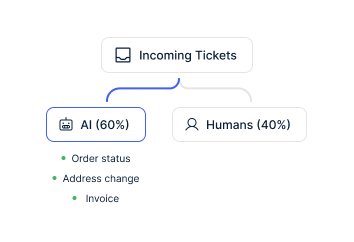
The armincx AI answers WISMO inquiries, invoice requests and standard questions automatically. Your team focuses on complex cases.

Flat-rate instead of seat costs. 5 to 15x cheaper per handled ticket than manual processing.

Native connectivity to Shopify, Shopware, JTL, Xentral and Billbee. AI accesses orders, tracking and invoices directly.
The switch from Intercom to armincx makes sense for e-commerce teams with 200+ tickets per month and a shop system. Three typical profiles:
The switch does not have to happen all at once. Many teams start step by step: first route WhatsApp inquiries as Intercom tickets, test armincx in parallel, and after 4-8 weeks complete the full migration.
The typical Intercom problem: all channels in one mailbox. Emails, chat, Instagram, Facebook. On top of that come internal messages, automatic notifications and spam. Your team scrolls through hundreds of entries to find the ten real customer inquiries.
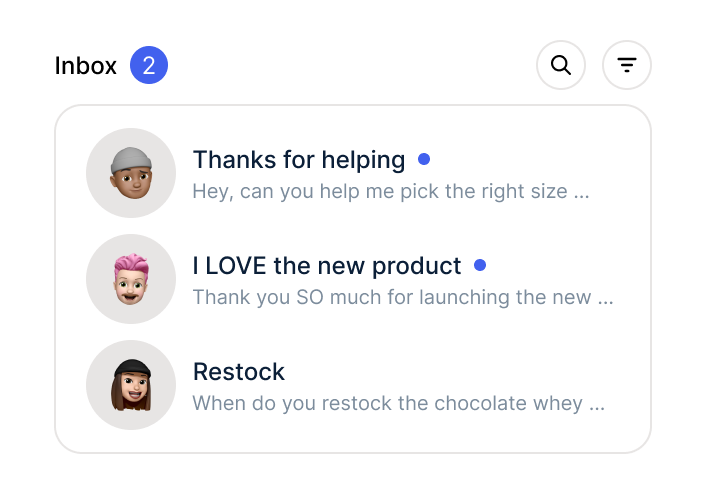
armincx solves this with a structured omnichannel inbox. The AI automatically pre-sorts incoming messages: real customer inquiries are prioritized, spam is filtered, and cross-channel duplicates are detected. When a customer writes an email first and then an Instagram DM, armincx recognizes it is the same customer and shows both messages in one profile.
"Having everything in one place. Emails, Slack, Intercom. And seeing what was communicated. With armincx I have everything in one."
On top of that, WhatsApp as a full channel. armincx offers WhatsApp marketing and WhatsApp support in one system. In Intercom, WhatsApp is a limited support channel without marketing features.

Disclaimer: All data conducted from over 50+ Sales Calls with DACH Ecom Owners
Meta costs for WhatsApp messages are 11 cents per marketing message in Germany and around 5 cents in Austria and Switzerland (as of 2026). Service messages within the 24-hour window are free. WhatsApp generates 2 to 3x higher revenue per recipient than email. After deducting the Meta fee, you retain 139% higher net margin than via email.
armincx software pricing is not publicly communicated. In a demo we calculate your individual business case together: current Intercom costs versus armincx flat rate. 5 to 15x cheaper per handled ticket than manual processing.
Your existing Intercom knowledge base, macros and FAQ texts are imported by the Chatarmin team as a Q&A base for the armincx AI. The AI learns from your existing response patterns and can draw on your built-up knowledge from day one.
Ticket history from Intercom is not directly importable. The relevant customer history (orders, returns, communication) remains in your shop system and ERP. armincx accesses this data directly.
The switch works in stages: you first route new channels to armincx, test the AI automation in parallel and then gradually migrate all channels.
What leading E-Commerce brands from the DACH region say about armincx
Florian Walz
snusHERO

“Chatarmin is the best marketing tool of 2025! Chatarmin has made it possible to scale customer access via WhatsApp.”
Christian Fenner
nucao

“In terms of value for money, Chatarmin is the best we could find on the market.”
Niels Timmermans
Fatbikeskopen

“I think it's a no-brainer for everyone in the e-commerce space to join Chatarmin.”
snusHERO
“Chatarmin is the best marketing tool of 2025! Chatarmin has made it possible to scale customer access via WhatsApp.”
nucao
“In terms of value for money, Chatarmin is the best we could find on the market.”
Fatbikeskopen
“I think it's a no-brainer for everyone in the e-commerce space to join Chatarmin.”

Create your armincx account and connect your shop system.
Redirect channels, import knowledge base and structure your inbox.
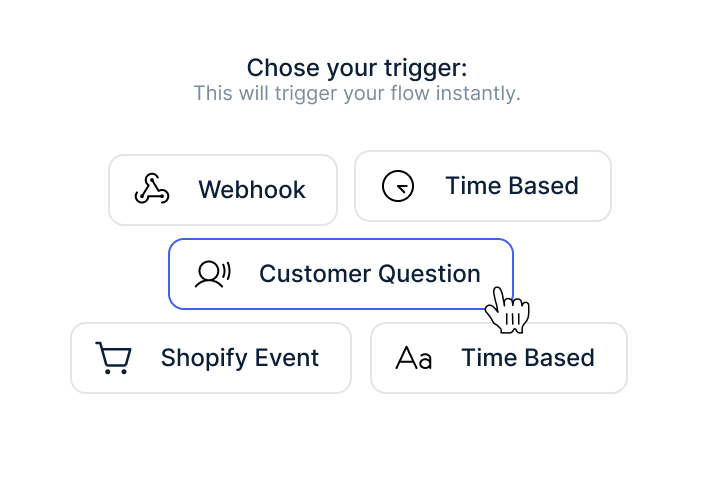
Configure AI workflows and launch your first automated responses.
Create your armincx account and connect your shop system.
Redirect channels, import knowledge base and structure your inbox.
Configure AI workflows and launch your first automated responses.
Onboarding for the Intercom migration runs in four steps:
The entire onboarding is guided personally by the Chatarmin team, in German. No external implementation partner. First automated responses go live within days. The full automation rate of 40-60% is reached within the first weeks, with 70-80% realistic long-term.
armincx hosts all data on servers in Germany. The AI processes customer data exclusively on EU infrastructure. A data processing agreement (DPA) is standard. The WhatsApp Business API runs GDPR-compliant via the official Meta Cloud API.
Data is not used for training purposes. Data separation between armincx and your shop systems is technically guaranteed.
Everything you need to know about switching from Intercom to armincx.
Intercom is a strong product for SaaS and product engagement. For e-commerce it lacks depth: no AI actions in the shop, no native DACH ERP integrations and an inbox structure that quickly becomes overwhelming at e-commerce ticket volumes. armincx was built specifically for e-commerce. Chatarmin itself internally switched from Intercom to armincx.
The Chatarmin team imports your Intercom knowledge base, macros and FAQ texts as a Q&A base for the armincx AI. The AI learns from your existing response patterns and can draw on your built-up knowledge from day one. No support content is lost.
No. The switch works in stages. You can first route WhatsApp inquiries as Intercom tickets, test armincx in parallel and complete the full migration after 4-8 weeks. Chatarmin offers a direct Intercom integration as an intermediate step.
armincx structures the inbox with AI-powered pre-sorting. Real customer inquiries are prioritized, spam is filtered and cross-channel duplicates are automatically detected. The inbox shows only relevant inquiries instead of collecting all channels unstructured in one mailbox.
The Chatarmin team guides the migration personally. Shop connection and first automated responses are ready within days. The full channel migration takes 1-4 weeks depending on complexity. The automation rate of 40-60% is reached within the first weeks.
Yes. armincx hosts all data on servers in Germany. A data processing agreement (DPA) is standard. The AI processes customer data exclusively on EU infrastructure. Data is not used for training purposes.
Ticket history from Intercom is not directly importable. The relevant customer history (orders, returns, communication) remains in your shop system and ERP. armincx accesses this data directly. Intercom knowledge base and macros are imported as a Q&A base for the AI.

Automate marketing and support in one platform.