
You're looking for a Zendesk alternative like ThinkOwl, but you don't want a feature checklist with green checkmarks. You want to know which tool actually takes the load off your e-commerce team. Which system understands your Shopify orders without hiring an agency first. And which one doesn't slip into a grey zone on GDPR (DSGVO).
That's exactly what we're covering here. Three tools, three philosophies: Zendesk as the global standard, ThinkOwl as the German AI solution and armincx by Chatarmin as the e-commerce-first alternative. With real numbers, honest weaknesses and a clear verdict on who fits which use case best.
Why a Specialized Zendesk Alternative Like ThinkOwl or Chatarmin?
Zendesk isn't a bad product. It's one of the largest helpdesk providers in the world and the Swiss army knife of support. But that's exactly the problem: if you're running a Shopify store with 500 to 2,000 tickets per month, you don't need a Swiss army knife. You need a scalpel.
In e-commerce, the ticket mix is very one-sided. In our analysis of 2.9 million tickets from 131 stores, more than every second classified ticket asks about the parcel status (54.6%). Returns (29.6%) and invoice and payment questions (15.8%) follow. Automate those three requests and your team feels the relief immediately, without additional headcount.
So the question isn't whether you need AI, but: Which system deploys it in a way your team actually benefits from?
Four things make or break that decision:
- AI that executes actions: not just generating text, but cancelling orders, updating addresses and creating returns
- Integrations that understand your stack: Shopify, Klaviyo, JTL, Xentral. Natively, not through third parties
- GDPR without grey zones: hosting in the EU, a clear DPA (data processing agreement), no surprises in the fine print
- Pricing that doesn't scale against you: no per-seat model that explodes during peak season
Zendesk, ThinkOwl, and armincx: Head-to-Head Comparison
| Criterion | Zendesk | ThinkOwl | armincx (Chatarmin) |
|---|---|---|---|
| AI approach | AI agents in all Suite plans, Copilot as add-on | AI categorisation, AI Wingman as add-on | AI-first: resolves tickets autonomously, executes backend actions |
| E-commerce integrations | Shopify app; AI can search, cancel and refund orders via Action Builder | API and Event Broker, no ready-made Shopify or Klaviyo app found | Native Shopify, Klaviyo, JTL, Xentral, Billbee |
| Channels | Omnichannel (email, chat, phone, social) | Email, chat, Facebook, Instagram; WhatsApp from Professional | Email, WhatsApp, Instagram, Facebook, live chat, voice |
| GDPR/hosting | EU region from Suite Professional, must be activated | Germany, data centres that meet ISO 27001 | Frankfurt, Chatarmin certified to ISO/IEC 27001:2022 |
| Pricing model | Per seat (scales with team size) | Per user, AI extra (OwlDesk from €42/user/month) | Flat rate + variable AI credits, no seat costs |
| Onboarding | Self-service or via Zendesk partners | Via ThinkOwl, scope on request | Done-for-you by German-speaking CSM team |
| Ideal for | Global enterprise teams | DACH mid-market with compliance focus (insurance, government) | E-commerce brands in the DACH region (10 to 200 employees) |
All figures as of 22 September 2026.
Want a broader view? Our overview of 15 Zendesk alternatives covers more tools, from Gorgias and Intercom to Tidio.
What Zendesk AI Can't Do and Why It Matters for E-Commerce
Zendesk has AI, and it has become considerably stronger in 2026. Since May 2026, AI agents are included in all Suite and Support plans, and through the Action Builder the AI can search, cancel and refund orders in Shopify. Further actions such as address changes need their own API connections.
One gap remains, though, and it hits e-commerce hard: attachments.
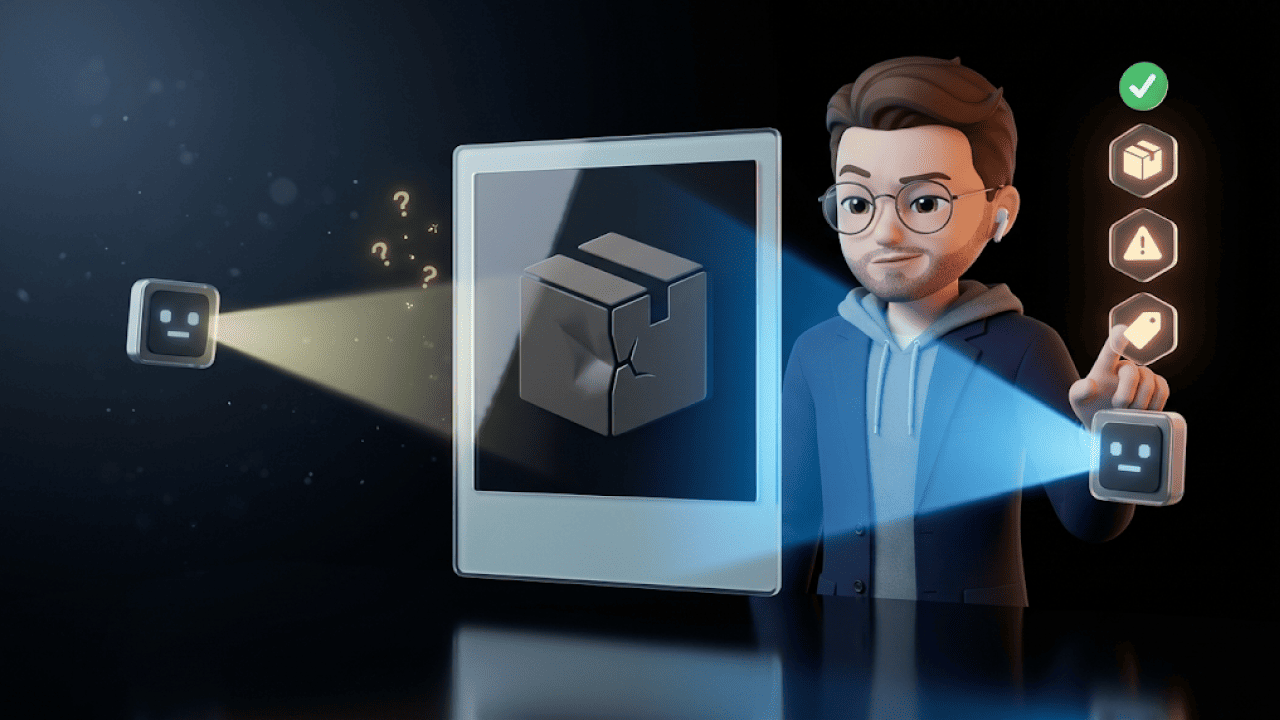
Real example: A customer sends a photo of a damaged parcel as a ticket attachment. According to the Zendesk help centre, Zendesk's AI agents only process the text of a request, not attached photos or documents. The AI can use PDFs from your knowledge base, but not attachments sent by customers. If you want to analyse damage photos or invoices automatically, you need an additional app from the Zendesk Marketplace.
armincx, on the other hand, uses AI image analysis to recognise the product, the type of damage and a description automatically. The agent sees a structured summary before even opening the ticket. No manual reading, no guesswork.
On top of that: intelligent routing based on intent and sentiment:
| Incoming request | Routing | Result |
|---|---|---|
| Complaint with damage photo | → Complaints team (priority 1) | No sitting in the inbox |
| Standard question (e.g. tracking) | → Auto-response by AI | Zero agent effort |
| Just a "Thanks" | → Auto-close | No distortion of reopen rate |
Sounds simple. But the last point in particular saves time: a plain "thanks" doesn't reopen a solved ticket, and your team doesn't have to touch it again.
How AI-powered ticketing works in practice, with routing, tagging and auto-resolve, we've broken down in a separate deep dive.
ThinkOwl: Strong on Compliance, Weak on E-Commerce
ThinkOwl deserves credit for what it does well: hosting in Germany, data centres that meet ISO 27001, German AI development. For industries with strict compliance requirements such as insurance, financial services and the public sector, that's relevant.
But let's be honest about the weaknesses in an e-commerce context:
No ready-made e-commerce integrations. ThinkOwl connects third-party systems via its documented API and the Event Broker add-on. We could not find a ready-made Shopify or Klaviyo app (as of 22 September 2026). If you want order data in your tickets, you'll need development work.
Modular pricing. OwlDesk starts at €42/user/month. Sounds fair. But AI features like AI Wingman are add-ons, and OwlForce adds usage-based costs. 10 users on the Professional plan cost €990 per month in base price. According to our analysis of ThinkOwl pricing, a 10-person team with AI add-ons quickly lands at around €2,000 per month, and that's without the OwlForce automation platform.
Messengers yes, marketing no. Instagram and Facebook come with Standard, WhatsApp from Professional. We could not find proactive WhatsApp campaigns or abandoned-cart flows at ThinkOwl (as of 22 September 2026). For e-commerce brands that also want to reach customers actively on their lock screen, that's a gap.
Where ThinkOwl fits: If you're an insurance company or government agency that needs hosting in Germany and primarily supports via email and web forms. Then ThinkOwl is a solid choice. We've also tested ThinkOwl as a Freshdesk alternative, and it fares better there.
Where ThinkOwl doesn't fit: If you're running a Shopify store and reaching your customers via WhatsApp, Instagram and email. Then you're paying for an enterprise ticketing system whose strengths you'll barely use.
ThinkOwl at a Glance: Pricing, API and Hosting
ThinkOwl sells three products with three pricing models. For most service teams, OwlDesk is the starting point: the helpdesk for your agents. OwlForce comes in when you want to automate processes with bots, RPA or document recognition.
| Product | Price (net) | What's included |
|---|---|---|
| OwlDesk Standard | €42 per user/month | Email, chat, Facebook, Instagram, automation rules, SLA policies, knowledge base, API |
| OwlDesk Professional | €99 per user/month | adds WhatsApp, audio chat, self-service portal and Dispatcher AI for ticket categorisation |
| OwlDesk Enterprise | €149 per user/month | adds BPMN workflows and intelligent fields |
| OwlForce | from €299 base price/month | automation platform with usage-based costs, WhatsApp at an extra €199 per month |
Sources: OwlDesk pricing and OwlForce pricing, as of 22 September 2026. Prices shown are ThinkOwl's German list prices in EUR.
The fine print matters most for your budget. On top of the base price, ThinkOwl charges usage-based fees for bot conversations, RPA, OCR, document processing and LLM models. The AI Wingman package with answer generation, summaries, translation and sentiment detection is a paid add-on. For WhatsApp, Meta's per-message fees apply as well.
Does ThinkOwl have an API?
Yes. Even the Standard plan includes the OwlDesk API, which lets you create and update cases. ThinkOwl documents standard APIs and a developer API in its support centre. With the Event Broker add-on, you can display and edit data from third-party systems directly in the ticket view.
Where is the data hosted?
According to its pricing page, ThinkOwl runs on a German cloud. Its data security page states that the systems run in Tier III+ data centres that meet requirements including ISO 27001. For teams with strict compliance requirements, that is a real advantage.
Is ThinkOwl a fit for e-commerce?
ThinkOwl lists e-commerce as one of its industries and names retailers such as Personalshop and JAKO among its customers. We could not find a ready-made Shopify app on ThinkOwl's website (as of 22 September 2026). Connecting your store therefore runs through the API or the Event Broker, which means development work on your side. armincx triggers actions such as cancellations, address changes and returns directly in Shopify, and we share the numbers further down.
What armincx Does Differently: The Numbers
armincx wasn't built as a helpdesk and then extended with AI. It was designed from the ground up as an AI customer service platform for e-commerce.
In practice, that means: the AI doesn't just generate responses. It cancels orders in Shopify, updates shipping addresses, creates returns and generates discount codes, automatically and according to rules you define in advance.
Benchmarks from our study of 2.9 million resolved tickets across 131 e-commerce merchants (methodology and all figures):
| Metric | With AI | Manual |
|---|---|---|
| First response time (median) | 0.9 hours after AI triage | 4.1 hours |
| Resolution time | 1.9 days (AI-resolved) | 3.0 days |
| Automation rate | 32.9% on average, 61.2% in the top quartile | – |
Important context on the numbers: The average automation rate is just under a third. That's not a marketing figure, but the average across all merchants, including those who have only just started. The top quartile shows what's possible with well-configured workflows: automation involved in more than 60% of tickets. How quickly you get there depends on your ticket mix, integrations and knowledge base.
You can track these values for your own store in the analytics dashboard. How that compares to other helpdesk tools for e-commerce, our 11-tool comparison shows with real prices and AI costs.
User Reviews: What G2 Ratings Reveal
Review platforms don't replace a real-world test. But they show patterns.
| Provider | G2 rating | Number of reviews | Context |
|---|---|---|---|
| Zendesk | ⭐ 4.3/5 | around 6,700 | Broadest data base in this comparison |
| ThinkOwl | ⭐ 4.6/5 | 10 | All reviews collected via invitations according to G2 |
| armincx (Chatarmin) | none yet | – | Chatarmin's G2 and OMR profiles rate the WhatsApp marketing product |
As of 22 September 2026.
What the numbers hide: Around 6,700 reviews for Zendesk and 10 for ThinkOwl aren't comparable in statistical reliability. Zendesk has been on the market for almost 20 years. 10 reviews for ThinkOwl is thin. That's not a quality judgement, but it limits what you can conclude.
There are no reviews yet for armincx. Chatarmin's reviews on G2 and OMR Reviews, the leading software review platform in the DACH region, refer to our WhatsApp marketing tool, so we deliberately don't list them here. For your own assessment, a demo with your real tickets tells you more than any star rating.
Employee Experience: The Underrated Argument
AI in customer service isn't a job killer. It's a monotony killer.
Your support team doesn't enjoy answering "Where is my package?" for the 50th time today. In our analysis, more than every second classified ticket is a WISMO request (54.6%). When AI solves these tickets automatically, including the tracking link from Shopify, status update and response, your team gets time for the cases that actually need a human.
This isn't a soft argument. High turnover in support costs money. Recruiting costs money. Onboarding costs money. A support agent who handles complex cases instead of copy-paste monotony stays longer. And your customer feels that in the service quality.
What separates a modern customer service chatbot from a dumb FAQ bot, and when AI in support actually makes sense, we've broken down separately.
Honest Assessment: When Each Tool Fits
No tool is right for everyone. Here's the honest breakdown:
Choose Zendesk if you're a global enterprise, have an internal IT team that can manage complex setups and run support across many channels and countries. Expect costs per agent: according to the Zendesk price list, 10 agents on Suite Professional cost €1,150 per month with annual billing. The Copilot AI assistant only comes with the Suite Enterprise + Copilot plan, which Zendesk prices on request.
Choose ThinkOwl if you work in a heavily regulated industry (insurance, financial services, public sector), need hosting in Germany and your support runs mainly via email and web forms. Expect modular add-on costs for AI.
Choose armincx if you're an e-commerce brand in the DACH region, use Shopify or Shopware, reach your customers via WhatsApp, email and Instagram and want AI that doesn't just respond but takes action. No per-seat pricing, done-for-you onboarding, hosting in Frankfurt.
What armincx is not: An enterprise tool for 500-agent teams with SAP backends and phone IVR. That's what Zendesk or Salesforce are for. armincx is built for teams of 10 to 200 employees who want to process Shopify orders and WhatsApp messages quickly and automatically.
Conclusion: Which Zendesk Alternative ThinkOwl Fits E-Commerce, GDPR, and AI?
The question isn't "Zendesk or ThinkOwl?", but: What does your business need?
Zendesk remains the global standard, and its AI can do considerably more in 2026 than a year ago. But you pay per agent, including for features you don't need in e-commerce.
ThinkOwl is the solid DACH alternative for compliance-heavy industries. But in e-commerce, it lacks ready-made integrations for Shopify and Klaviyo, and WhatsApp marketing.
For e-commerce brands that want to cut support costs, relieve their agents and use AI that actually processes orders: armincx is the Zendesk alternative built for e-commerce.
No seat costs. Hosting in Frankfurt. And AI that knows your Shopify backend.
Book a demo and see how armincx relieves your support team →
FAQ: Zendesk Alternative ThinkOwl for E-Commerce, GDPR, and Automation
What is the best GDPR-compliant alternative to Zendesk and ThinkOwl for e-commerce?
For e-commerce brands in the DACH region, armincx is the strongest option: hosting in Frankfurt, native Shopify and Klaviyo integrations and WhatsApp as a channel. ThinkOwl also hosts in Germany, but is primarily built for compliance-heavy industries.
How do the pricing models of Zendesk, ThinkOwl, and armincx differ?
Zendesk and ThinkOwl charge per agent or user: 10 agents on Zendesk Suite Professional cost €1,150 per month and 10 users on ThinkOwl Professional €990, with AI add-ons extra in both cases. armincx works with a flat rate plus variable AI credits and no per-agent costs.
Can armincx really process Shopify orders automatically?
Yes. The AI cancels orders, changes addresses, issues refunds and creates discount codes directly in Shopify, according to rules you define in advance.
How does ThinkOwl perform with e-commerce integrations?
ThinkOwl connects third-party systems via its API and the Event Broker add-on, and we could not find a ready-made Shopify or Klaviyo app. For e-commerce brands, that means development work on their side.
Where can I find independent reviews of all three tools?
On G2, Zendesk scores 4.3/5 from around 6,700 reviews and ThinkOwl 4.6/5 from 10 reviews (as of 22 September 2026). There are no reviews yet for armincx, as Chatarmin's G2 and OMR profiles cover the WhatsApp marketing product.
What does "AI-first" mean at armincx compared to Zendesk?
armincx was built from the ground up as an AI platform with its own workflow engine and also analyses photos in attachments. According to the Zendesk help centre, Zendesk's AI agents only process the text of a request, and attachments need a Marketplace app.
How long does onboarding take with armincx compared to the others?
Migrating from your old system usually takes a few days with armincx, and it typically takes two to four weeks until the AI automation is fully up to speed. Our German-speaking CSM team sets up workflows, trains the AI and guides the go-live.
Which ticketing system works best for e-commerce with Shopify?
It depends on how many actions the AI should execute itself: Zendesk can cancel and refund orders in Shopify, while armincx also covers address changes, returns and discount codes. For a broader comparison, check our ticketing system comparison for e-commerce.