
Your inbox has 1,200 unread emails. A big chunk of them are variations of "Where is my order?". You've been clicking through Outlook since 9 AM and haven't done anything productive yet.
Conversational Support solves this problem. But not because WhatsApp is a "new channel". It solves it because WhatsApp plus AI enables a different architecture than any classic ticketing system.
That's the point most Conversational Support articles online miss. They pretend WhatsApp is just email with blue check marks. It isn't. And the difference decides whether you end up automating 40% or 80% of your tickets.
Conversational Support isn't a channel extension. It's an architecture decision.
Quick definition: Conversational Support means your customers talk to you the way they talk to friends — over messaging channels, in real time, async, with voice notes, images, voice. WhatsApp is the dominant channel in the DACH region.
But the definition is only half the story. The actually interesting question: How does your tech stack deliver these conversations?
There are two models.
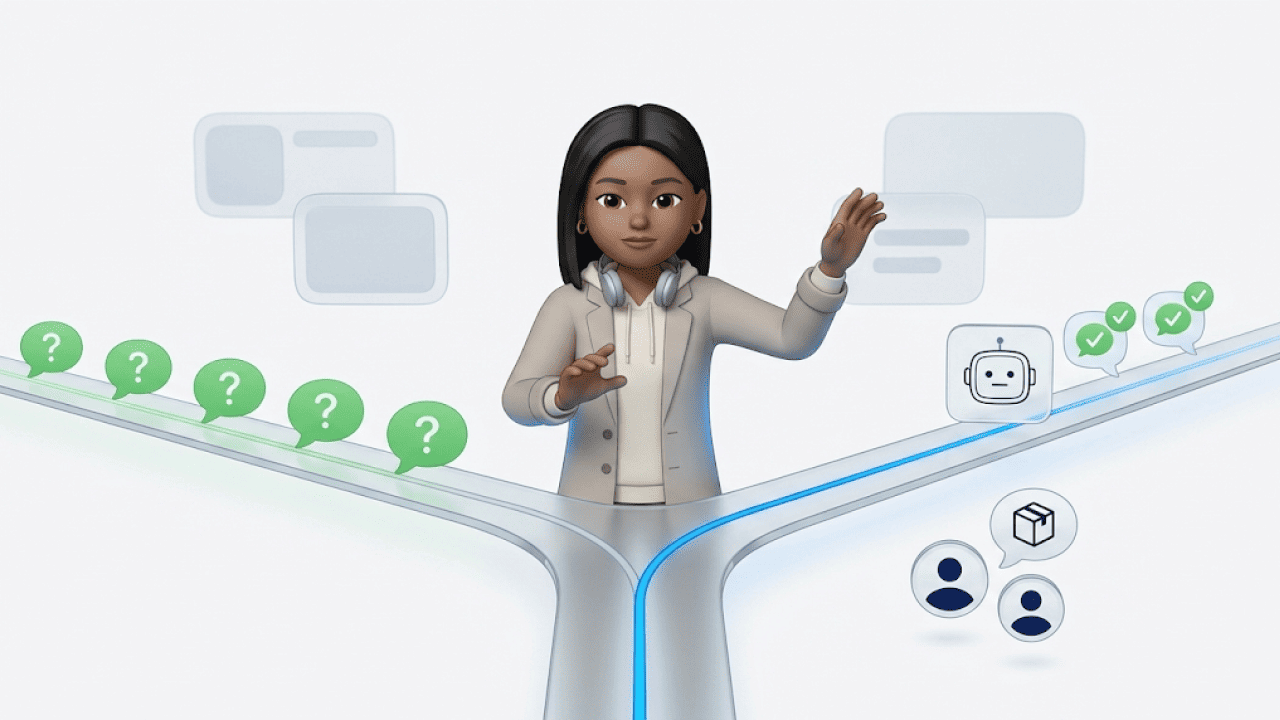
Model 1 — AI bolted on: You have a classic helpdesk. Zendesk and Gorgias come from the US and don't know JTL. Freshdesk tries to bridge both worlds. Greyhound makes you install Windows Remote Desktop on a Mac — that's not okay in 2026. All of these vendors eventually bolted WhatsApp on at some point. Plus a chatbot that spits out text macros. Sounds like Conversational Support. It isn't. The bot can talk — but it can't act. Cancellations, address changes, return labels: your team still clicks through that manually.
Model 2 — AI-first with workflow execution: AI isn't a plugin, it's the foundation. It reads the request, identifies intent, pulls your shop and ERP data via API (Shopify, JTL, Xentral, Shopware, Billbee), executes the action — and replies to the customer. No human in the loop. That's the architecture we built with armincx.
My take: Anyone introducing Conversational Support in 2026 while still running a classic ticketing helpdesk as the base will not push their automation rate above 40%. Architecture beats feature lists.
Why WhatsApp is the lever in 2026 — with current numbers
Numbers you should know. The ones still stuck on 2022 figures in 90% of English-language blog posts:
- 3.3 billion monthly active users worldwide, as of January 2026. Projected to hit 3.5 billion by year-end.
- DACH penetration above 94% of internet users. Germany alone counts around 53 million active WhatsApp users.
- 73.3% of online adults prefer messaging as their primary channel for communicating with businesses. Source: Meta/Kantar State of Business Messaging Report (2025 study, 11,056 respondents across 22 markets).
- 66.8% are frustrated when a business doesn't offer messaging.
- 98% open rate on WhatsApp versus 22% on email. 90% of messages are read in under 30 minutes.
Translation: Your customer already has WhatsApp installed. They're in it every day. They expect you to reach them there. If you don't, it costs you conversion — not just in support, but across the entire sales funnel.
For a deeper dive into the numbers: we've compiled real WhatsApp Business API use cases with concrete revenue and automation data.
Three use cases that deliver ROI immediately
Theory is nice. Here are the three use cases where we see measurable results fastest with armincx customers.
1. WISMO automated — "Where Is My Order?"
This isn't one use case among many. This is THE use case. Depending on the shop, 30 to 80% of your ticket volume is variations of "Where is my package?". Fashion shops with longer delivery times tend toward the upper end. FMCG with local warehouses toward the lower.
Here's how the flow runs: Customer asks about their shipment. The AI matches the phone number with the shop customer and pulls order plus tracking number. It queries the carrier API (DHL, Hermes, DPD, GLS, UPS) for the current status. A personalised reply with tracking link goes out — in seconds, no human involved.
Once that's set up cleanly, you push your automation rate hard. The range we see at customers in the first three months: 60 to 80% reduction in manual WISMO tickets — depending on how deeply the carrier APIs and ERP are connected.
2. Cancellation, address change, return — as a real workflow
This is where Model 1 and Model 2 split. A classic helpdesk bot writes: "Please send us your order number, we'll take care of it." Translation: your employee does it manually.
With armincx, the AI triggers it directly. Customer says: "Please cancel my order." AI checks: Has the order shipped? Is the customer eligible? If yes: cancellation triggered in Shopify AND JTL in parallel, refund triggered via the payment provider, confirmation sent to the customer. All in seconds.
That's the difference between "chatbot" and AI agent.
3. Pre-sales advice and conversion rescue
Sunday evening, 9:30 PM. Customer is on the couch wondering whether the supplement works with their lactose intolerance. Email support replies Monday morning — by then, they've long bought from a competitor. WhatsApp AI replies in seconds, asks three smart follow-up questions, recommends the right product, sends the link. Conversion rescued.
Works the same way for beauty brands (skin type consultation), fashion (sizing, materials), pet (nutrition questions). That's the point where support turns into a profit centre. Pre-sales advice, cross-selling, upselling — all from the same inbox.
What this means for Black Friday and Q4
Let's be honest: the real stress test for your support doesn't come in June. It comes between Black Friday and the end of January. Ticket volume triples. Working students and temp staff get hired. The team burns out.
That's exactly where the ROI of Conversational Support shows up — not in theory, but in 6 weeks of crisis.
Three effects we see regularly with armincx customers in Q4:
- Ticket peaks get smoothed out because the AI handles WISMO, cancellations and standard questions even at 10:30 PM. Your team focuses on real escalations.
- You save on panic hires. Temp staff costs money, is unreliable (sick days, holidays) and needs onboarding. Bad trade-off compared to an AI that runs from day one.
- Conversion rate holds up because pre-sales requests on Sunday night don't get stuck in the queue.
My take: Anyone trying to introduce Conversational Support in October is too late. Setup, AI training and workflow tuning realistically take 4–8 weeks. Whoever wants to coast through Q4 builds this in Q2 or Q3.
Classic helpdesk vs Conversational Support
Where exactly do the differences lie between a classic helpdesk and a Conversational Support architecture? The key dimensions side by side:
| Dimension | Classic Helpdesk | Conversational Support (armincx-style) |
|---|---|---|
| Architecture | Ticket-centric, AI plugin | AI-first, conversation-centric |
| AI function | Text macros, response suggestions | Independent workflow execution |
| Cancellations / refunds | Manual via agent | Automatic via API |
| Inbox model | Per-channel split, many breaks | True omnichannel inbox |
| DACH integrations | Mostly Shopify, rest copy-paste | Native JTL, Xentral, Shopware, Billbee |
| Pricing logic | Per seat or per ticket | Flat + variable AI credits |
| Mobile optimisation | Email mindset | Mobile-first: voice, speech, image |
| Automation ceiling | ~40% (typical with Gorgias) | 70–80% after optimisation |
The ~40% with Gorgias isn't a marketing number — it's what we hear in migration calls from incumbent customers. Anyone starting with a US tool like Zendesk or Gorgias and bolting WhatsApp on top is buying the limitation along with it. The missing JTL or Xentral integration alone costs your team hours per day in copy-paste mode.
What Conversational Support doesn't solve — the honest counterpoint
Wouldn't be fair if I only sold you the sunny side. Three things WhatsApp + AI also don't solve in 2026:
1. Complex B2B complaints still need a human. When a wholesale customer reports a defective equipment set with legal consequences, the AI isn't the right contact. It should escalate cleanly to a specialist — not decide on its own.
2. Voice calls aren't going away. According to Salesforce, 76% of service professionals prefer the phone for complex cases. In DACH B2B wholesale, insurance, and for older target groups, the phone call remains the first choice. That's exactly why we integrated an AI phone assistant into the stack — voice and chat in one architecture, not two separate tools.
3. Amazon and eBay stay out of reach. Marketplace APIs are closed. If 60% of your tickets come from Amazon Seller Central, even the best WhatsApp tool won't help you. You need to weigh that soberly before you invest.
In short: Conversational Support doesn't replace every channel. But it's the highest-ROI channel in 2026 — and the only one that gives you support and marketing reach in one shot.
GDPR: The three hard requirements
No Conversational Support article without a GDPR section. The three things you need:
- Double opt-in with documented consent, revocable at any time.
- WhatsApp Business API through a certified Business Solution Provider. Not the WhatsApp Business App — that one syncs your address book to Meta and is a GDPR grey zone.
- EU hosting and DPA (Data Processing Agreement) with your provider.
What does that mean in practice? You need a partner who handles this for you — including clean opt-in flows and documentation of the legal pitfalls. Anyone who underestimates GDPR mechanics collects cease-and-desist letters before the first campaign goes out.
Migration: What happens to old tickets?
Anyone moving from Greyhound, Zendesk, Gorgias or Outlook has two worries: first, do my old tickets get lost? Second, does this project block me for months?
Both can be avoided — if the migration is planned cleanly.
Existing tickets: As a rule, they can be imported as historical data or archived as CSV. The important thing is that the new stack knows the key customer profile data and the last 12 months of communication history. Migrating every single old ticket sounds tempting but is rarely worth the effort.
Implementation effort: With armincx, the typical setup timeline is 2 weeks for the basics (WhatsApp API live, standard workflows) and 4–8 weeks for the full integration with ERP, shop system and AI training on your product data. Done-for-you onboarding with a German-speaking CSM is part of the deal — not an add-on.
My take: The most common migration worry isn't the tech. It's internal politics — teams that have clung to their old tools. Whoever addresses this early and positions the AI as relief (not replacement) has already cleared the hardest part.
What customer service in 2026 does differently than 2022
Anyone googling "AI in customer service" knows the buzzword bingo. "AI revolution", "end-to-end automation", "hyperpersonalisation". Sounds nice, helps nobody.
What's actually different from 2022:
- AI agents resolve up to 70% of support requests fully autonomously in 2026. Not "pre-qualified" — actually resolved, with the action executed.
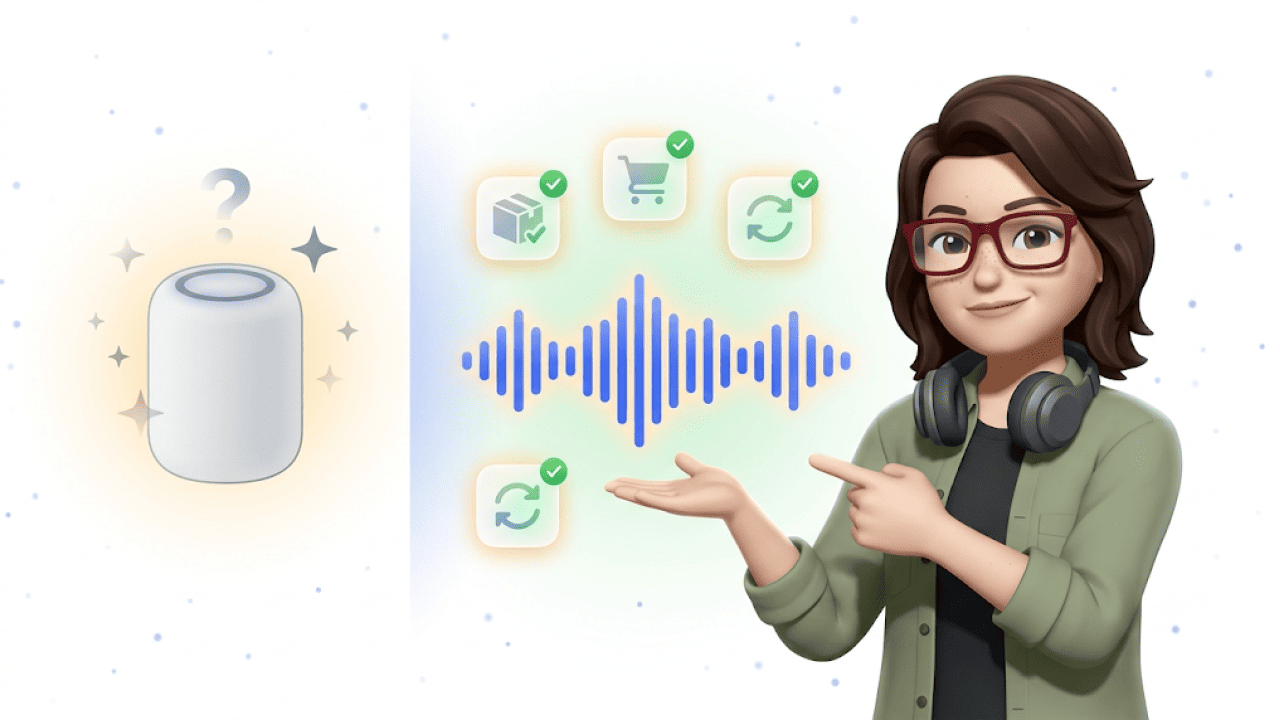
- Voice is back. AI phone assistants pick up calls 24/7 and run workflows. Voice and chat in one platform.
- The omnichannel inbox is no longer "nice to have" — it's mandatory. Customer starts on WhatsApp, jumps to Instagram, comes back on email — same thread, same history, same customer profile.
- Tagging and analytics run automatically. You see at a glance how many tickets come in about defects, delivery times or payment. That changes not just your support — but your product management.
Anyone who wants to implement this seriously can't avoid a platform with an AI-first architecture. That's exactly what armincx was built for: an AI customer service suite that bundles voice, chat and workflow execution in one stack — with native integrations into the DACH-specific systems that US tools regularly fail at.
Conclusion: Conversational Support is architecture, not an add-on
What should stick:
WhatsApp isn't the lever. Architecture is the lever. Anyone bolting WhatsApp onto a classic helpdesk is buying complexity without automation benefits.
70 to 80% automation is realistic — but only with an AI-first setup and deep DACH integrations. Starting with US tools means capping yourself.
Conversational Support isn't a "trend" in 2026. It's the only support stack that serves cost centre and profit centre at the same time. Pre-sales advice, upselling, cross-selling — all from the same inbox.
If you want to see what this looks like specifically for your tech stack: book a demo. We'll show you in 30 minutes how many of your tickets can be automated — live on your real inquiries, not on marketing slides. No 12-month contract, no bullshit.
FAQ
What's the difference between Conversational Support and classic WhatsApp support?
Depends on how it's built technically. Classic WhatsApp support is a channel bolted onto an existing helpdesk — the bot can generate text but can't execute actions. Conversational Support is AI-first: the AI runs cancellations, address changes and refunds independently via API. That's the difference between "chatbot" and "AI agent".
Can Conversational Support run fully automated?
No. Realistic numbers are 70–80% fully automated tickets after a 3–6 month setup phase. The rest still needs humans — especially complex complaints, B2B cases and emotionally charged escalations.
Is WhatsApp customer service GDPR-compliant?
Yes, but only via the official WhatsApp Business API with a certified Business Solution Provider, documented double opt-in and EU hosting. The WhatsApp Business App isn't sufficient for legally compliant B2C operations in DACH.
How long does it take to set up Conversational Support?
Depends on the depth. WhatsApp API connection and standard workflows (WISMO, FAQ answering, greeting) are live in 2 weeks. Full integration with ERP, shop system and CRM plus AI training on your product data takes 4–8 weeks. Anyone wanting to be Q4-ready should start no later than Q2/Q3.
What does Conversational Support cost per month?
Depends — realistic range between €200 (small D2C shop, basic setup) and €2,500 plus (mid-market with full AI automation, multiple brands, high ticket volume). On top of that come Meta fees per WhatsApp conversation (Marketing, Utility, Service — each priced differently) and variable AI credits. armincx offers flat-rate packages plus AI credits — no per-ticket pricing like Gorgias, where costs explode in Q4.
Can old tickets from Greyhound, Zendesk or Outlook be migrated?
Yes. Existing tickets can be imported as historical data or archived as CSV. In practice, it's rarely worth migrating every single old ticket — what matters is the customer profile data and the communication history from the last 12 months. Done-for-you migration with a German-speaking CSM is part of armincx onboarding.
Which channels belong in an omnichannel inbox?
At minimum WhatsApp, email, live chat and Instagram/Facebook DMs. Anyone wanting to integrate voice should look for an integrated AI phone assistant rather than bolting a separate voice provider on the side.
Does AI in customer service replace human staff?
No — it shifts them. Anyone automating 70% of "where's my package" inquiries gains capacity for strategic work, premium advice and process optimisation. We call it "room to breathe" for the team. How this affects customer satisfaction we've covered in a dedicated post.