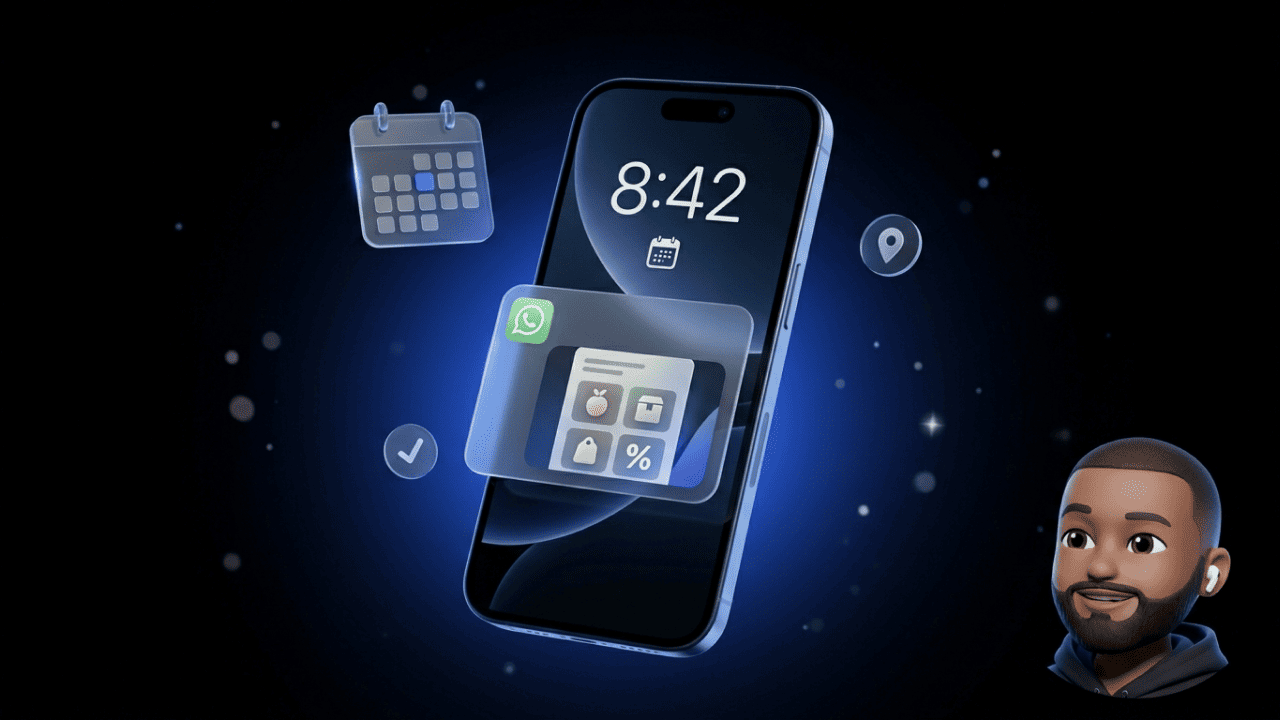

Every Sunday, a WhatsApp message with the current weekly flyer lands on the lock screen of several million Lidl customers. For a 132-billion-euro retailer with around 12,600 stores across 31 countries, that is a notable move in the marketing mix. It gets more interesting when you look closer: the Lidl WhatsApp strategy follows a surprisingly lean mechanic, runs on its own messenger platform, and deliberately leaves a lot on the table. That combination is exactly what makes the case relevant for e-commerce brands setting up or scaling WhatsApp marketing in the DACH region.
Who is Lidl and how big is the WhatsApp channel?
Lidl is part of the Schwarz Group, Europe's largest grocery retailer. 132 billion euros in revenue for the 2024/2025 financial year, around 12,600 stores in 31 countries, more than 100,000 employees and over 3,250 stores in Germany alone. Since 1973 the brand has stood for a simple promise: solid quality at the lowest price.
In recent years Lidl has invested heavily in digital. The Lidl Plus app as a loyalty vehicle, an own online shop, an active social presence, and for several years now WhatsApp as a push channel for the weekly flyer. Belgium took the lead in 2023 and became the first country to replace the printed flyer with WhatsApp in several cities, including Namur, Liège, Antwerp and Ghent. Germany has since followed and runs a dedicated landing page for the subscription at lidl.de/c/whatsapp-prospekte.
The logic behind it is sober. Print distribution costs are climbing, attention for paper flyers is dropping, and WhatsApp delivers far higher open rates than email. Schwarz Media reports open rates around 90 percent for the channel. Comparable numbers appear in D2C practice: in the Snocks setup, open rates sit around 95 percent, achieved with a list that is a fraction of Lidl's size.
How Lidl WhatsApp works in practice
The mechanic is deliberately simple and consists of three steps.
The opt-in runs through a Click-to-WhatsApp button on the Lidl page. One tap opens a chat with the official Lidl number. Additional entry points exist through social media and occasionally through the email newsletter. After the initial "Start", the bot asks for exactly one piece of information: postal code or favourite store. That is data minimization as a design decision, and at the same time the basis for regional personalisation.
The weekly push has a fixed sending day. In Germany the flyer arrives on Sundays, in Austria on Tuesdays, in Switzerland again on Sundays. Every message follows the same structure: a short teaser text, the digital flyer as a PDF or image carousel, and a link to the store finder or online shop.
The opt-out works through "Stop". A message with "Stop" or a button tap ends the service immediately. The mechanism is transparently communicated on every Lidl landing page. That cleanliness is GDPR obligation and protects long-term list quality.
Whappodo and Stackit: the tech behind the push
In September 2024 Schwarz Media announced the acquisition of the messenger platform Whappodo at the Schwarz Media Summit. Whappodo was founded in the Frankfurt area in the mid-2010s and provides newsletter and flyer distribution across WhatsApp, Signal, Threema, Apple Business Chat and Telegram. The data sits on Stackit, the Schwarz Group's own cloud platform.
For most e-commerce brands this is not directly transferable. Very few have the budget or the need to buy their own messenger platform and run their own cloud. Still, the move reveals a principle that matters for smaller shops too: control over the channel, ownership of the data, clear governance. A specialised WhatsApp Business API platform offers exactly that logic for e-commerce, without requiring a 132-billion-euro balance sheet behind it.
What works about the Lidl mechanic for e-commerce brands
The strength of the Lidl WhatsApp strategy lies in its radical refusal of complexity. Four design choices translate directly into a D2C shop.
Lidl positions the weekly flyer as a service. Subscribers wait passively for the message and open it out of habit, because they expect a tangible benefit. The same principle works in e-commerce for restock alerts, order status updates and sizing advice. These formats feel like help and perform like marketing. Brands like Snocks deliberately build their WhatsApp logic on this idea. Other Chatarmin customers such as CATRICE or Firebox use the channel for mixed service-and-marketing flows.
A fixed sending day trains a mental expectation. "Sunday brings the Lidl flyer" is a connection Lidl has reinforced for years. The same logic works for a D2C shop: Thursday for the drop notification, Sunday for the style edit, Wednesday for the restock alert. The exact format is secondary. Predictability beats random bursts.
For the opt-in Lidl asks for exactly one piece of information. Postal code, done. Many shops make the mistake of forcing three to five fields, then complain about poor conversion in the onboarding flow. Lower the threshold and grab one relevant data field, and the setup step gets you noticeably further.
The opt-out is prominently communicated and immediately effective. That seems counter-intuitive at first. In reality it protects list quality, because dissatisfied subscribers leave cleanly instead of generating active negative sentiment inside the channel.
| Lidl mechanic | Translation to a D2C shop |
|---|---|
| Sunday weekly flyer | Thursday weekly drop notification |
| Opt-in with postal code | Opt-in with size, favourite category or need |
| "Stop" wording, immediately effective | "Stop" wording plus optional segment-based pause |
| Whappodo operated in-house | WhatsApp Business API provider like Chatarmin |
| Lidl Plus app as CRM layer | Shopify, Klaviyo or direct CRM as backbone |
Where Lidl deliberately leaves gaps and where your D2C lever sits
As strong as the push mechanic is, the gaps in the setup are equally visible. This is exactly where the real lever for e-commerce brands sits.
Lidl WhatsApp is a one-way street. Anyone who replies to the flyer gets an automated bot answer, but no real dialogue. Advice happens in the store or through the Lidl Plus app. In D2C e-commerce, conversational commerce is a direct conversion lever instead: sizing advice for apparel brands, product finders for supplement shops, order status requests that land in the messenger instead of the call centre. A platform like Chatarmin for customer service combined with AI agents for recurring requests covers an area Lidl deliberately leaves empty.
Postal code is the only segmentation layer at Lidl. Useful for regional offers, far too coarse for RFM logic. VIP customers receive the same flyer as first-time visitors, inactive subscribers stay in the list. In e-commerce, segmentation is the foundation against list fatigue instead. Treat first-time buyers, regulars and inactives identically and engagement rates start eroding within months.
Incrementality measurement is not visible to the outside at Lidl. For a retailer this size the gut feeling on the channel is almost certainly positive, and the contribution is most likely measured internally. For an e-commerce shop that has to defend every marketing investment against paid ads, holdout logic is non-negotiable. Without a control group there is no way to tell whether WhatsApp generates incremental revenue or simply shifts existing demand around.
Lidl also does not use repeat purchase triggers through WhatsApp. In bricks-and-mortar grocery, weekly shopping is the default. In a D2C shop the picture changes. The actual profit lever sits in the repeat purchase rate. Post-purchase flows built with WhatsApp Flows, cross-sell sequences and targeted reactivation are building blocks missing in the Lidl setup that deliver measurable contribution margin in e-commerce.
What you need to run a similar logic in your shop
A lean push logic like Lidl plus the D2C levers on top does not require a corporate budget. The tech stack is manageable.
The foundation is the WhatsApp Business API. The app version is fine for very small lead lists. Once you go past around 256 recipients per send, the API becomes necessary. With it come approved templates, automated flows, a team inbox, tracking and the connection to the shop system. Providers like Chatarmin include the API directly, removing the need to organise a separate Meta verification process.
Shop integration in real time is the second piece. For cart data, order status, product information and customer segments to flow into the messenger, shop and WhatsApp tool need to be cleanly connected. Chatarmin offers direct connectors for Shopify, Shopware, Klaviyo, Pipedrive and many more systems. An overview lives on the WhatsApp Integrations page.
Template governance becomes relevant once the list grows. With the WhatsApp Business API, proactive messages run through pre-approved templates. Five templates take you a long way, fifty in parallel require clear naming conventions and approval workflows. Anyone building a clean WhatsApp Newsletter cannot skip this step.
Tracking on contribution margin is the fourth component. Clicks and open rates are nice, but the internal budget comparison against paid ads asks for contribution margin per campaign. UTM tracking, coupon codes and server-side events are the levers for this.
Meta fees run separately from the software. In Germany Meta currently charges around 11 cents per marketing template message; service messages have been completely free since November 2024. A detailed breakdown lives in the Chatarmin guide on WhatsApp Business costs.
GDPR and data protection in the DACH context
WhatsApp marketing in the German-speaking region only works with clean data protection processes. Lidl sets the example here and creates an expectation that applies to smaller brands as well.
Every opt-in needs to be documented: timestamp, source, consented purpose. Lidl communicates this transparently inside the opt-in flow and openly describes what is sent, how often, and for what purpose. That clarity reduces complaints, because subscribers form realistic expectations from day one.
The opt-out mechanic through "Stop" is standard and must be implemented at every API-based platform. A sloppy implementation risks Meta sanctions and, in the worst case, GDPR proceedings. For a deeper look at the topic, the WhatsApp GDPR guide from Chatarmin is a useful starting point.
Data minimization as a principle is the last important takeaway. Lidl asks for one piece of information. Anyone forcing five fields in the onboarding flow collects data they do not actually need and loses opt-in rate along the way.
Conclusion: what stays from the Lidl example
The Lidl WhatsApp strategy is not a D2C playbook to copy one-to-one. Lidl is a bricks-and-mortar discounter with its own tech platform, its own cloud and a distribution logic that shares little with the typical Shopify shop. But the design choices around WhatsApp do translate: push format as service, fixed sending day, one question at opt-in, transparent opt-out.
Where Lidl deliberately leaves gaps is where the real D2C lever lives. Conversational commerce, RFM-based segmentation, incrementality measurement through holdouts, repeat purchase triggers. These building blocks decide whether WhatsApp ends up as "another push channel" or as a profitable retention channel.
Over 450 brands use Chatarmin as a WhatsApp Business API platform for exactly that logic. Shopify and Klaviyo integration, AI agents for the service layer, RFM segmentation, holdout tests for clean incrementality measurement. To set up WhatsApp in the DACH region as a distribution channel with D2C levers on top, book a demo with Chatarmin and we will walk through the plan for your shop together.
Frequently asked questions on the Lidl WhatsApp strategy
How does Lidl WhatsApp work from a customer's perspective?
Lidl runs a dedicated WhatsApp service page on lidl.de. A tap on "Start" opens a chat with the official Lidl number. After entering the postal code, German subscribers receive the upcoming week's flyer every Sunday. Unsubscribing works any time through "Stop" in the chat.
Which platform does Lidl use behind the scenes?
Lidl runs on Whappodo, a messenger platform acquired by Schwarz Media in September 2024. Whappodo supports several messengers in addition to WhatsApp and operates on Stackit, the Schwarz Group's own cloud platform.
What does WhatsApp marketing cost for e-commerce brands?
Meta charges a fee per proactive message. In Germany that is currently around 11 cents for marketing templates. Service messages have been completely free since November 2024. The software cost for a WhatsApp Business API platform varies by provider and volume. A detailed breakdown sits in the Chatarmin cost guide.
Does WhatsApp marketing make sense for smaller shops too?
Yes, especially for smaller D2C brands, because they often disappear in email inboxes. With a platform like Chatarmin, most DACH shops are productive in under 30 days. Open rates around 90 percent are achievable without a 12,600-store reach.
Which mistakes should I avoid when building my own WhatsApp channel?
The most common mistakes are excessive frequency (more than two to three marketing messages per week), missing segmentation, and poorly documented opt-ins. Using discounts as the default lever also leads, over time, to a list that only reacts to promotions.
What GDPR requirements apply in the DACH region?
Three building blocks are mandatory: documented consent, transparent information on content and frequency, and a working unsubscribe through stop wording. On top come the requirements from the TTDSG (in Germany) and the GDPR more broadly. More details in the WhatsApp GDPR guide.