
A huge share of e-commerce customer requests boils down to one question: "Where is my order?" And people love to ask that question by phone. Not by email. Not in chat. But at 7:45 p.m., long after your support team has gone home.
That's where the voicebot comes in. But before you spend money on some voice AI, let's sort out the terms. Because "voicebot", "voice assistant" and "AI phone assistant" get thrown around as if they were the same thing. They're not — not quite.
What is a voicebot? A clear definition
A voicebot is a software-based system that understands spoken language and replies in spoken language. It answers calls, recognizes what you say, processes the request and gives an audible answer back — in real time, without a human stepping in.
Technically, a voicebot is built from three components:
- Speech-to-Text (ASR): turns your spoken words into text.
- Natural Language Understanding (NLU): works out what you actually want.
- Text-to-Speech (TTS): turns the answer back into a voice.
In plain terms: you talk, the bot understands, the bot answers. Sounds simple, but technically it's what looked like science fiction five years ago. The language models of the past two years have lifted the whole thing from "annoying computer voice" to "wait, was that just a human?"
If you want to go deeper into the tech behind it, take a closer look at the topic of speech recognition.
Voicebot, voice assistant, AI phone assistant: where's the difference?
Short answer: at their core, all three mean the same thing. But the nuances matter.
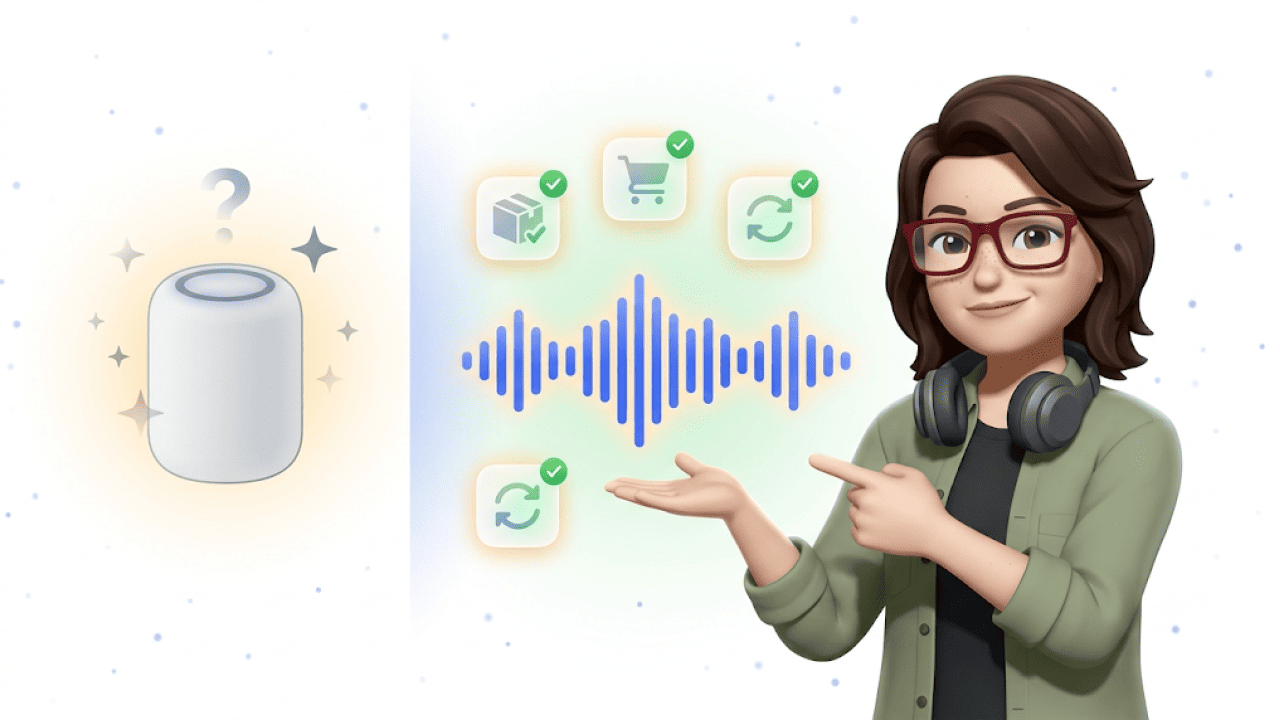
- Voice assistant is the umbrella term. Any system that reacts to spoken language is a voice assistant — including the smart speaker in your living room.
- Voicebot is mostly used in a business context — voice AI in customer service, sales or support.
- AI phone assistant is the concrete application on the phone. In other words: a voicebot built specifically for inbound and outbound phone calls.
So the difference is less technical than contextual. An AI phone assistant is a voicebot. A voicebot is a voice assistant. But not every voice assistant ends up on the phone. More on that in our overview of the AI phone assistant.
Voicebot vs. chatbot: the difference that actually matters
This is where it gets interesting, because many people mix the two up. A chatbot works with text. You type, it types back. A voicebot works with voice. You speak, it speaks.
Sounds like a small difference? It isn't.
With a chatbot, you have time. You can offer buttons, send links, show a table. The customer reads at their own pace. With a voicebot, the clock is ticking. Nobody waits three seconds for a spoken answer without getting nervous. The AI has to understand faster, answer faster and cope with interruptions.
The catch: voicebots are technically more demanding. A misunderstood word on the phone is immediately obvious. A typo in chat is easier to forgive.
We've compared chatbot and voicebot in detail elsewhere.
How does an AI voicebot work, step by step?
Let's take the classic WISMO case ("Where is my order?"):
- A call comes in. The voicebot picks up — instantly, even at 10 p.m.
- Identification. It asks for the order number or recognizes the phone number.
- Data lookup. The bot pulls the shipping status from your shop system or the shipping tracker.
- Answer. "Your parcel went out this morning and should arrive tomorrow."
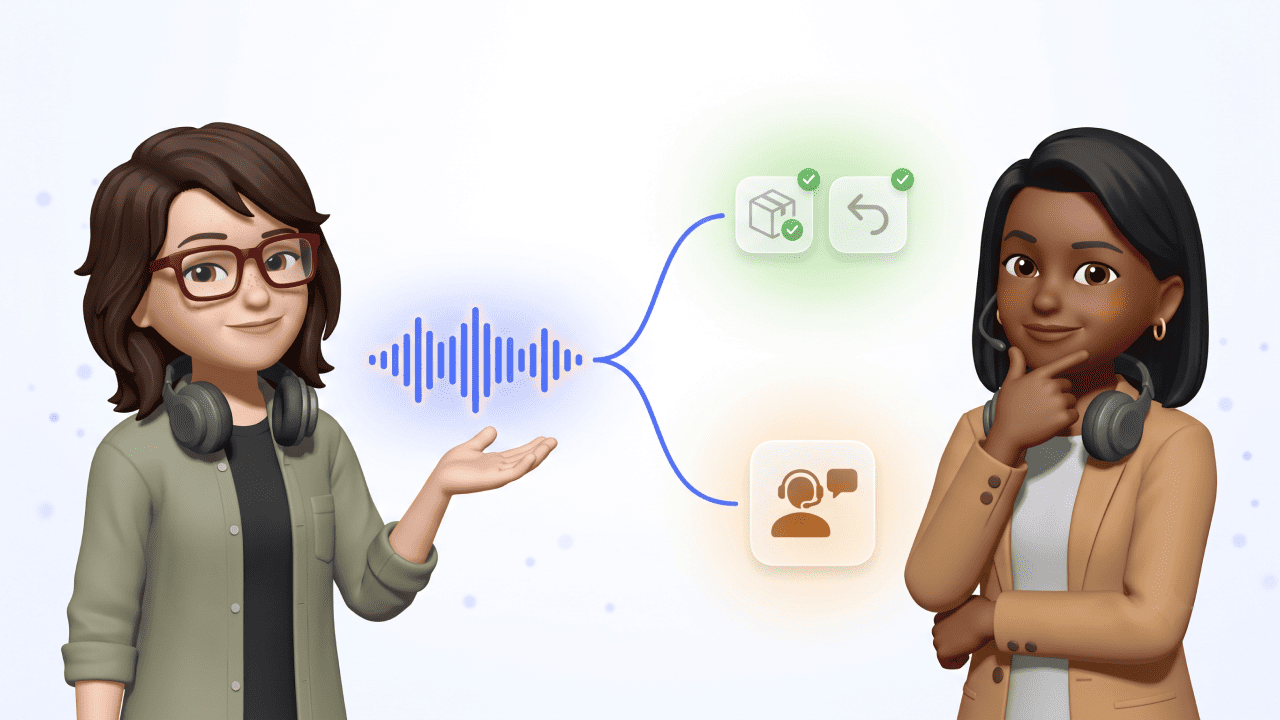
- Escalation. If it doesn't understand something or things get complicated, it hands off to a human.
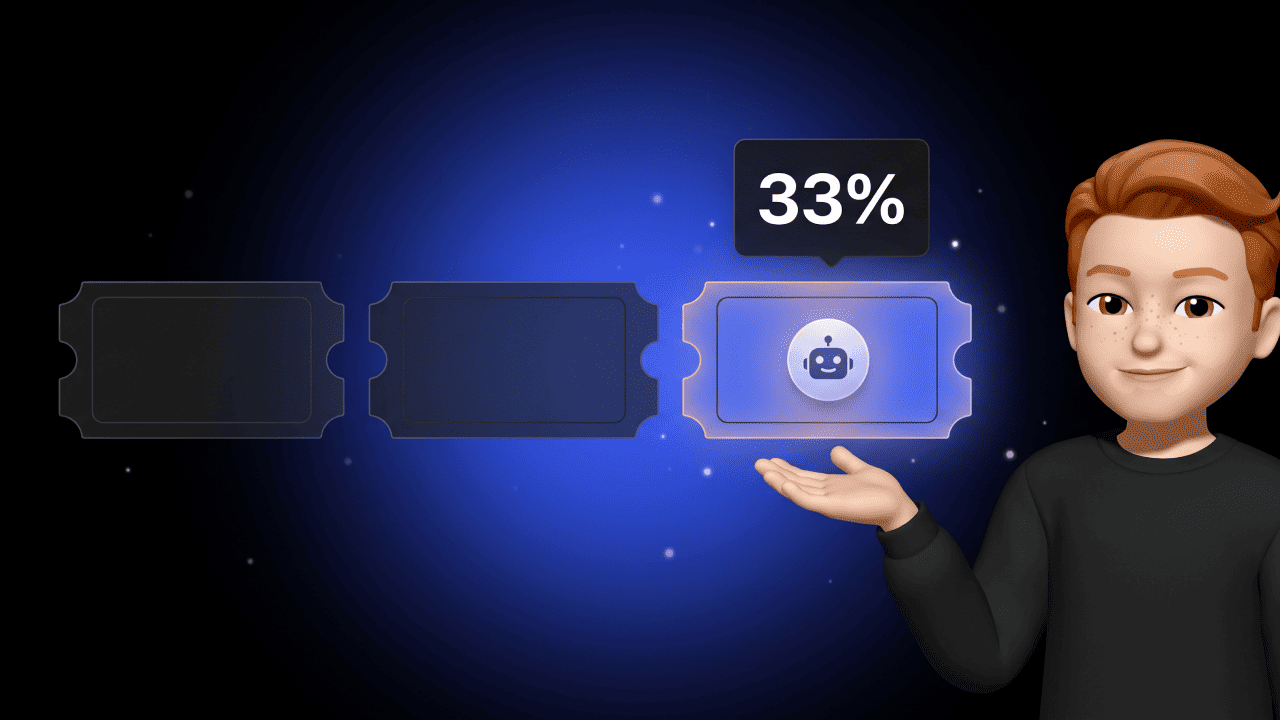
The result? The customer has their answer in under a minute. Your support team doesn't have to look up the same tracking number for the 80th time. And these WISMO cases are no side issue: in an analysis of 131 armincx merchants, more than half of the clearly classified inquiries were about the whereabouts of an order — across all channels.
When a voicebot actually makes sense for your online shop
Now the honest part. A voicebot is no end in itself. It only pays off under certain conditions.
Yes, a voicebot is worth it when:
- You have high call volumes (let's say, from a few dozen calls a day).
- The requests are recurring and similar (delivery status, returns, opening hours).
- You have a shop system the bot can connect to (Shopify, Shopware & co.).
- Calls outside business hours are getting lost.
No, probably not, when:
- You run a niche hotline with three calls a week.
- Your cases are highly complex and individual (legal advice, sensitive medical topics).
- You have no connectable system and everything runs manually.
In other words: volume plus repetition plus system integration — that's the formula. Miss one of them, and the voicebot turns into an expensive toy. How that plays out in support specifically is a topic of its own (keyword: voicebot in customer service).
What does a voicebot cost?
In short: it depends on how it's billed. The common models on the market:
- Per minute: you pay for the actual talk time.
- Per call: a flat rate per handled conversation.
- Credit/package model: you buy quotas, similar to prepaid.
The ROI logic is simple: take your monthly call volume, multiply it by the automation rate (the share of calls the bot resolves without a human) and compare that with the staff costs you'd otherwise carry. With a high WISMO share, decent automation rates are realistic — precisely because these standard requests are easy to automate.
A detailed breakdown of the pricing models and a provider comparison are something we cover separately.
Voicebot in German: what to watch for in the DACH market
One thing international tools love to underestimate: the German language is not plug-and-play. Dialects, formal address, long compound words ("Sendungsverfolgungsnummer" — shipment tracking number) — a voicebot solution has to handle all of that cleanly.
On top of that comes the GDPR. Voice recordings are personal data. Where are they processed? On which servers? Who has access? If a provider can't give you a clear answer, stay away.
Many local service providers rely on tools like fonio — fine for medical practices and tradespeople. But for e-commerce with shop-system integration you need different priorities. What actually matters in a comparison with fonio is something we look at separately.
For private users: where the voicebot hits its limits
Are you a private individual wondering whether you need a voicebot yourself — say, as a smart answering machine? Honestly: for most private cases that's overkill. A simple AI answering machine usually does the job. Voicebots only show their value at volume and with recurring requests — in other words, in business.
And sensitive topics? When things get emotional, or it's about money, health or complaints, a human belongs on the phone. A good solution recognizes that itself and hands off. A bad one leaves the customer stuck in an endless loop.
For online shops: the concrete lever
If you run a shop, the math is different. Here you save real money and gain real availability. A voicebot picks up at night, on holidays, on Black Friday, when call volume explodes.
At Chatarmin, we think voice AI consistently from the e-commerce customer's perspective — with deep integration into your shop system instead of generic standard answers. If you want to see what an AI phone assistant for online shops actually looks like, take a look there.
FAQ — Voicebot
What is a voicebot?
A voicebot is software that understands spoken language and replies by voice. It answers calls automatically and handles requests in real time, without human intervention.
Is a voicebot the same as a chatbot?
No. A chatbot communicates via text, a voicebot via voice. The voicebot is technically more demanding, because it has to understand and answer spoken language in real time.
Is a voicebot the same as a voice assistant?
Essentially yes. "Voice assistant" is the broader, everyday term; "voicebot" is the common business term. Both describe systems that react to spoken language.
Does a voicebot work reliably in German?
Yes. Modern language models understand German very well by now. But make sure the provider handles dialects and German compound words cleanly and works in a GDPR-compliant way.
What does a voicebot solution cost?
Billing is usually per minute, per call or via credit packages. The exact prices vary widely by provider and volume — you'll find a breakdown in our costs article.
Which online shops is a voicebot worth it for?
For shops with high call volume, lots of recurring requests (WISMO above all) and a connectable shop system. At low volume, it usually doesn't pay off.
Can a voicebot hand off to a human?
Yes. Good voicebots recognize when a case gets too complex or sensitive, and then hand off to a human agent.
Does a voicebot replace my support team entirely?
No. It takes over recurring standard requests and relieves the team. Complex and emotional cases stay a job for humans.
How fast does a voicebot answer?
Usually in real time — within a few seconds. For simple WISMO requests, the whole interaction is often done in under a minute.
What's the difference between a voicebot and an AI phone assistant?
An AI phone assistant is a voicebot built specifically for phone calls. "Voicebot" is the broader term, "AI phone assistant" the concrete application on the phone.
Conclusion: voicebot yes — but do the honest math
A voicebot is technically mature: it understands spoken language, answers in real time and takes the same old calls off your plate. But it's no autopilot. The formula stands: enough volume, recurring requests, a connectable shop system. If that fits, you save real money and you're finally reachable at 10 p.m. too. If it doesn't, leave it alone. Look honestly at your call volume — most of the time, WISMO is the biggest lever.