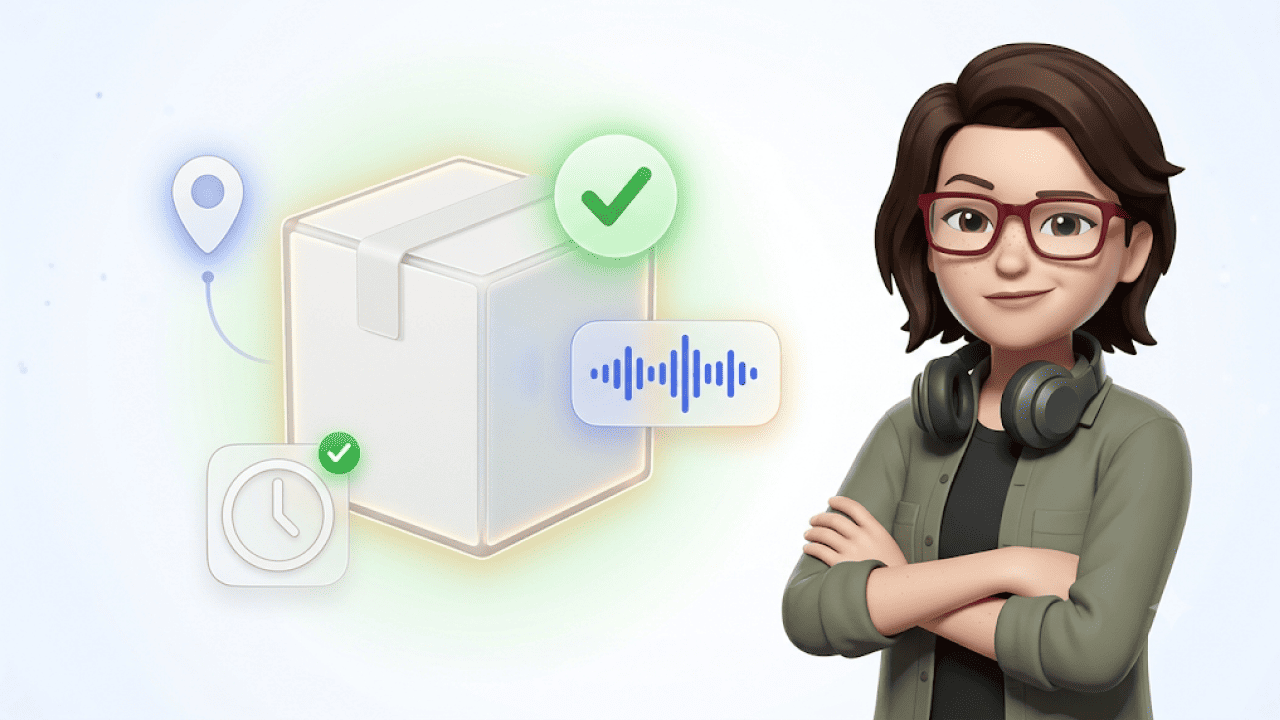

40 percent. That's how many service calls in online shops revolve around one single question: "Where is my order?" Same question every time. Same answer every time. And still, someone on your team sits there typing in tracking numbers by hand.
This is exactly where voicebot providers come in. AI takes the call, understands the question, answers — no hold music, no pause, around the clock.
The problem: most comparison lists are advertising. Every provider is supposedly the best. Nobody tells you where it breaks down.
This article does it differently. I'll show you the voicebot providers that matter for e-commerce in the DACH region in 2026 — with strengths AND weaknesses. Ours included. Meaning: where armincx isn't the right choice, you'll read it here in black and white.
What a Voicebot Really Has to Do for Your Shop
Before we compare providers: not every voicebot software is built for e-commerce. Many come from the medical-practice or tradesperson world. They can book appointments. But they know nothing about your shopping cart.
A voicebot for online shops has to do four things:
- Automate WISMO. The classic. The bot pulls the shipping status live from your system and reads it out.
- Connect to your shop system. Shopify, Shopware, WooCommerce. Without live data, the bot can only guess.
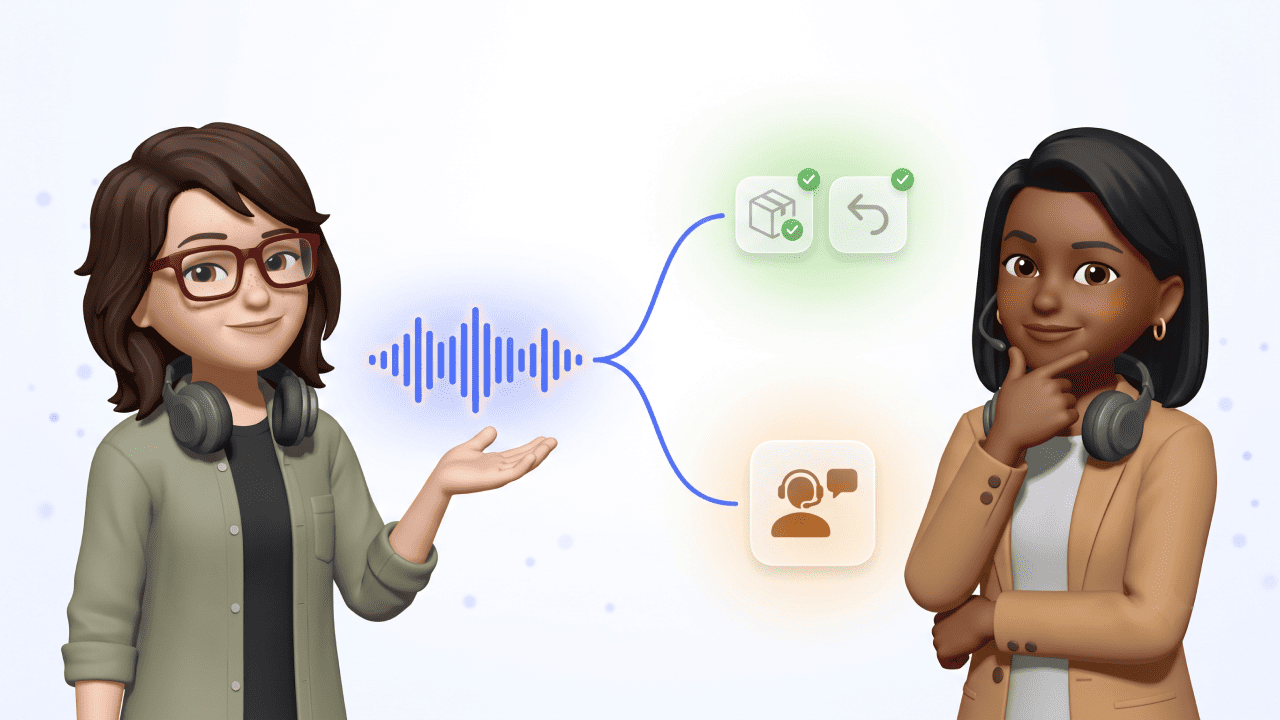
- Escalate cleanly. When things get complicated, the bot hands off to a human — with context, not from scratch.
- German at native-speaker level. Including dialect tolerance. Someone from Swabia speaks differently than someone from Hamburg.
Which means: a phone-assistant comparison that only checks for "has AI" won't help you. The real question is: does the bot understand e-commerce?
The Voicebot Providers Compared
Here's the honest overview of the relevant AI phone assistants for the DACH market in 2026. No provider is strong everywhere. And that's fine.
| Provider | E-Com Focus | Shop System Integration | DACH Language | Strength | Weakness |
|---|---|---|---|---|---|
| armincx | ✓ Specialised | ✓ Shopify/Shopware/JTL | ✓ Native DACH | E-commerce, WISMO, deep shop data | ⚠ No focus on medical practices/trades |
| fonio.ai | ✗ Generalist | ⚠ Limited | ✓ Strong | Local service businesses, fast setup | ✗ No real shop depth |
| VITAS.ai | ✗ Practices/SMB | ✗ Hardly any | ✓ Good | Appointment booking, healthcare | ✗ E-com not supported |
| Aaron AI | ✗ Healthcare | ✗ No | ✓ Good | Medical practices, patient management | ✗ Unsuitable for shops |
| Synthflow | ⚠ Partial | ⚠ Via API/Zapier | ⚠ EN-first | Flexibility, modular system | ⚠ Thin DACH support |
| Retell AI | ⚠ Developer tool | ⚠ Build it yourself | ⚠ EN-first | Full control for devs | ✗ No out-of-the-box shop |
| Bland AI | ✗ US market | ✗ Build it yourself | ⚠ Weak DE | Scaling, US telephony | ✗ DACH data protection unclear |
| Parloa | ⚠ Enterprise | ⚠ Custom | ✓ Strong | Large call centres, corporates | ✗ Expensive, long onboarding |
The table reveals the pattern: providers from the practice world (VITAS, Aaron) are built for appointments — not orders. Providers from the US (Bland, Retell) are developer tools with no ready-made shop integration.
fonio.ai — Strong for Local Service Businesses, Not Shops
Let's be honest: fonio gets a lot right. Setup is fast. The German voice sounds good. For a law firm, a workshop or a practice that simply doesn't want to miss another call — a solid choice.
The catch: fonio is a generalist. If your online shop gets hundreds of WISMO calls a week and the bot is supposed to check the shipping status live in Shopify, the tool hits its limits. Deep shop integration isn't the core.
VITAS and Aaron AI — Healthcare, Not Commerce
Both are established in the DACH region. Both are good at what they do: appointments, callbacks, patient communication. VITAS has gained a foothold in the SMB space, Aaron in healthcare.
Meaning: if you run a practice, take a look. If you run a shop — wrong place. The bots know nothing about a shopping cart, a return, or an order status. You'd have to build everything around them.
Synthflow, Retell, Bland — Flexible, but You Build It Yourself
These three are toolkits. Powerful, yes. But they hand you the tools, not the finished solution.
Which means: you need someone to develop the shop integration yourself. Webhooks, API calls, error handling. That's developer work. For a technical team with capacity — interesting. For a shop owner who wants to go live next week — frustrating.
On top of that: Retell and Bland are EN-first. German language quality varies, and DACH data protection isn't always clearly documented. With Bland (US hosting), you should check GDPR carefully.
Parloa — Enterprise, with an Enterprise Price Tag
Parloa plays in the top league. Corporates, large call centres, six-figure call volumes. The tech is good. So is the support.
The catch: onboarding takes time. The pricing is nothing for a shop with two million euros in annual revenue. If you're not enterprise, it's overkill.
Where armincx Wins — and Where It Doesn't
Now to us. Honest, as promised.
Where we're strong: e-commerce in the DACH region. Full stop. armincx is built for online shops. Deep integration with Shopify, Shopware, JTL and Xentral. The bot pulls order data live, answers WISMO questions with the real shipping status, recognises return requests and escalates cleanly to your team. German language quality at native-speaker level, dialect-tolerant.
The result? You automate exactly the repetitive calls that drain your team — and keep the complex cases with a human.
Where we're NOT the right choice: Do you run a medical practice, a law firm or a local trades business without a shop system? Then we're wrong for you. Our strength is shop integration — and you don't need it there. Go with fonio or VITAS. Honestly.
And if your call volume is tiny — five calls a week — a voicebot barely pays off. No matter whose. The setup doesn't earn its keep there.
Why E-Commerce Specialisation Makes the Difference
armincx comes from e-commerce — not from the practice or call-centre world. More than 130 merchants run on the platform, and it handles their support: order lookup in Shopify and JTL, shipment tracking, returns, address changes, refunds.
Which means: we know the calls that eat up your shop support. Where the shoe pinches, what customers really ask on the phone, how a return plays out. That DNA is in the voicebot — and it's exactly what a generalist built for booking appointments lacks.
FAQ
What's the best voicebot provider in 2026?
Depends what for. For e-commerce in the DACH region, armincx is specialised. For medical practices and local service businesses, fonio or VITAS are often the better choice.
Do I need a shop system for a voicebot?
No. But without a shop system, the bot has no access to order and shipping data. That's exactly what makes e-commerce voicebots valuable in the first place.
Does a voicebot really work well in German?
Yes. The best providers reach native-speaker level, including dialect tolerance. EN-first tools like Bland or Retell often fall short in German.
What does an AI phone assistant cost?
The models range from price-per-minute to per-call to credit-based. The range is wide.
Can a voicebot hand off to a human?
Yes. Good bots escalate complex cases automatically — and pass along the conversation context, so the agent doesn't start from scratch.
Is armincx right for my medical practice?
No. armincx is specialised in e-commerce. For practices, Aaron AI or VITAS are the more fitting choice.
How fast is a voicebot set up?
With generalists, often within days. With toolkit tools like Retell or Synthflow it takes longer, because you build the integrations yourself. Enterprise solutions like Parloa come with long onboarding.
Is a voicebot worth it with few calls?
No. With just a handful of calls a week, the setup barely pays off — no matter the provider. It becomes worthwhile from a meaningful, repetitive call volume.
Is data protection an issue with US providers?
It can be. US hosting like Bland AI's raises GDPR questions. Check the hosting location and data processing agreement carefully before you start.
What sets an e-commerce voicebot apart from a normal one?
The shop connection. An e-com voicebot pulls live data from orders, shipments and returns. A generalist doesn't know this data and can't really answer WISMO questions.
Conclusion: Pick the Provider That Fits Your Use Case
There's no "best" voicebot. There's the best one for you.
Local service business, practice, law firm? fonio, VITAS or Aaron. Large corporate with its own dev team? Parloa, Retell or Synthflow.
Online shop in the DACH region with a WISMO load and a shop system? Then armincx is worth a look. That's exactly what it's built for.
In short: skip the generalist if you need e-commerce depth. And skip armincx if you don't.
Want to see how an AI phone assistant for online shops automates your WISMO calls? Book a demo — we'll show you live what's possible with your real shop data.