
RCS Chat sounds like the perfect marketing channel in 2026: verified sender, carousels, buttons, reach without an app install. And yes — as an SMS successor, RCS is a real leap. But for your D2C store in the DACH region, RCS Chat comes with hard disadvantages that no carrier sales deck will show you. Reach with holes in it. An inbox where nobody is waiting for your brand. And zero reliable conversion data. Here are the 8 points you need to know before you move budget.
1. The reach has holes — and you won't see them
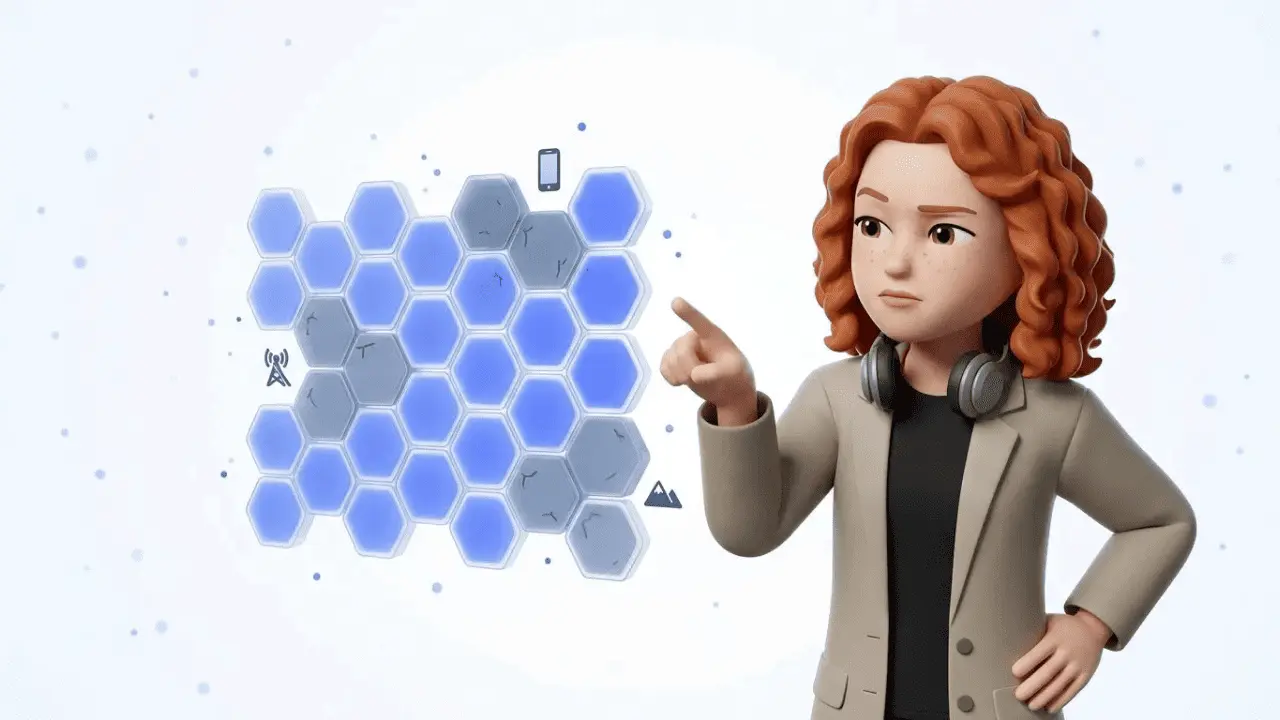
Around 80% of smartphones in Germany are RCS-capable, more than 55 million users. Sounds like full coverage. It isn't.
- iPhone: RCS has run since iOS 18 — but the bubble stays green, and your business message doesn't look like iMessage.
- Discounters and MVNOs: anyone on a rented network often has gaps. 1&1 on its own 5G network had delays in iOS support for a while.
- Austria & Switzerland: less widely covered than Germany.
Here's what that means: you plan a campaign for 100% of your list and actually reach only a variable share — depending on device, network and country. With WhatsApp, that question is effectively settled in DACH.
2. The SMS fallback eats exactly what you took RCS for
If a device can't do RCS, the message automatically falls back to SMS. Good for deliverability. Bad for you:
- Carousel, buttons, HD images, interactive tracking view — all gone.
- Your carefully built rich message turns into "Delivery tomorrow 9–12" with a shortened link.
- And you still pay: the SMS is billed separately.
In short: your campaign experience is only as good as the weakest device on your list.
3. Nobody is waiting for your brand in the SMS inbox
In DACH, WhatsApp has a head start that RCS won't close overnight: habit.
- Your customers open WhatsApp several times a day. The native SMS messenger? For the parcel notification.
- You build your RCS opt-in list from zero — without the channel being internalized as a "brand messenger."
- GDPR still applies: documented opt-in is mandatory, just like with WhatsApp.
So you do the same opt-in work — for a channel your audience doesn't yet read as a marketing channel.
4. RCS marketing fights an uphill battle against spam perception
One detail from the search data says a lot: "disable rcs" gets searched almost as often as "enable rcs."
- The native messenger is mentally reserved for official SMS, 2FA codes, parcel updates.
- A marketing push in that context reads as intrusive fast.
- One badly timed discount blast — and your verified brand channel is the reason someone switches RCS off.
Fair counter-check: verification protects against phishing confusion. But it doesn't turn an ad into a welcome message.
5. There's (still) no mature marketing ecosystem
WhatsApp Business has built a toolset since 2018: Flows, catalog, Click-to-WhatsApp ads, dozens of DACH platforms. RCS marketing is years behind there.
| Marketing building block | WhatsApp Business | RCS (DACH 2026) |
|---|---|---|
| Full purchase journey in chat | Yes (WhatsApp Flows) | Barely |
| Product catalog | Yes | Limited |
| Click-to-chat ads | Yes (Meta Ads) | Not native |
| Specialized DACH marketing tools | Many | Few |
| Documented ROAS cases | Yes | Thin |
A lot of RCS still runs through carrier APIs or aggregators (Sinch, Infobip, Bird (formerly Messagebird)) — more plumbing, less marketing layer.
6. Pricing is a negotiation — not a price list
With WhatsApp you know your message pricing. With RCS in DACH, the list price is just the starting point.
- Telekom around 6–8 cents per message, Vodafone around 4–7 cents, o2 cheapest at high volume — and for all three: negotiation is mandatory.
- An aggregator saves setup time but adds a 10–25% markup per message.
- Three carriers, three verification processes, three pricing models.
For a mid-market store, that means a procurement project instead of a self-service setup. What actually ends up on the bill is broken down in our article on RCS Chat costs.
7. Data flows through Google — and A2P is not end-to-end encrypted
This is where it gets relevant for GDPR owners — and where the most-repeated mistake hides.
- Person-to-person chats (P2P): end-to-end encrypted since May 2026 (iOS 26.5 + Google Messages, via MLS). Source: Apple and Google, May 2026.
- Business messaging (A2P): not end-to-end encrypted — it can't be, since your system has to process the message. Instead: transport encryption plus sender verification.
- RCS Business Messaging usually runs through Google as the largest hub. EU data residency exists (e.g. via Telekom), but you have to actively choose and check it.
In short: "RCS is encrypted now" is true for your customers privately — not automatically for your marketing sends.
8. You're betting without a benchmark
The hardest point for a data-driven decision: in DACH e-commerce, reliable RCS marketing numbers don't exist yet.
- WhatsApp has documented cases — D2C brands with ROAS north of 80x on WhatsApp campaigns.
- RCS marketing benchmarks for DACH D2C? Thin to nonexistent.
- You invest setup, verification and opt-in building into a channel whose conversion reality you have to find out for yourself first.
It can pay off. But it's a bet, not a calculation.
Where RCS wins anyway (the fair counter-check)
To be clear: RCS isn't a bad channel. It's just rarely the right marketing channel in DACH.
RCS plays to its strengths in:
- Transactional and service messages as an SMS replacement: shipping status, appointment reminders, 2FA — with logo and verification instead of an anonymous sender number.
- Phishing-sensitive industries: the verified sender is a real security plus.
- Reach without an app requirement: no download, runs in the pre-installed messenger.
- Markets where WhatsApp is weaker (US, France).
Bottom line: RCS is functional. WhatsApp is behavioral.
RCS Chat's disadvantages aren't technical flaws. RCS does carousels, buttons, rich media — much of it really well. The problem is the market: in DACH, buying behavior lives in WhatsApp.
Reach with holes, an inbox without marketing expectation, negotiated pricing and zero benchmark — for a D2C store, that's the more expensive bet in 2026.
Our line: seriously evaluate RCS as a service and transactional channel. For D2C marketing in DACH, WhatsApp stays the channel with the provable numbers.
Want to see what WhatsApp marketing pulls in for your store — before you invest in an unproven channel? Book a demo with Chatarmin.
FAQ — RCS Chat Disadvantages
Is RCS Chat encrypted and secure?
For private chats: yes. Since May 2026, RCS messages between iPhone (iOS 26.5) and Android are end-to-end encrypted. For business messaging (A2P) that doesn't apply — there, transport encryption and sender verification protect the message, but there's no end-to-end encryption.
What are the biggest disadvantages of RCS versus WhatsApp?
Lower marketing reach due to device and carrier gaps, no mature marketing ecosystem, negotiated pricing across three carriers, and missing conversion benchmarks in DACH. WhatsApp has habit, tooling and documented cases here.
Can I disable RCS on my phone?
Yes, RCS can be switched off and back on in your messaging app's settings — in a few steps on both Android and iPhone.
Is RCS worth it for e-commerce in DACH?
As a marketing channel, rarely right now — the tooling and benchmarks aren't there. As an SMS replacement for transactional and service messages (shipping, appointments, 2FA), RCS can pay off. The decision hinges on the use case, not the hype.
What does RCS Business Messaging cost?
In Germany, roughly 4–8 cents per message depending on the carrier — but list prices are a negotiation base.