
RCS Chat costs aren't a single price. They're two answers for two very different groups — consumers and brands.
Google Messages has counted over 1 billion monthly active RCS users since late 2023. In the US, people send more than 1 billion RCS messages — per day — in 2025. Apple followed with iOS 18. The SMS successor is mass market now.
For you as a private user, the cost is: nothing. Not a cent extra. For brands, it's: per message — and since RCS rolled out across DACH in early 2026, the math is finally worth running. But not for every use case.
Let's break it down.
What RCS costs consumers: spoiler — it's free
Rich Communication Services is the successor to SMS. Instead of the old SMS network, RCS runs over IP — meaning your data connection. Just like WhatsApp, iMessage or Signal.
For you as a user, that means:
- No SMS fee per message
- No surcharge for images, videos or group chats
- Costs only come from the mobile data you use — which most plans already include
An RCS text with an image pulls roughly 100–500 KB depending on size. On a 5 GB plan, that's thousands of media messages a month before your data even noticeably dips. Plain text messages? Practically unmeasurable.
The catch: RCS only works when both sides support it. Message someone without an RCS-capable device, or with the feature switched off, and the message falls back to SMS — and then you're back to paying your carrier's standard SMS rate.
What RCS Business Messaging (RBM) really costs brands
Now it gets interesting. When a business messages you over RCS — shipping update, boarding pass, 2FA code — the consumer doesn't pay. The brand does. Per message.
Google's RCS Business Messaging (RBM) runs through aggregators like Twilio, Sinch, Infobip or Vonage. They buy volume from Google and the carriers and resell it. In DACH, a second route has opened up since 2026: the carriers themselves — Telekom, Vodafone and o2 now offer RBM directly via their own APIs.
The price isn't uniform. It depends on:
- Market/country — the US is much cheaper than DACH
- Carrier — T-Mobile US and Deutsche Telekom are two different worlds
- Message type — Conversational, Single Message, Basic Message
- Volume — in DACH, list prices are a starting point; 30–45% off via volume is routine
Sample RCS Business Messaging prices (2026 ballpark)
| Region | Price per message (RBM) | Model |
|---|---|---|
| US | ~$0.005–$0.015 | Pay-per-message |
| France | ~€0.015–€0.04 | Conversational session |
| UK | ~£0.02–£0.05 | Pay-per-message |
| Germany | ~€0.04–€0.08 (list price, negotiable) | Pay-per-message |
| Brazil | ~$0.008–$0.02 | Pay-per-message |
The biggest change from 2025: in Germany, RBM is no longer a niche. All three carriers bill productively, and around 80% of smartphones are RCS-capable. The old line "RCS basically doesn't exist in DACH" simply isn't true anymore.
RCS vs. WhatsApp: the honest price comparison for 2026
This is where it gets concrete for brands — and where the most has changed.
First: since 1 July 2025, WhatsApp no longer bills per 24-hour conversation but per delivered message. Every marketing or authentication template costs individually. Service replies inside an open 24h window stay free.
Second: in Germany, a WhatsApp marketing message costs around €0.1131. An RCS marketing message sits at ~4–8 cents. Per message, RCS is now cheaper in DACH. That's new — and it flips the old "WhatsApp is cheaper anyway" argument.
| Criterion | RCS Business (RBM) | WhatsApp Business |
|---|---|---|
| Billing | Per message (sometimes session) | Per message (since July 2025), utility free in service window |
| Price DACH (marketing) | ~€0.04–€0.08 | ~€0.1131 |
| Price US (marketing) | Fractions of a cent to ~1.5 cents | ~$0.025 |
| Reach DACH | ~80% of devices (since early 2026) | Very high, established |
| Reach US | Strong, across all major carriers | Limited |
| iPhone support | Since iOS 18 (consumer), RBM inconsistent | Full |
| Brand verification | Verified sender + logo | Green checkmark |
| Rich media | Carousels, buttons, images | Carousels, buttons, flows |
| Two-way / conversational commerce | Thin, mostly transactional | Mature |
| Tool/CRM ecosystem DACH | Thin | Mature (BSPs, Shopify-native) |
| Conversion data DACH | Barely documented | Proven (e.g. Alpurial >80x ROAS) |
In short: per message, RCS wins in DACH. On the total bill, WhatsApp wins — for now. Why, in a second.
Hidden costs of RCS Business Messaging
The message price is only half the truth. What RBM adds on top:
1. Aggregator and platform fees Twilio, Sinch & co. take a markup. Setup fees, platform fees, monthly minimums. At low volume, the aggregator's cut is often higher than the actual message price.
2. Onboarding & brand verification Google and the carriers require a verified sender. It takes several weeks and ties up time in legal and marketing. In DACH, Telekom's verification is the strictest — and therefore the most trusted, which matters for banks, insurers and health.
3. Fallback costs If a recipient has no RCS, the message falls back to SMS. A2P SMS costs around 7–12 cents per message in DACH. So: you plan an RCS budget and still pay SMS prices for part of your list.
4. Content production RCS does carousels, buttons, rich cards. Skip them and you waste the edge over SMS. Use them and you need templates, design, testing.
5. Tool and CRM integration This is the biggest catch in 2026. The RCS tooling landscape is far thinner than the WhatsApp BSP world. Native Shopify triggers, ready-made flows, segmentation, analytics — standard on WhatsApp, often custom-built or expensive SaaS on RCS.
When RCS pays off for brands — and when it doesn't
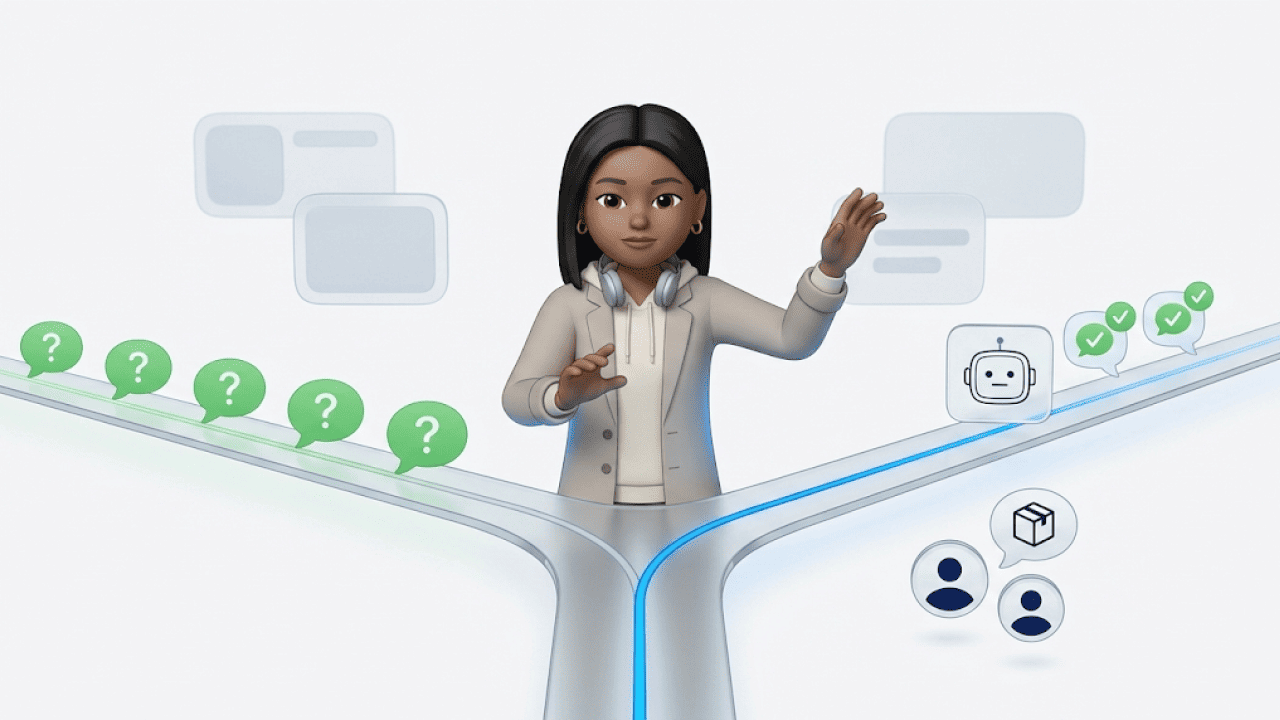
An honest fork in the road. Not every use case is an RCS use case.
RCS pays off for:
- Transactional messages & 2FA: low cost per auth, verified sender, less phishing risk than SMS. Here RCS is the better SMS replacement.
- Airlines & travel: boarding passes, flight updates, check-in. High-frequency, transactional.
- Carrier & public-sector notifications: telcos, utilities, government.
- US markets: where SMS marketing dominates, RCS is the logical next step.
WhatsApp pays off for:
- DACH D2C / e-commerce marketing: the reach is there, the conversion is proven. Brands like Alpurial run a ROAS of over 80x through WhatsApp newsletters.
- Marketing flows with high conversion: abandoned cart, re-engagement, Black Friday.
- Conversational commerce: where the customer writes back, not just receives.
The key point: in DACH, RCS competes less with WhatsApp than with SMS. As a cheaper, verified, multimedia SMS replacement for transactional messages, RCS is strong in 2026. As a marketing channel for DACH D2C, it's still behind WhatsApp. Not on price. On behavior and ecosystem.
Example calculation: what does an RCS campaign really cost?
Scenario: you want to reach 50,000 customers in Germany with a Black Friday offer.
RCS calculation (ballpark):
- ~35,000 recipients reachable via RCS × ~6 cents = €2,100
- ~15,000 falling back to SMS × ~9 cents = €1,350
- Aggregator, platform, prorated setup = ~€500
- Total: ~€3,950
WhatsApp calculation:
- 50,000 marketing messages × €0.1131 = €5,655 in Meta fees
- Software/BSP = fixed (from ~€99/month up)
- Total: ~€5,655 + tool
On paper, RCS is about €1,700 cheaper here. But now comes the part the headline numbers leave out:
- WhatsApp reach in DACH: high and documented.
- WhatsApp conversion: proven from real customer data (Alpurial >80x ROAS).
- RCS marketing conversion in DACH: barely documented.
- RCS tooling for flows, segmentation, Shopify: thin.
In short: the cheaper send can be the more expensive mistake. You save €1,700 on delivery — and lose a multiple of that in revenue if the campaign doesn't convert. Price per message is one metric. Revenue per campaign is the one that counts.
FAQ — RCS Chat Costs
Does RCS cost me anything as a private user?
No. RCS runs over your data connection. You pay nothing per message — only the data that's already in your plan.
What does an RCS message cost a business?
Depending on market, carrier and aggregator, between fractions of a cent (US) and ~8 cents (DACH, list price). Plus platform and setup costs.
Is RCS cheaper than SMS?
Usually yes. A2P SMS costs around 7–12 cents per message in DACH. RCS — once negotiated — often comes in below that, and adds rich media and a verified sender. How the RCS vs SMS duel plays out overall is covered in its own comparison.
Is RCS cheaper than WhatsApp Business?
Per message in DACH: yes. RCS marketing sits at ~4–8 cents, WhatsApp marketing at ~€0.1131. On the total bill, that evens out through fallback costs, thin tooling and unclear conversion.
Do I pay an SMS fee if my recipient has no RCS?
Yes. If the message falls back, you as the brand pay the carrier's SMS rate. That makes the math messier than the RCS price list suggests.
Is RCS Business Messaging available in Germany?
Yes — and that's the big change in 2026. Telekom, Vodafone and o2 bill RBM productively, and around 80% of smartphones are RCS-capable. In 2025 this was still a work in progress.
Is there conversation pricing like WhatsApp used to have?
Partly. In France and some markets, billing runs on conversational sessions (24h windows). In the US, pay-per-message dominates. WhatsApp itself switched to per-message billing in July 2025.
Does RCS pay off for e-commerce in DACH?
For transactional messages (shipping, auth, status): increasingly yes. For marketing: rarely. The reach is there, but tooling and proven conversion favor WhatsApp. For DACH D2C marketing, WhatsApp is the more rational choice in 2026.
What does verification as an RCS brand cost?
Verification itself is usually free — the time investment is the bigger cost. Aggregator setup fees range from €0 to a few hundred euros depending on the provider.
Can I run RCS and WhatsApp in parallel?
Yes, many test it. In practice that means double tooling, double templates, double compliance. Worth it mainly if you have volume in markets where RCS dominates — and WhatsApp for DACH.
Conclusion: understanding RCS costs means placing the channel correctly
For consumers, RCS is free. Period. If you're a private user worrying about cost, you're worrying about the wrong thing.
For brands, the picture flipped in 2026. RCS has arrived in DACH — widespread, verified, cheaper per message than WhatsApp. The old argument "RCS isn't worth it in DACH because hardly anyone has it" is done.
But: cheaper per message doesn't mean cheaper per revenue. In 2026, RCS is the better SMS replacement — for transactional messages, auth, status updates. For DACH D2C marketing, WhatsApp still beats RCS. Not on price. On mature tooling, conversational commerce and conversion that's backed by real customer data.
What that means for you: if you want to send in DACH, RCS is worth a test — for the right use cases. If you want to sell in DACH, WhatsApp remains the choice with the proven ROI in 2026.
Want to know how messaging costs translate into actual revenue? Book a demo with Chatarmin — we'll show you live what pays off and what doesn't.
External source for current RCS standards: GSMA RCS Universal Profile