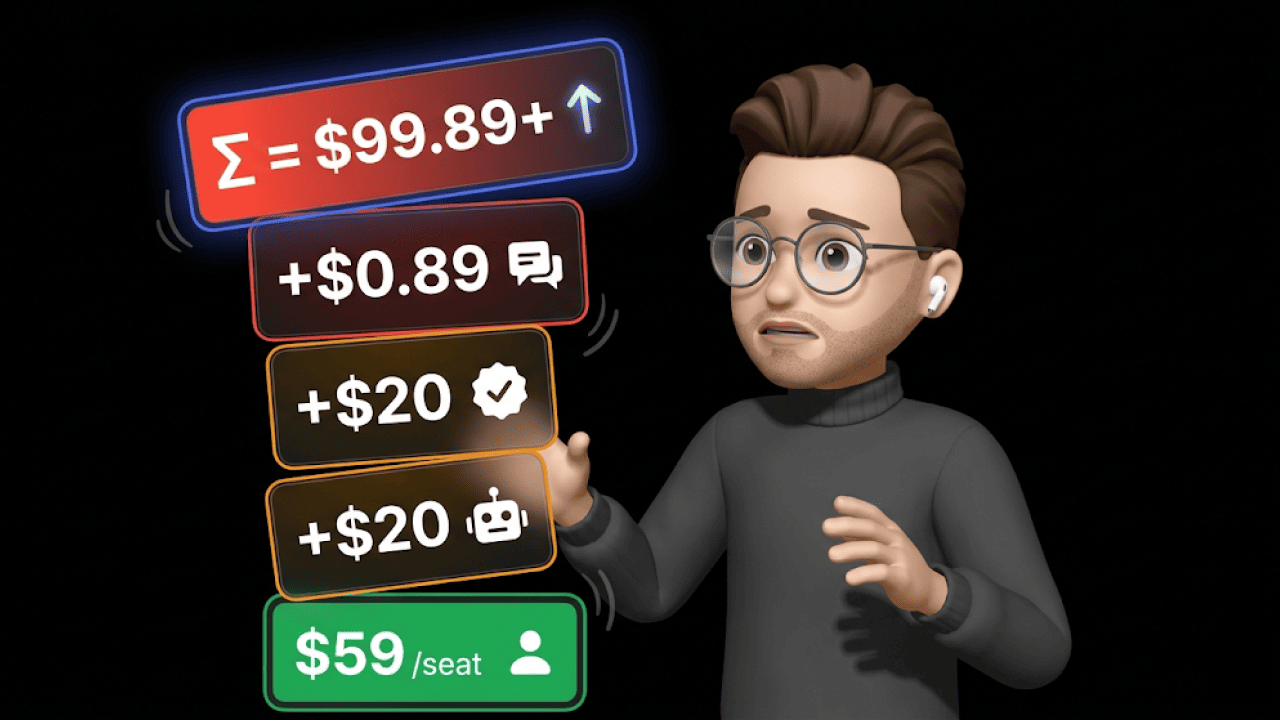

Front pricing looks simple at first glance: one price per user, a few plans, done. In practice, your bill depends on add-ons, channels, and seat limits. That's exactly where it gets interesting for e-commerce teams in the DACH region (Germany, Austria, and Switzerland). This article looks at Front the way a Shopify or JTL merchant would: what the tool actually costs in 2026, what it does well, and where you can tell it wasn't built for online retail.
What Is Front and Who Is It Built For?
Front is a shared-inbox platform for customer communication. Email, live chat, SMS, social media, and WhatsApp come together in one interface where a whole team works. According to Front, more than 9,000 businesses use the platform.
Its strength is clearly email. Front comes from the email world, and it feels like it: shared mailboxes, comments, assignments, a clean collaboration layer on top of the classic inbox. For support and operations teams coordinating hundreds of emails a day, that's a solid tool.
For e-commerce in the DACH region, the starting point is different. Here, what counts is whether a tool understands orders, returns, and shop data, whether WhatsApp is a real channel, and whether pricing scales with ticket volume. More on that in a moment. First, the numbers.
Front Pricing 2026: The Three Plans
Front simplified its pricing in 2026. Instead of the previous four plans (Starter, Growth, Scale, Premier), there are now three tiers. Prices are per seat per month with annual billing (based on third-party sources like G2 and Hiver as well as Front's own help center, as of early 2026):
- Starter, $25 per seat/month: shared inbox and basic ticketing. Limited to a single channel type (email or chat or SMS) and a maximum of 10 seats.
- Professional, $65 per seat/month: omnichannel with several channels at once, advanced automations, and analytics. Up to 50 seats.
- Enterprise, $105 per seat/month: includes most AI features by default (Autopilot excluded), plus advanced permissions and reporting. According to Front, an onboarding package is mandatory for contracts above $25,000.
Two things to keep in mind. First: older comparison sites and tool databases still show the old four-plan model with prices from $19 to $229. That information is outdated, but it sticks around in search results. Second: the prices above apply to annual billing. Monthly billing runs noticeably higher, according to the same sources. For the current state, it's always worth checking the official Front pricing page.
There's no permanently free plan. Front offers a limited free trial, usually 14 days. There's no minimum license requirement either: for Starter and Professional, one license is enough, according to Front's help center.
Where the Bill Grows: Add-ons and Channels
The seat price is only the starting point. Several features that matter in everyday e-commerce cost extra on the lower plans.
AI features as add-ons: Copilot (suggested replies) and Smart QA (quality scoring) are paid extras on Starter and Professional, around +$20 per seat per month each according to Hiver. Autopilot, the automated case handling, is billed at roughly $0.89 per resolved case. On the Enterprise plan, most of these AI features are already included.
WhatsApp as a paid add-on: WhatsApp isn't a standard part of Front. It's a separately bookable channel add-on. You need a Meta Business Account, and the channel works as an inbox: receive messages, reply, send templates, assign conversations. What WhatsApp Business costs add on top are the per-message Meta fees. Those apply regardless of the tool.
Seat limits force upgrades: Starter caps at 10 seats, Professional at 50. Once your team grows past those limits, the next plan isn't optional. A 12-person team lands on Professional automatically, regardless of which features you actually need.
In plain terms: the $25 list price is rarely the price an active e-commerce team ends up paying.
Front From an E-Commerce Perspective: What Fits, What's Missing
Now the lens that matters for you. What does a Shopify or JTL merchant want from a communication tool, and how far does Front get?
A central omnichannel inbox is something Front handles well. Multiple channels, one team, clean assignment: that's core competency. Rule-based automation like tagging and routing, plus analytics on response time and CSAT, are there too.
It gets thinner on the things that define online retail. Three points stand out:
- Shop actions, not just text: In retail, it's rarely just about the reply, it's about the action behind it. Cancel an order, change an address, trigger a return. Front is a communication layer. Deep, write-level access to Shopify or JTL usually runs through third parties or Zapier.
- WhatsApp as a real channel: For many customers in the DACH region, WhatsApp is the first point of contact. In Front, WhatsApp is an inbox add-on. Broadcast campaigns, newsletters, and opt-in logic aren't part of the product.
- GDPR and hosting: Front is a US company and works with Standard Contractual Clauses. EU hosting isn't standard. Anyone processing customer data from the DACH region should review the contract with their data protection officer.
My take: Front is a good tool for email-driven teams. For a shop that puts WhatsApp and automated shop actions at the center, it covers about half the distance.
What We Take From This for armincx
These gaps are one reason we built armincx differently. armincx is an AI-first customer service suite for e-commerce. The AI doesn't just reply, it executes real actions through a workflow engine, like cancellations, address changes, or returns, directly in Shopify and JTL. WhatsApp, email, Instagram, and live chat sit in one inbox. Onboarding is handled by a German-speaking team.
This isn't a verdict against Front. It's a different design direction. Front optimizes collaboration at the inbox. armincx aims to handle the recurring 30 to 80% of standard questions like "Where's my order?" automatically, so your team has room for the rest. Which approach fits you depends on whether your bottleneck is team coordination or ticket volume.
Frequently Asked Questions About Front Pricing
How much does Front cost per user per month?
Front costs $25 (Starter), $65 (Professional), or $105 (Enterprise) per seat per month with annual billing in 2026. Monthly billing runs higher, according to third-party sources.
Does Front have a free plan?
No. Front doesn't offer a permanently free plan, only a limited free trial, usually 14 days. Check the exact scope directly on the pricing page.
How many plans does Front have in 2026?
Three: Starter, Professional, and Enterprise. The earlier four-plan model with Starter, Growth, Scale, and Premier (prices from $19 to $229) is outdated but still shows up in older comparisons.
What do Front's AI features cost?
On the lower plans they're add-ons. Copilot and Smart QA cost around +$20 per seat per month each according to Hiver, and Autopilot about $0.89 per automatically resolved case. On the Enterprise plan, most AI features are included.
Does Front offer a WhatsApp integration?
Yes, as a paid channel add-on. You can receive WhatsApp messages, reply, and send templates. Broadcast campaigns, newsletters, and segmentation aren't part of the feature set.
Is Front GDPR-compliant?
Partly. Front is a US company and offers Standard Contractual Clauses, but EU hosting isn't standard. A review by your data protection officer is advisable for DACH customer data.
Does Front work with Shopify?
Yes, an integration exists. It mainly brings customer context into the inbox. Deep, write-level actions like cancellations or returns usually run through third-party tools. For what a native Shopify connection looks like, see specialized solutions.
Is Front worth it for e-commerce in the DACH region?
It depends. For email-driven teams, Front is strong. If WhatsApp is your main channel and you want to automate shop actions, compare the price including add-ons with specialized tools. You'll find an overview of options in our piece on the Front alternative.
Does Front have seat limits?
Yes. The Starter plan is capped at 10 seats, Professional at 50. There's no minimum, though, one license is enough. Once your team grows past the limits, an upgrade to the next plan is required.
Bottom Line: Who Front Is Worth It For
Front is transparent about its base prices. Three plans, $25 to $105 per seat, clearly tiered. For an email-centric team that mainly wants to collaborate better, that's a fair offer.
For e-commerce in the DACH region, it's worth a close look at the total bill. AI features and WhatsApp are add-ons on the lower plans, seat limits force upgrades, and shop actions often need extra tools. Whether it pays off depends on how central WhatsApp and automated processes are for you.
If your customer service is mostly recurring questions and Shopify or JTL are in the mix, look at how far an AI-first solution gets you. Book a demo and see armincx in a real setup.