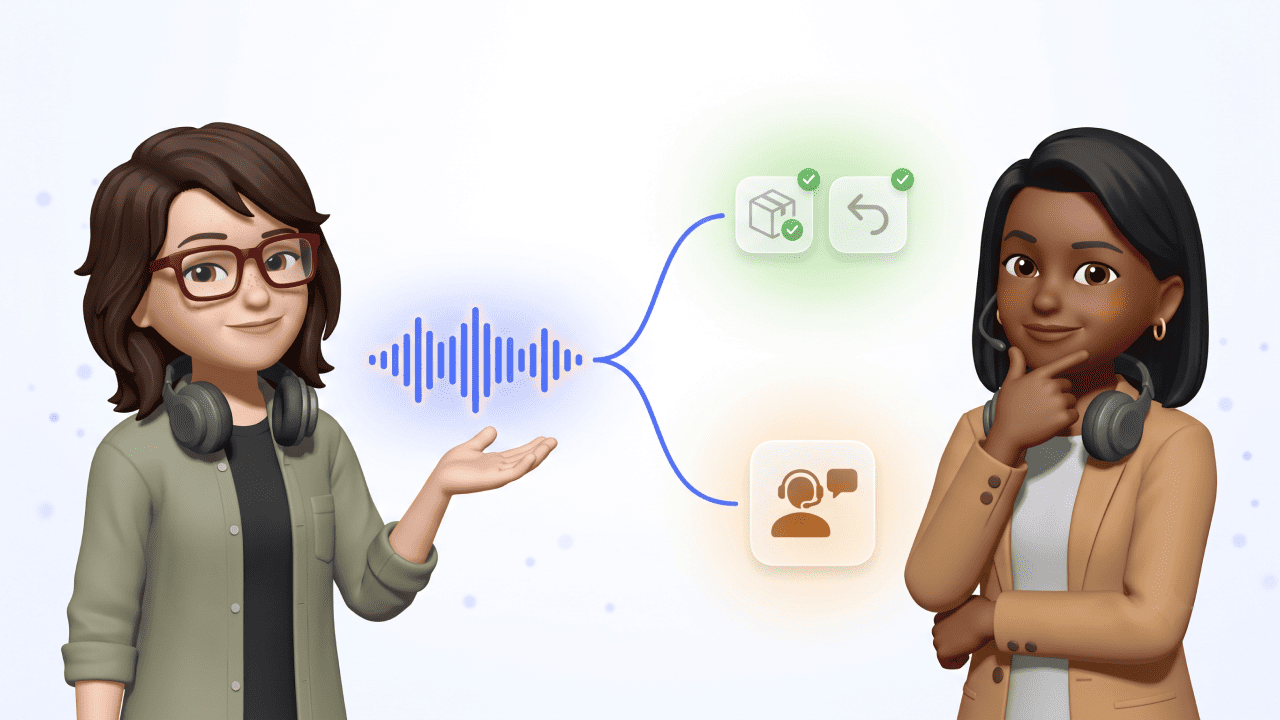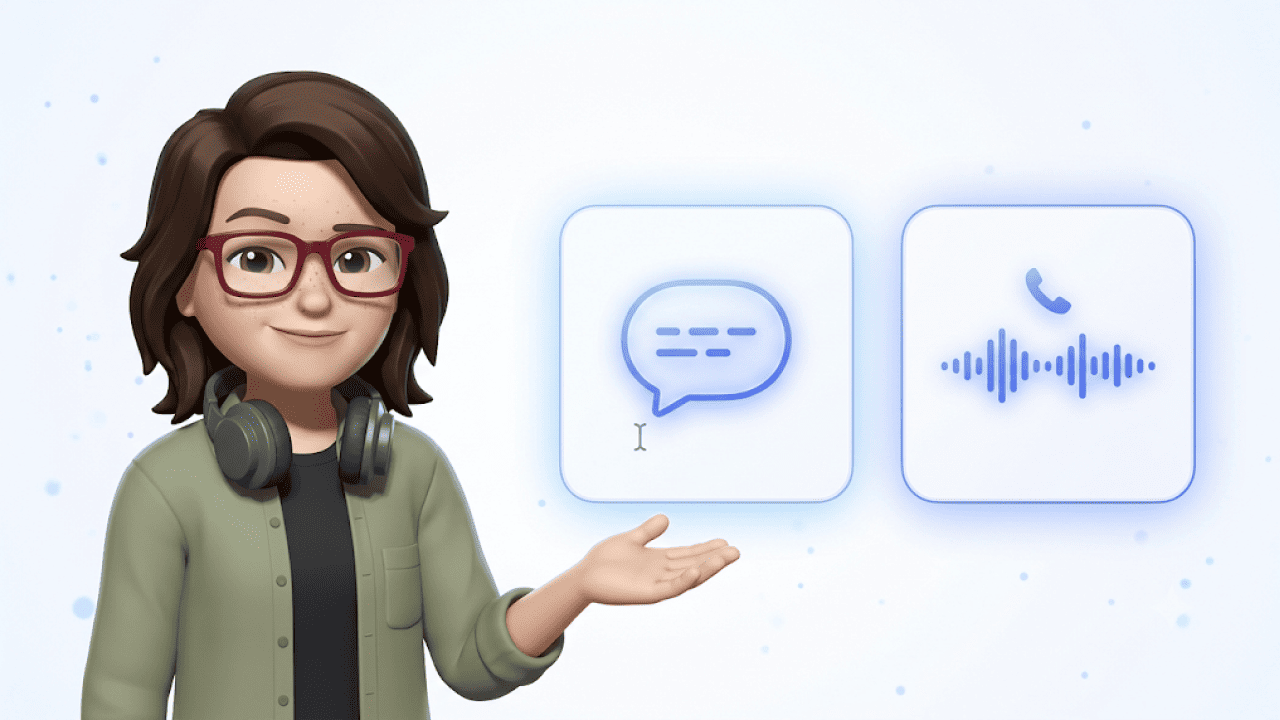

A customer types "Where's my parcel?" into your chat window at 10:47 PM. Another one calls the next morning and asks exactly the same thing. Two channels, one question. But which one solves the ticket faster? And cheaper?
That's the question deciding budgets in e-commerce support right now. Both technologies grew up in 2024/2025. Voice models now understand even mumbled order numbers. Chatbots answer follow-up questions without losing the thread.
Here's the point: the "chatbot or voicebot" decision is no longer a matter of belief. It's a calculation. Let's look at when each channel wins.
Chatbot and Voicebot: What's the Actual Difference?
Sounds trivial, but it isn't. Today both often run on the same language model in the background. The difference lies in the channel. And that changes everything.
A chatbot runs in writing. On your website, in WhatsApp, in Messenger. The customer types, the bot types back. Can be asynchronous, visual, with buttons and links.
A voicebot runs on voice. The customer calls, speaks, the bot replies out loud. Synchronous, real time, no screen.
So the decisive difference between chatbot and voicebot isn't intelligence. It's the situation your customer is in.
Put simply: someone driving a car doesn't type. Someone quietly sorting out a return at the office doesn't call. The channel decides who can even reach you.
Speed: Which Channel Really Solves the Ticket Faster?
This is where it gets interesting. Because "fast" has two meanings.
Fast per single answer? Chatbot. The customer reads what they're after in two seconds. Tracking link, size chart, opening hours: all visible instantly.
Fast to resolution? Depends. For a simple WISMO query ("Where's my order?"), the voicebot is often faster. No typing, no hunting for buttons. The customer says the order number, the bot reads out the status. Done in under a minute.
The catch: with a chatbot, the customer can do something else in parallel. On a call, they're tied up. On the flip side, a larger share of chat users drops off mid-conversation. The half-finished exchanges nobody bothers to complete.
The result: there's no overall winner. There's only the right channel per query type. How a voicebot in customer service actually works is a topic of its own.
The Comparison Table: Chatbot vs. Voicebot in E-Commerce
| Criterion | Chatbot | Voicebot |
|---|---|---|
| Availability | ✓ 24/7, can be asynchronous | ✓ 24/7, but synchronous |
| Speed per answer | ✓ Very fast (reading) | ~ Slower (listening) |
| Complex choices (products, tables) | ✓ Strong (visual) | ✗ Weak (no screen) |
| Emotional escalation | ~ Feels cold | ✓ Voice de-escalates better |
| Accessibility (visual impairment, older customers) | ~ Limited | ✓ Strong |
| Multitasking for the customer | ✓ Possible | ✗ Fully occupies |
| Documentation/traceability | ✓ Chat history stays | ~ Needs a transcript |
| Integration into your shop system | ✓ Deep possible | ✓ Deep possible |
| Cost per contact | ✓ Cheaper | ~ Higher (voice processing) |
| Spontaneous, impatient customers | ~ Typing-averse drop off | ✓ A call feels more personal |
In short: chat wins on volume and visuals. Voice wins on emotion, accessibility, and phone-leaning audiences.
When to Bet on the Chatbot
There are clear scenarios where the written channel comes out ahead.
You get a lot of recurring standard questions. Shipping costs, delivery times, return windows. The chatbot answers them at a fraction of the cost of a call.
Your answers need links or images. Size chart, product comparison, tracking URL. Hard by voice, easy by chat.
Your audience is young and prefers typing. Gen Z hates calling. Full stop. For them, WhatsApp support is often the only channel they'll use voluntarily.
You want to connect marketing and support. For DACH shops, WhatsApp works as a channel not only in support but also as a conversion lever. The written channel ties tightly into your sales logic. Something that's harder to pull off over the phone.
If you want to go deeper on conversational AI in general: the gap between a simple chatbot and conversational AI is bigger than most people think.
When the Voicebot Is the Better Choice
Now the other side. There are queries where voice clearly wins.
Your phone won't stop ringing. If you miss dozens of calls every day because your team is overloaded, an AI phone assistant solves the problem at the root. Nobody gets stuck on hold.
Your customers are older or prefer to call. Furniture, care products, big-ticket purchases. Here people want to talk, not type. A good voicebot catches these calls instead of letting them ring out.
It's about emotions. Complaints, late deliveries, faulty goods. A voice de-escalates better than a chat window. That's not magic. It's psychology.
WISMO calls eat your time. "Where's my parcel?" is one of the most common support questions in e-commerce. How to automate WISMO queries without it feeling soulless is a chapter of its own.
The catch with voice: it's more expensive per contact. Voice processing costs more compute than text. What an AI phone assistant realistically costs is worth doing the math on before you decide.
Chatbot vs. Conversational AI: Not the Same
Important, because they're often confused: a classic chatbot isn't automatically conversational AI.
The old chatbot works with fixed decision trees. "Press 1 for shipping." Rigid, frustrating, prone to dead ends.
Conversational AI understands free language. The customer phrases it however they want. The bot still gets it. That holds for text and for voice alike.
Here's the point: the interesting question today is no longer "chatbot vs. conversational AI". Both channels, chat and voice, now run on the same AI base. The only difference is the channel the customer reaches you through.
The Honest Truth: You Usually Need Both
Here's the part providers don't like to say.
The question "chatbot or voicebot" is often framed wrong. When it counts, you need both. Connected through the same data and the same logic.
An example: the customer starts in the WhatsApp chat, gets stuck, calls. If the voicebot then knows the chat history, the customer doesn't have to explain everything again. This is exactly where good integration separates from the cobbled-together kind.
Put simply: the technology is secondary. The connection to your shop system decides. A voicebot without access to order data is an expensive answering machine. What to look for when choosing a provider hangs almost entirely on this integration depth.
Where Each Provider Is Strong
Not every voice provider targets e-commerce. Here's the honest breakdown:
Tools like fonio or VITAS are strong outside e-commerce: with doctors' offices, tradespeople, law firms, or in call centers. Appointment booking, call handling, callbacks. If you're looking for a fonio alternative for exactly that use case, the comparison is worth it.
In e-commerce DACH, the math looks different. It's about order status, returns, Shopify or WooCommerce integration. What counts here is whether the voicebot accesses your order data live. Not whether it can book an appointment.
The result: there's no "best" provider. There's only the one that fits your business model. A local hairdresser and a fashion shop with thousands of orders a day need completely different setups.
How to Decide Right
Three questions that make the decision for you:
- How many calls do you miss per day? Over 20? Voice pays off. Under 5? Build out chat first.
- How typing-friendly is your audience? Young and digital, then chat. Older and phone-leaning, then voice.
- Do you have a connected shop system? If yes, get the most out of both channels. If no, fix that first.
If you bring voice and chat together through one shared conversational AI logic instead of running two island solutions, you save yourself double the upkeep.
By the way: armincx focuses precisely on e-commerce DACH with deep shop-system integration. If you're in exactly that segment, the armincx voice approach is worth a look.
FAQ: Chatbot vs. Voicebot
What's the difference between a chatbot and a voicebot?
The chatbot communicates in writing through a chat window or messenger, the voicebot through the spoken voice on the phone. Both can use the same AI in the background. The channel decides which customers you reach.
Is a voicebot faster than a chatbot?
Depends. Per answer the chatbot is usually faster, because reading is faster than listening. For simple WISMO queries the voicebot often still resolves the ticket quicker, because no typing is needed.
Do I need a chatbot or a voicebot?
Usually both. Which channel takes priority depends on your audience and your call volume. At over 20 missed calls a day, voice pays off; with a typing-friendly young audience, chat does.
Is a chatbot the same as conversational AI?
No. Classic chatbots work with fixed decision trees. Conversational AI understands free language and works both in chat and by voice.
What does a voicebot cost compared to a chatbot?
Voice is usually more expensive per contact, because voice processing needs more compute. You'll find the exact models and their ROI logic in the post on the costs of an AI phone assistant.
Is a voicebot a good fit for my online shop?
Yes. Provided you have high call volume and a connected shop system. Then the voicebot can access order data live and resolve WISMO queries automatically. Without shop-system integration it stays an expensive answering machine.
Can a voicebot resolve complex complaints?
Partly. Standard cases yes, sensitive or escalating cases belong with a human. A good voicebot recognizes that and hands off cleanly.
Which channel is better for emotional customers?
The voicebot. A voice usually de-escalates better than a chat window. For complaints and late deliveries, the spoken channel feels more personal.
Does a voicebot work for local service providers too?
Yes. There are specialized providers like fonio or VITAS for that. For pure appointment booking and call handling, that's enough. For e-commerce, shop-system integration is what counts.
Does the chatbot disappear because of voice technology?
No. Both channels have different strengths and audiences. The future lies in combining them, not replacing one with the other.
Conclusion: The Right Channel for the Right Query
Chatbot vs. voicebot isn't an either-or question in the end. It's a question of the right channel for the right query. If you connect both through the same shop data, you stop losing customers. Whether they type or call. That's exactly what an AI customer service is built for, one that doesn't treat chat and voice as separate worlds.