
You search for ‘Shopify MCP’ and end up with several official servers, a string of GitHub projects and guides describing tools that Shopify switched off at the end of August. Google Ads, Meta and Klaviyo are hardly any clearer. This overview shows you which MCP servers officially exist for e-commerce, what they can read and write, and how much setup is involved. We checked every detail against the vendors’ documentation on 14 October 2026, with a focus on online shops in Germany, Austria and Switzerland (DACH).
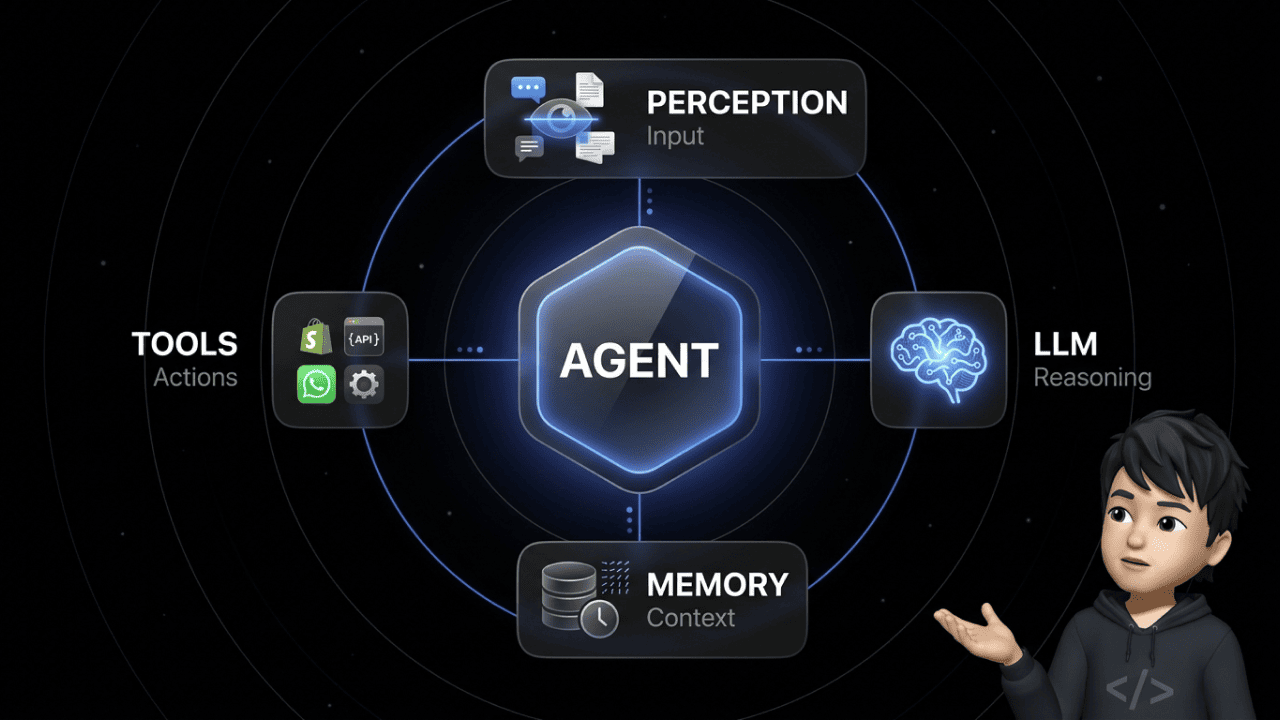
Some background: an MCP server connects AI assistants such as Claude or ChatGPT with the data and functions of a tool. The standard behind it is called the Model Context Protocol. According to Anthropic, there were already more than 10,000 active public servers at the end of 2025. For your shop, a handful of them matter.
MCP servers for e-commerce at a glance
Nine tools from the typical e-commerce stack offer an official MCP server. They differ mainly in two ways: whether the AI can only read or also write, and whether a login is enough or a developer needs to step in.
| Tool | Runs on | Read | Write | Login is enough | Strongest for |
|---|---|---|---|---|---|
| Shopify | Several Shopify servers | Catalogue, order status | Cart, checkout | Partly, catalogue also without login | Shopping agents, app development |
| Shopware | Built into the shop system | Yes | Yes, controlled via allowlist | No, admin setup | Shop data from your own system |
| Klaviyo | Hosted | Yes | Partly: campaigns, profiles, templates | Yes, with Owner, Admin or Manager role | Email reporting |
| Chatarmin | Hosted | Yes | Drafts, campaigns after approval | Yes | WhatsApp marketing |
| Google Ads | Open source, self-run | Yes | No | No | Campaign reporting |
| Google Analytics | Open source, local | Yes | No | No | Questions about traffic and revenue |
| Meta Ads | Hosted by Meta | Yes | Yes | Yes, via Facebook Login for Business | Reporting, ads, catalogue |
| HubSpot | Hosted | Yes | Yes, CRM objects | No, own app required | B2B and wholesale |
| Pipedrive | Hosted | Yes | Yes | Yes | Sales pipeline |
As of 14 October 2026. Features and status change constantly.
Shopify MCP: which server do people mean?
Shopify MCP is the umbrella term for several official MCP servers from Shopify. They are aimed at developers of AI agents that shop on behalf of buyers and at developers of Shopify apps. These are the servers behind the term:
| Server | For whom | What it does |
|---|---|---|
| Global Catalog | Developers of shopping agents | Search products across all Shopify shops |
| Storefront Catalog MCP | Developers of shopping agents | Search products of a single shop and fetch details |
| Cart MCP and Checkout MCP | Developers of shopping agents | Build carts and turn them into a checkout |
| Order MCP | Developers of shopping agents | Fetch the status of orders placed through your own agent |
| Customer Accounts MCP | Developers | Functions around the customer account |
| Dev MCP in the AI Toolkit | Shopify developers | Search docs and API schemas, check code |
The shopping servers run on the Universal Commerce Protocol (UCP) and are reachable per shop at https://{your-shop-domain}/api/ucp/mcp. Shopify describes them in its Agentic Commerce documentation and the Dev MCP in the AI Toolkit.
An MCP client can query your shop’s catalogue without signing in. According to Shopify, this applies to the catalogue, the cart and building a checkout, at the lowest rate limits. Completing a checkout and fetching orders requires credentials from the Dev Dashboard. For production traffic, Shopify recommends signing in as a rule.
Important if you are reading older guides: Shopify has removed the catalogue and cart tools of the former Storefront MCP. The deprecation came in June 2026 with support until the end of August, and the migration page has pointed to UCP ever since. Only the lookup of shop policies and FAQs still runs on the old /api/mcp endpoint.
Our take for merchants: none of these servers is built for revenue and order questions in a chat. For that, Shopify offers Sidekick, the AI assistant inside the Shopify admin. According to the Shopify Help Centre, Sidekick analyses data, manages orders and edits products, and it shows you changes for review before applying them. Which features and limits you get depends on your plan.
Two other routes are worth knowing:
- AI Toolkit with Shopify CLI: developers use it to run Admin API queries against their own shop, with changes blocked by default. It pays off if you want to combine shop data with other tools in one chat and have someone with developer skills on the team.
- Inbox agent: for AI chat in your shop, meaning for your customers, Shopify points merchants without code to the Inbox agent in Shopify Inbox.
Admin access via chat is mainly promised by community servers on GitHub. Check carefully who maintains the project before you store an admin token.
Shopware MCP: built into the shop system
Shopware has shipped its MCP server with the shop system since version 6.7.11.0. For many DACH merchants, this is the most relevant server on the list. According to the Shopware documentation, there are two endpoints:
/api/_mcpfor the Admin API, covering products, orders and customer data from the back end/store-api/_mcpfor the Store API, covering the view of a sales channel
For the Admin API, an AI client signs in with the credentials of a Shopware integration or via OAuth. An allowlist lets you set which tools are permitted per integration and per user. For example, you allow search and hold back deletion. Admin users bypass the allowlist, so plan access with dedicated roles. The Store API has no allowlist and only needs the sales channel’s access key.
Three things you should know:
- The server is switched off by default. You enable it via the
MCP_SERVERfeature flag. - Shopware lists it as experimental until version 6.8.
- Setup requires admin rights and some technical know-how. In practice, your agency usually handles it.
Klaviyo MCP: email data in your chat
Klaviyo runs a hosted MCP server at https://mcp.klaviyo.com/mcp. You add the address in your AI tool and sign in via OAuth. According to the Klaviyo documentation, the hosted server is open to users with the Owner, Admin or Manager role. Klaviyo lists Claude, ChatGPT, Cursor and VS Code among the supported clients. Alternatively, there is a local server that you run with a private API key.
What the AI may do depends on the area:
| Area | Access |
|---|---|
| Campaigns | Read, reports, create |
| Flows | Read and reports |
| Profiles | Read, create, update |
| Templates | Read, create, edit, delete |
| Lists and segments | Read |
| Catalogues and events | Read |
A switch restricts the server to read-only access. A typical first question: ‘Which three flows brought in the most revenue over the last 30 days?’
Chatarmin MCP: WhatsApp marketing from Claude and ChatGPT
The Chatarmin MCP is included for all Chatarmin customers and connects your WhatsApp channel with Claude, ChatGPT, Cursor, VS Code or GitHub Copilot. You sign in via OAuth with your Chatarmin login. In ChatGPT, the connector runs through Developer Mode. According to the OpenAI Help Centre, write actions are available on the Business, Enterprise and Edu plans, while the Pro plan can only read.
What the server can do:
- Query figures: revenue of a campaign, results of a flow, contacts with opt-in
- Build drafts: flows land in Chatarmin as inactive drafts, templates as drafts before submission to Meta
- Create campaigns: only after your explicit confirmation, with a test run showing the number of recipients beforehand
What this looks like in practice: a health brand among our customers has already created 61 templates and 59 flows via the MCP.
There are two limits to know. The MCP only sends individual WhatsApp messages through a paid add-on tool that is switched off by default. And access is restricted to your own organisation.
Google Ads MCP and Google Analytics MCP: reporting with read access
Google offers open-source servers for both products, and both are read-only. You keep changing bids, budgets and settings in the interface.
| Google Ads MCP | Google Analytics MCP | |
|---|---|---|
| Source | Google Ads API docs | Google Analytics docs |
| Access | Read only | Read only |
| Runs on | Locally or self-hosted, for example on Cloud Run | Local installation from GitHub |
| Typical question | ‘How did my campaigns perform this week?’ | ‘Which products sold best yesterday?’ |
The Google Ads MCP comes with three tools: list accounts, query reports with the Google Ads Query Language and fetch metadata on resources. To set it up, you need a Google Cloud project with API access and OAuth credentials.
Our take: both servers are a good choice for reporting because read access keeps the risk low. Plan for someone who knows their way around Google Cloud to handle the setup.
Meta Ads MCP: the server with write access
Meta hosts its Ads MCP server itself at https://mcp.facebook.com/ads. Anyone searching for ‘Meta MCP’ usually means this server. Meta’s documentation groups the tools into seven categories:
- Reporting on campaign performance
- Ads, ad sets and campaigns: create and edit
- Catalogues: create them and maintain product data
- Signals and datasets: check them
- Help articles: search them
- A/B tests and conversion lift studies: manage them
- Activity logs: view them
You sign in via OAuth with Facebook Login for Business. According to the setup guide, you do not need your own Meta developer app. If you use one, you add the use case ‘Create & manage ads with ads MCP server’ there.
The difference from Google: the Meta server can write. An ad account means real budget. So start with reporting and have the AI assistant present every change to you for confirmation.
HubSpot MCP and Pipedrive MCP: when your CRM joins in
In e-commerce, a CRM mainly matters for B2B business and wholesale. Both vendors have an official, hosted server.
Pipedrive introduced its server on 30 June 2026:
- Availability: included in all plans, sign-in via OAuth
- Access: read and write within existing user permissions
- Control: every action ends up in the change log
HubSpot describes its remote server as follows:
- Read and write: contacts, companies, deals and tickets, plus carts, products and orders
- Read only: campaigns, landing pages and blog posts
- Setup: your own app with permissions, and an admin of the HubSpot account connects first
- Audience: mainly technical teams, according to HubSpot
A note on the docs: the FAQ on the same page mentions read-only access to contacts, companies and deals. The best way to find out which applies is a test with your own account.
Official or community: how to recognise a good MCP server
The vendor maintains an official server itself and adapts it to changes in its API. With community projects, a single developer or a third party does that. Check these five points for every server:
- Operator: the vendor, a well-known third party or a private GitHub project.
- Sign-in: OAuth with your own login is the safest route. A permanent API token in a configuration file deserves a second look.
- Access: you only need write access once your reporting is in place.
- Hosting: hosted by the vendor or running locally on your machine.
- Approvals: campaigns, budgets and prices should only change after your approval.
Official here means ‘maintained by the vendor’ and says little about maturity. Shopware lists its server as experimental. Google limits itself to read access. Shopify removed and replaced tools within a few months. Expect your setup to keep changing over the coming months.
Getting started: the MCP stack for a Shopify shop
Start with the servers where a login is enough, and stick to reading for the first few weeks. We recommend this order for a typical Shopify shop with Klaviyo and WhatsApp:
- Connect Klaviyo or Chatarmin first. Both servers are hosted, and you are connected in a few minutes.
- Ask reporting questions. For example: ‘Compare the open rate of my last newsletter with my last WhatsApp campaign.’
- Let the AI build drafts. A welcome flow or a template is created as a draft, and you review it in the editor you already know.
- Add Meta Ads, Google Ads and Google Analytics once approvals for the ad account are settled and someone takes over the Google setup.
At this stage, you ask Sidekick in the Shopify admin about your Shopify revenue and orders.
One point applies to every server: the provider of your AI tool also processes the data you query. For businesses in the EU, that makes it a GDPR question. Use a business account with a data processing agreement, clarify where your AI provider processes the data, and ask for metrics rather than individual people.
Conclusion: which MCP server pays off first?
The hosted servers of your marketing tools pay off fastest. You connect Klaviyo, Chatarmin and Pipedrive without a developer. Meta Ads is the only ads server with write access and runs on your Meta login. Google Ads and Google Analytics deliver reporting with read access but need technical setup. With Shopify and Shopware, the benefit depends on whether you have a developer or an agency at your side. For your shop data in a chat, Sidekick is the shorter route.
If you run WhatsApp marketing, connect the Chatarmin MCP and ask Claude for the figures of your last campaign. Not using Chatarmin yet? Then book a demo and see how more than 500 brands build WhatsApp into a revenue channel.
Frequently asked questions about MCP servers in e-commerce
Is there an official Shopify MCP server?
Yes. Shopify offers several official servers, mainly for shopping agents and developers.
Can I connect Claude to my Shopify shop?
It depends. Through the Storefront Catalog MCP, Claude reads your shop’s product catalogue, while orders and revenue are only officially accessible via the developer setup in the AI Toolkit.
What is the difference between Shopify MCP and Sidekick?
Sidekick is Shopify’s AI assistant in the admin and works directly with your shop data. The MCP servers connect external AI tools such as Claude or ChatGPT with Shopify, mainly for shopping agents and developers.
What is UCP at Shopify?
UCP stands for Universal Commerce Protocol, a standard for AI agents in commerce. Since 2026, Shopify has offered its servers for catalogue, cart, checkout and order status through it.
Is the Shopify Dev MCP the same as the Storefront Catalog MCP?
No. The Dev MCP gives developers docs and API schemas for work on apps and themes, while AI agents use the Storefront Catalog MCP to search the products of a single shop.
Can the Google Ads MCP change campaigns?
No. Google’s server is read-only and intended for reporting and analysis.
Is there an official Meta Ads MCP server?
Yes. Meta hosts it itself, and it can also create and edit ads, ad sets and campaigns.
Does Klaviyo have an MCP server?
Yes. Klaviyo runs a hosted server that users with the Owner, Admin or Manager role connect via OAuth.
Do I need a developer for MCP servers?
It depends. You connect hosted servers such as those from Klaviyo, Chatarmin, Meta Ads or Pipedrive with a login, while Google Ads, Google Analytics, Shopware and HubSpot need technical setup.
Are MCP servers free?
It depends. The protocol is open, and each vendor decides whether its server costs extra.
Is a hosted MCP server a good place to start?
Yes. Hosted servers with a login are connected in a few minutes, so start with the tool where you look up figures most often.