
95 percent. That is the word recognition rate of modern speech-to-text models under clean conditions – meaning someone speaks clearly into the microphone. Ten years ago, speech recognition on the phone was a joke. "Say yes or no." That was the limit. Today you talk to a voicebot that filters out mumbling, dialect and background noise – and still gets that you are asking about your parcel.
What changed? Not the microphones. The AI behind them. And that is exactly what we are looking at now.
What AI Speech Recognition Actually Does
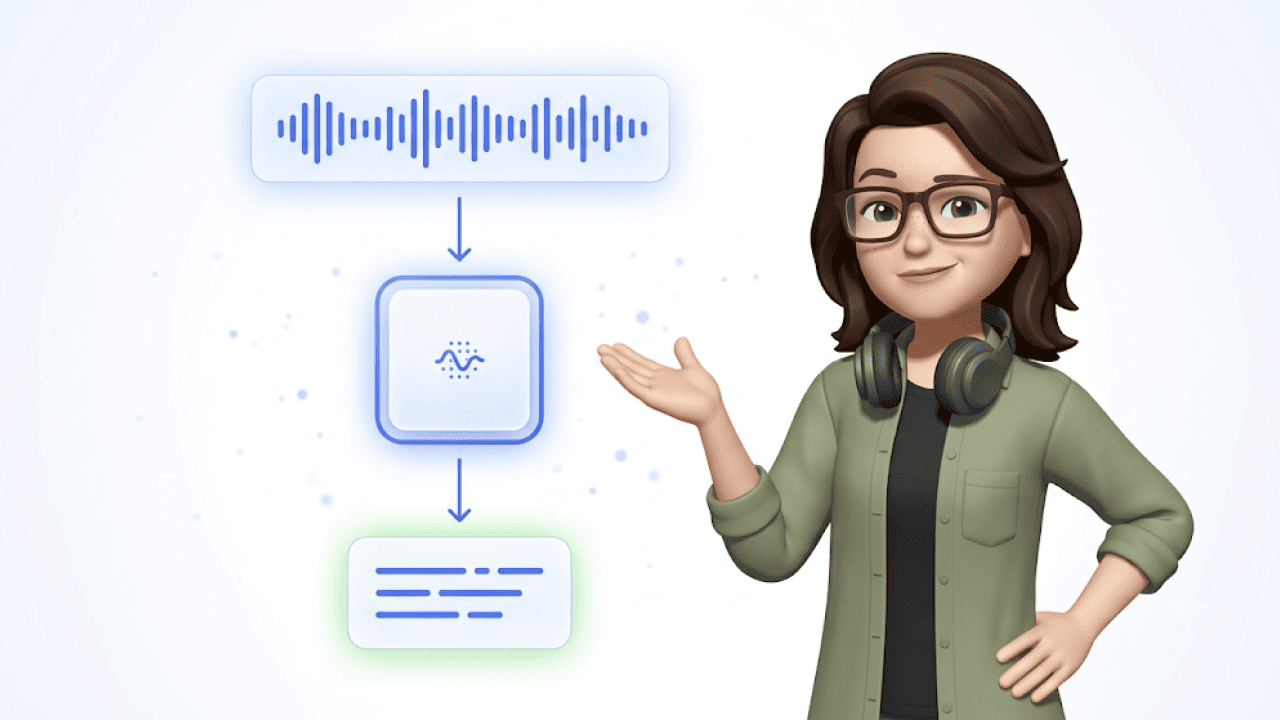
Speech recognition – technical term: ASR, Automatic Speech Recognition – converts spoken language into text. You say "Where is my order?", the machine writes that sentence down. Sounds simple. It is not.
Because speech is chaotic. People swallow syllables. They speak fast, slow, with an accent. They say "uh" mid-sentence. They talk while a dog barks in the background. A system that only understands clean studio recordings is worthless on the phone.
Here is the thing: AI speech recognition has to guess – and guess well. It calculates which sequence of words was most likely meant. "Where is my order" or "Where is my older"? The model picks the variant that makes more statistical and contextual sense.
This ability is the foundation for every AI phone assistant. Without it, there is no phone automation. Full stop.
Why Classic Speech Recognition Failed on the Phone
Earlier systems worked with rigid rules and dictionaries. They matched sound patterns against stored templates. If the pronunciation deviated, the system broke down.
What came out of it: endless menu loops. "Press 1 for shipping." Or speech recognition that only worked if you spoke like a news anchor. Every dialect, every bit of line noise, every "Hmm, well, I wanted to ask…" threw the thing off the rails.
The phone is also a technical nightmare for ASR. The audio quality is poor. Phone lines only transmit a narrow frequency range – roughly 300 to 3,400 hertz. High and low frequencies are missing entirely. Exactly the ones that help humans tell sounds apart.
In short: if you want speech recognition on the phone, you need a model that can handle bad audio. Classic systems couldn't. That is why phone automation was pure frustration for years.
How Modern ASR Models Solve the Problem
The leap came with neural networks and deep learning. Instead of rigid rules, these models learn from huge amounts of real speech recordings. Hundreds of thousands to millions of hours – with accents, background noise, slips of the tongue.
Two building blocks make the difference:
Acoustic model. It translates the audio signal into probable sounds. Modern versions work with the context of the whole sentence, not sound by sound in isolation.
Language model. It knows the probability of word sequences. It knows: "Where is my order" is far more likely than "Where is my older". This knowledge corrects acoustic uncertainty.
Today's end-to-end models couple both tightly. They process an audio signal directly into text, using the full context as they go. That is why they still understand even when a word was half swallowed – they infer the likely meaning from the rest of the sentence.
Here is the catch: these models are only as good as their training data. A model trained mainly on US English understands German worse. Which is exactly why German ASR is a topic of its own.
German ASR: Why the Language Really Matters
German is no easy case for speech recognition. Long compound words. Separable verbs that spread across the whole sentence. And dialects that sometimes deviate strongly from standard German.
A model that doesn't know Swabian, Saxon or Austrian German fails with real callers. And those are exactly the people who call. Nobody speaks textbook German on the phone.
Here is what that means: for the DACH region you need a speech-to-text system trained on German-language data – including regional colouring. A generic model isn't enough. That is the difference between a voicebot that has to ask every third caller to repeat themselves and one that just works.
For online shops in the DACH region, this is no detail. If half your customers sound Austrian or Bavarian, the quality of German ASR decides the entire automation.
From Text to Understanding: What Comes After Speech Recognition
Here is a point many people confuse. Speech recognition only converts speech into text. It does not understand what you want. It just transcribes.
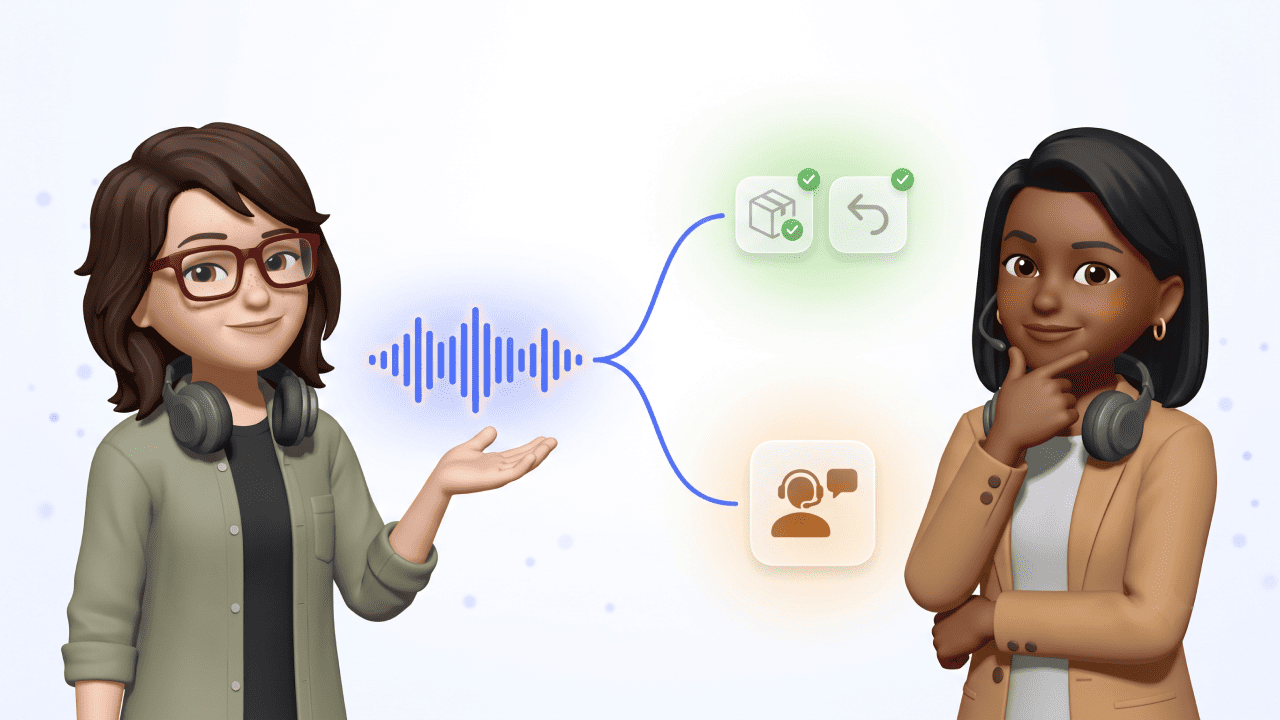
The actual understanding happens afterwards. The recognised text goes to a model that reads out the intent – intent recognition. "Where is my order" is identified as a shipping-status request. Only then can the assistant react, look up the order number in your system and answer.
This chain – speech recognition, intent recognition, reaction – is the foundation of every conversational AI. Speech recognition is the first step. Without clean text, everything after it fails. If the ASR writes "older" instead of "order", even the best intent model gets nothing.
So here is the rule: speech recognition is not the whole system. But it is the foundation. If the foundation is crooked, the best logic on top of it helps nothing.
Where AI Still Fails
Honestly: speech recognition is not perfect. Three scenarios make it sweat.
Noise. Calling from a moving car, from the train platform, from a packed café. The more background noise, the harder the recognition. Good systems filter it, but at some point it is over.
Technical terms and proper names. Product names, brand names, unusual words. A model that has never seen the term guesses wrong. That is why you train ASR for e-commerce with the specific product vocabulary of a shop.
Several speakers at once. Two people talk over each other. The system doesn't know who to listen to.
Some calls a human has to take over in the end. Good systems recognise their own uncertainty and escalate in time. Bad ones keep guessing and annoy the caller.
Ignore these limits and you build a voicebot that does more harm than good. Plan for them and you build one that solves a large share of the standard requests and hands the rest over cleanly.
Speech Recognition in Practice: Phone Automation for Shops
Now it gets concrete. What does good AI speech recognition give you as an online shop?
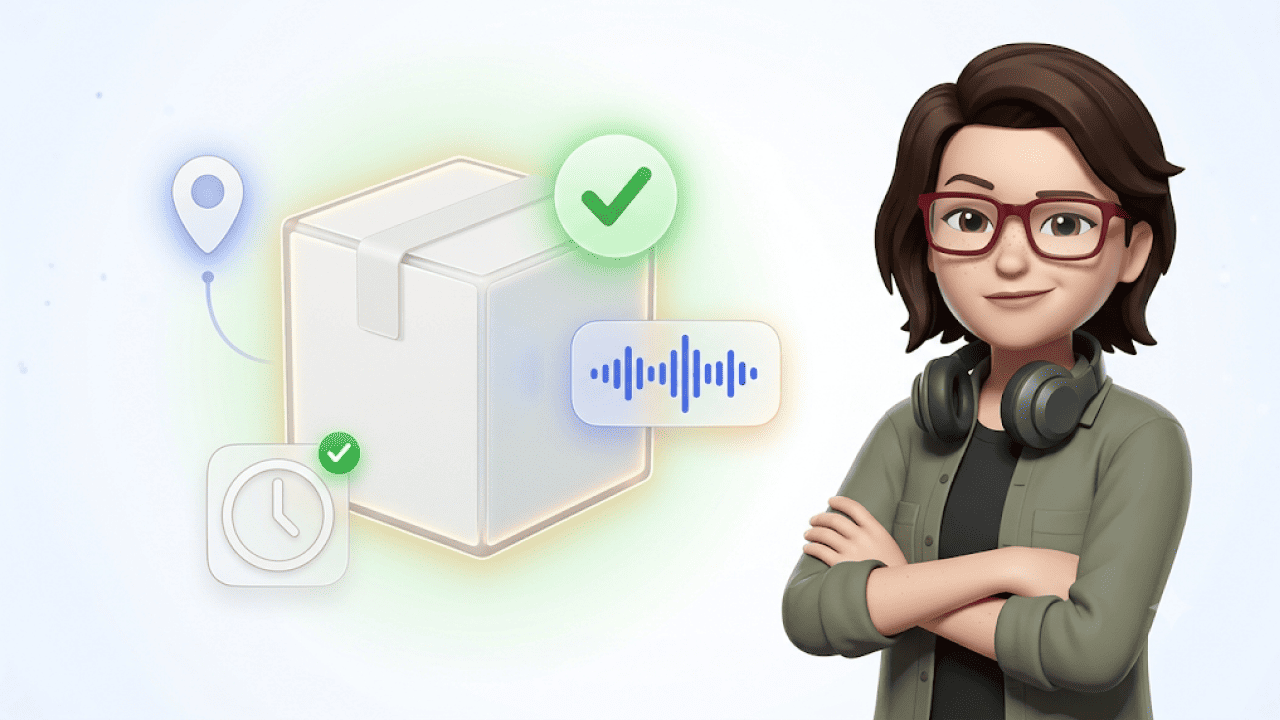
The most common call in e-commerce: "Where is my order?" – the classic WISMO problem. Where Is My Order. This question eats support capacity. It is always the same. And it can be automated – provided the speech recognition understands the caller correctly.
Here is how it runs: the caller asks about their order, ASR turns it into text, the system recognises the intent, pulls the shipping status from the shop system and reads it out. The caller gets the answer right away. Your team stays free for the tricky cases.
But this only works if the chain holds. If German ASR is poor, the caller is misunderstood and gets annoyed. If the connection to the shop system is missing, the bot can't look anything up. Both have to fit together.
What such a system costs and at what call volume it pays off depends heavily on the setup. Anyone comparing providers should test German speech recognition first. With real callers, real dialects, real noise.
Who It Pays Off For – and Who It Doesn't
Private users. You just want to replace your own answering machine or manage appointments? Then consumer solutions on your smartphone are enough. A dedicated ASR pipeline is overkill for you.
Online shops. It looks different when your support works through the same mix of questions every day. Shipping status, returns, availability. High call volume, always the same topics, shop system in place. Then good German speech recognition is the lever that brings real relief.
FAQ — AI Speech Recognition
Is speech recognition the same as AI?
No. Speech recognition is a subfield of AI. It converts spoken language into text and today uses AI methods like neural networks to do that more accurately.
Is AI speech recognition the same as speech-to-text?
Yes. Speech-to-text and ASR (Automatic Speech Recognition) describe the same process: spoken language is turned into written text. AI is the method commonly used behind it today.
Does AI speech recognition understand dialects too?
Yes, if the model was trained on the right data. A system trained on standard German fails with strong dialect. For the DACH region it needs training with regional language variants.
How accurate is modern speech recognition?
Under good conditions, leading models reach word recognition rates around 95 percent. With noise, dialect or poor phone quality, the value drops. Real-world accuracy depends heavily on the use case.
Does speech recognition work worse on the phone than on a computer?
Yes. Phone lines only transmit a narrow frequency range, which reduces audio quality. That is why phone voicebots need models trained specifically for this sound quality.
Does the voicebot understand what I mean, or does it just transcribe?
Speech recognition only transcribes at first. Understanding the intent happens in a second step, intent recognition. Only both together make a working voicebot.
What happens if the AI doesn't understand me?
Good systems recognise their own uncertainty and ask again or hand over to a human. Bad systems keep guessing and frustrate the caller. The escalation logic is what matters.
Do I need a German speech recognition model for my shop?
Yes, if your customers speak German. Generic, mainly English-trained models understand German and its dialects worse. For DACH online shops, German ASR is a must.
Can speech recognition understand my shop's product names?
Only partly on its own. The system has to learn proper names and technical terms. Good solutions can be trained on your shop's product vocabulary.
When does speech recognition pay off for phone automation?
As soon as you regularly have high call volume with recurring standard questions – like shipping status or returns. At low volume without clear repetition, the effort rarely pays off.
Conclusion: Speech Recognition Is the Foundation of Every Phone Automation
In short: speech recognition is not an end in itself. It is the foundation that makes phone automation work in the first place. Whether it pays off for you depends on your call volume and the quality of German ASR. Test the recognition. Then decide.