
You google "Sprinklr pricing" and find: nothing. No pricing page, no calculator, just a contact form. That's always been the strategy. Since April 30, 2026, it's even more consistent. Sprinklr has officially discontinued its Self-Serve program. What's left is a platform with only one business model: six-figure enterprise contracts.
I'm Johannes, founder of Chatarmin. We build WhatsApp marketing for e-commerce brands in the DACH region. No Unified-CXM, no social listening across 47 countries. But I've broken Sprinklr down for you all the way to the terms of service – so you know whether you're looking at the right platform when you click that demo button.
Sprinklr Pricing at a Glance
| Item | Estimated cost | Billing |
|---|---|---|
| Sprinklr Self-Serve (Service & Social) | Discontinued April 30, 2026 | – |
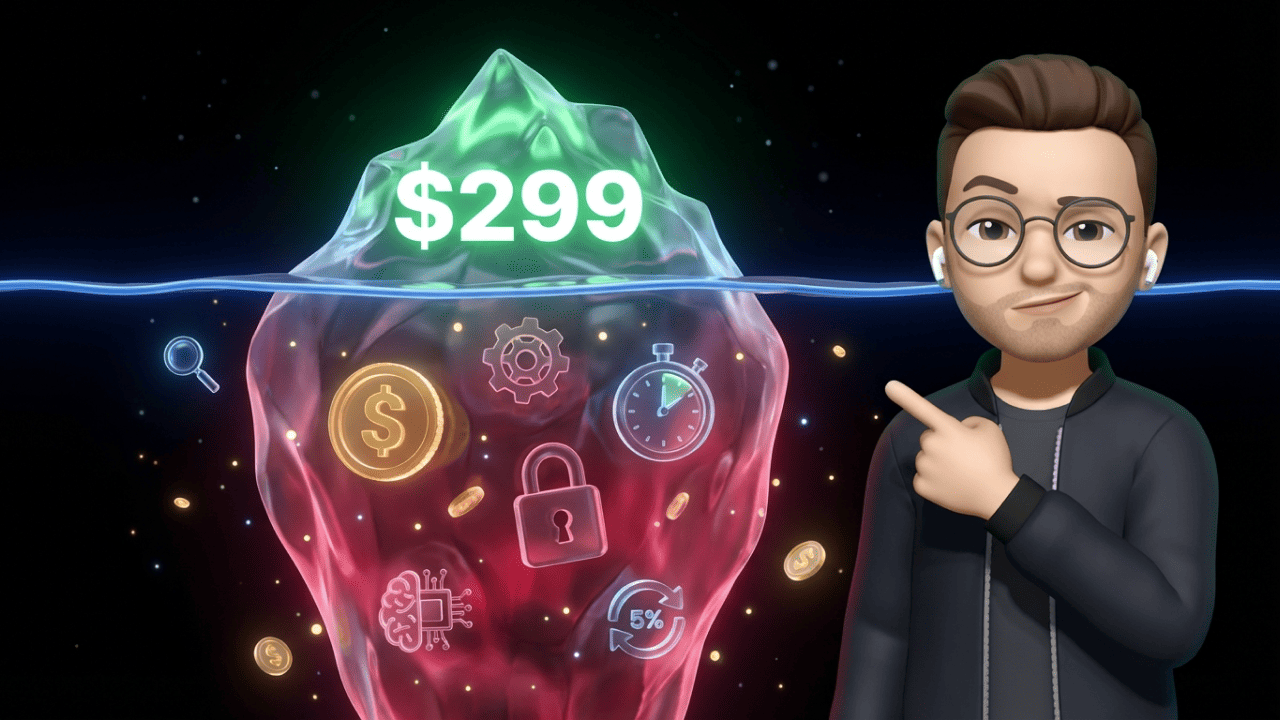
| Sprinklr Social Advanced (historical) | ~$299 / user / month | annual upfront |
| Sprinklr Service Self-Serve (historical) | ~$199–249 / seat / month | annual or monthly |
| Enterprise contract (entry) | from ~$50,000 / year | individual contract |
| Median contract value (Vendr data) | ~$129,380 / year | individual contract |
| Implementation (Professional Services) | ~$25,000–150,000+ | one-time |
| Renewal increase | ~5–15% per year | varies by contract |
These numbers come from Vendr benchmark data and public reviews on G2 and Capterra. Sprinklr negotiates every contract individually – which is exactly what makes the math so painful.
Self-Serve Is History – And That Changes Everything
Until early 2026, Sprinklr had two worlds: Self-Serve plans with public pricing starting around $199 per seat – and enterprise contracts behind closed doors. With April 30, 2026, the first world disappeared. Existing Self-Serve customers had access until that date, according to the official announcement. After that: migrate to enterprise or switch.
The signal is clear. Sprinklr has decided to stop serving the mid-market and smaller teams. Anyone booking a demo today is forced into a consultative sales process with discovery calls, scoping meetings, and individual quotes.
What this means: if you want a platform you can test on Monday and roll out to your team on Thursday, Sprinklr is no longer your address in 2026. Three to six months of sales cycle plus implementation are the new minimum. Even reviewers on G2 – where Sprinklr averages 4.2 stars across all products – cite complexity and long onboarding times as the main criticisms.
For DACH e-commerce brands that want to use WhatsApp as an active revenue channel, this is the most important takeaway in this article.
What Does Sprinklr Cost on an Enterprise Contract?
Sprinklr deliberately doesn't publish a price list. Contracts depend on modules, user counts, channel volume, and contract term. Translation: every customer pays something different – and without comparison data, you're negotiating blind.
The most reliable data source is the procurement platform Vendr, which analyzes anonymized contract data from its customers. There, the median annual contract sits at around $129,380. The range goes from about $26,000 at the bottom to over $500,000 for large multi-module setups. Typical minimum contracts start between $50,000 and $100,000 per year.
Four factors drive the price:
- Modules: Sprinklr Service, Social, Insights, Marketing, Advertising – each costs separately
- User licenses: admin, publisher, analyst, and agent roles with different rates
- Channel and message volume: for Service and Marketing, price scales with throughput
- Contract length: 24- or 36-month contracts with prepayment unlock 15–25% discounts
Add Professional Services for implementation. Vendr data shows: $25,000–150,000 is realistic, depending on complexity. For full multi-module setups, more like $150,000+. These line items rarely make it into the first quote – ask about them explicitly, otherwise you'll have a surprise at first renewal.
Hidden Costs: The Four Items Nobody Mentions in the Sales Call
The license is just the start. There are four cost blocks that no Sprinklr demo addresses cleanly – and that I see again and again when comparing contracts.
Auto-renewal with a price bump. Sprinklr contracts typically include an auto-renewal clause with a 60–90 day cancellation notice before contract end. Miss the window and you're auto-renewed. Vendr data shows renewal increases between 5 and 15% per year – negotiable, but not without active pushback. On a $100,000 contract, that's easily $30,000+ in extra costs over three years.
AI token costs with Bring-Your-Own-Key. Sprinklr AI+ Studio uses several LLM providers as Sprinklr-managed defaults: Azure OpenAI, Google Vertex, Amazon Bedrock, and Sprinklr's own in-house LLM. If you want to use your own API key, BYOK is available for six providers – OpenAI, Azure OpenAI, Google Vertex, Amazon Bedrock, Anthropic, and xAI. With BYOK, token costs land directly with the provider, on top of the Sprinklr license. If you don't bring your own key, you carry these costs indirectly through the license pricing. Either way, AI is not "included for free." With specialized providers like armincx, the cost structure is often more transparent because fewer options mean less complexity.
Volume-based limits with Service and Insights. With Sprinklr Service, price scales with message volume. With Sprinklr Insights, you buy a mention quota per month. If a post goes viral or a PR crisis hits, either overage fees kick in – or data collection gets throttled. Exactly when you need the data most.
No support in Self-Serve. While the program was still running, the clause was clear. In the Self-Serve Terms, Sprinklr explicitly forbade Self-Serve customers from opening support tickets. With the program's end, that point goes away – but it says something about the culture: real support is an enterprise function.
Sprinklr's Strengths – And Where the Premium Pricing Doesn't Deliver
Sprinklr is not a weak product. Quite the opposite: the platform was named a Leader in the Forrester Wave Social Suites Q4 2024, a Strong Performer in the Forrester Wave CCaaS Platforms Q2 2025 (not Leader, that's an important distinction). In the 2026 Gartner Magic Quadrant for Voice of Customer Platforms, Sprinklr is also named a Leader.
For global corporations with 50+ social media managers, 30-country compliance, and granular approval workflows, Sprinklr is one of the few platforms that covers this in depth. Over 60% of the Fortune 100 use it.
What gets called a Sprinklr weakness is actually a market problem: every social media tool sits in the same API traffic jam. With TikTok, all platforms primarily surface top-engagement posts at high volume – the long-tail data is missing because TikTok doesn't deliver it. With Threads, DM functionality is generally limited via the Meta API. Anyone criticizing Sprinklr for its "Unified Engagement" promise should know: Hootsuite, Sprout Social, and Khoros sit in the same jam.
On WhatsApp, the situation is more nuanced than often portrayed. Sprinklr supports the WhatsApp Marketing Messages API for HSM marketing templates – activation runs through Sprinklr Support. So you can send marketing campaigns. But: the platform is built as a service and care tool with a marketing add-on, not as a WhatsApp-first marketing suite. If you run WhatsApp as a central revenue channel, you'll feel that in daily use – in the speed of newsletter creation, the depth of the flow builder, the native shop integration.
My take: For global corporations, Sprinklr is irreplaceable. For DACH mid-market, it's a solution looking for the right problem.
GDPR and Data Hosting in the DACH Region
2025 saw movement – and the old "US corporation, data goes overseas" reflex doesn't hold across the board in 2026. Sprinklr has been hosting locally in Germany via Google Cloud since March 2025. Additional hosting regions are listed in the subprocessor documentation.
What you still need to check: which hosting region is in your contract. According to the Sprinklr Trust Center, the region is set during contract negotiation – the default config can also mean US hosting. On top of that, Sprinklr affiliates and subprocessors in other regions access data for support and engineering. These cross-border transfers are covered by Standard Contractual Clauses (SCCs), but they happen.
Sprinklr is SOC 2 Type II certified, has a GDPR-compliant Privacy Cloud, and offers Data Subject Rights Management. On paper, the compliance is solid. In practice, it's a contract question.
By comparison: specialized DACH tools like Chatarmin host in the EU by default and deliver GDPR compliance from day one. If your e-commerce business model rests on a clean GDPR foundation, you save weeks of contract work with an EU-first provider. Audits get faster. Contracts thinner.
Cost Example: What Sprinklr Costs a Mid-Sized Team
To make this concrete – a realistic scenario for a DACH e-commerce team with 8 service agents and 3 social media managers, enterprise contract, entry around Vendr-typical values:
| Item | Estimated cost / year |
|---|---|
| 8x Sprinklr Service Enterprise (full setup) | ~$60,000–80,000 |
| 3x Sprinklr Social Enterprise | ~$20,000–30,000 |
| Sprinklr Insights (listening quota) | ~$10,000–20,000 |
| Implementation (one-time, year 1) | ~$50,000 |
| AI tokens (BYOK, 5,000 interactions/month) | ~$5,000–10,000 |
| Total year 1 | ~$145,000–190,000 |
| Total year 2 (no implementation, +5% renewal) | ~$100,000–145,000 |
That's not a worst case. That's mid-range – close to the Vendr median of $129,380. For context: many DACH e-commerce brands run their entire marketing and customer service stack for under €50,000 (≈ $54,000) per year.
Sprinklr vs. Specialized Tool Stack
The honest question isn't "Sprinklr or nothing?" – it's "Which combination covers my actual needs better?"
| Criterion | Sprinklr (Enterprise) | Specialized stack (e.g., Chatarmin + armincx + Hootsuite) |
|---|---|---|
| Annual cost | $100,000–500,000+ | $15,000–40,000 |
| Setup time | 3–6 months | days to weeks |
| WhatsApp Marketing | Via Service module | Native campaigns, flows, AI chatbot |
| Customer Service AI | Sprinklr AI+ (add-on) | armincx integrated |
| Social Publishing | 30+ channels, approvals | 10–20 channels, leaner |
| GDPR Hosting | Negotiable (DE/CH/US) | EU-first by default |
| Support | Premium support extra | Included from plan 1 |
For global corporations with complex governance, Sprinklr is irreplaceable. For DACH e-commerce with 5–50 employees, the specialized tool stack isn't just cheaper – it goes live faster and is lighter in daily use.
Who Should Actually Use Sprinklr in 2026?
Sprinklr fits if you:
- are a Fortune 500 corporation or have comparable compliance requirements across 30+ countries
- employ 50+ social media managers and need granular approval workflows
- have a six-figure annual software budget and can plan 3–6 months of onboarding
- are willing to budget AI tokens, implementation, and renewal increases separately
Sprinklr is overkill if you:
- run an e-commerce team under 50 employees
- want to use WhatsApp as an active marketing and revenue channel
- need to start next week, not next quarter
- need transparent, predictable software costs instead of negotiation marathons
The Self-Serve discontinuation has cemented Sprinklr's market position: in 2026, the platform is even more clearly a tool for large corporations than it was in 2024. If your name isn't Coca-Cola, Siemens, or L'Oréal, ask yourself before any demo whether the size of the solution matches the size of the problem.
Conclusion
Sprinklr is not a bad product. Sprinklr is just the wrong product for you if you do DACH e-commerce. You'll burn money on features you'll never touch – and wait six months for functionality others have live in a week.
Let's talk before you sign a six-figure contract. No quarter-long onboarding. No sales marathon. Just a conversation about whether WhatsApp marketing actually works for your business.
Book a Chatarmin demo – GDPR-compliant, live in days, built for DACH e-commerce.
Frequently Asked Questions about Sprinklr Pricing
What happened to Sprinklr Self-Serve?
Sprinklr discontinued the Self-Serve program on April 30, 2026. Existing Self-Serve customers had access until that date – since then, the only path into the platform is through an enterprise sales process.
What Sprinklr modules exist?
Sprinklr bundles five main modules: Service (customer service, CCaaS), Social (social media management), Insights (listening, analytics), Marketing (campaign orchestration), and Advertising (paid media). Each module is licensed separately.
Is there a free version of Sprinklr?
No. Sprinklr no longer offers a permanent free version in 2026. The 30-day trial in the Self-Serve program also ended with the program's discontinuation on April 30, 2026.
What does Sprinklr cost per month right now?
There are no official monthly prices anymore. Enterprise contracts start at around $50,000 per year according to Vendr – the median sits at roughly $129,380 annually.
What's the minimum contract for Sprinklr Enterprise?
According to Vendr, from around $26,000 annually for tightly scoped single-module setups. Typical minimum contracts run between $50,000 and $100,000 per year.
Are AI features included in the Sprinklr price?
Partly. Sprinklr AI+ Studio uses four Sprinklr-managed default providers (Azure OpenAI, Google Vertex, Amazon Bedrock, Sprinklr in-house LLM) and additionally offers BYOK for six providers including OpenAI, Anthropic, and xAI. With BYOK, token costs land directly with the provider – on top of the Sprinklr license.
Does Sprinklr include technical support?
Yes, on the enterprise contract. Standard support (email, knowledge base, community) is included – premium support with a dedicated account manager costs extra.
Can you cancel Sprinklr monthly?
No. Sprinklr works with annual or multi-year contracts and a cancellation notice of 60–90 days before contract end. Miss the window and you land in auto-renewal – often with a 5–15% price increase according to Vendr data.
How long does implementation take?
3–6 months for a full enterprise integration according to G2 and Capterra reviews. Plus 1–3 months of sales cycle before that.
Is Sprinklr suitable for small and medium businesses?
In most cases, no. With the discontinuation of the Self-Serve program and a minimum contract size around $50,000 per year, Sprinklr explicitly targets large enterprises in 2026.
Does Sprinklr offer WhatsApp Marketing?
Yes, technically. Sprinklr supports the WhatsApp Marketing Messages API for HSM marketing templates – activation runs through Sprinklr Support. WhatsApp is part of the Sprinklr Service module as a channel.
What happens when you exceed the mention or message volume?
Overage fees kick in, or data collection gets throttled. Both are negotiable – but rarely part of the first quote.
Where is my data hosted with Sprinklr?
Sprinklr has offered local data hosting in Germany via Google Cloud since March 2025. Additional hosting regions are listed in the subprocessor documentation. The specific region is set in the contract.
Is Sprinklr GDPR-compliant?
Yes, with caveats. Sprinklr is SOC 2 Type II certified and offers a GDPR-compliant Privacy Cloud – but the actual compliance depends on the contractually chosen hosting region.
What's the difference between Sprinklr and Chatarmin?
Sprinklr is a Unified-CXM suite for large enterprises with over 30 modules. Chatarmin is a specialized WhatsApp marketing platform for DACH e-commerce; for AI customer service, we have armincx as a separate product. Both are GDPR-first, EU-hosted, and live in days instead of months.