
Over 3 billion people use WhatsApp every month. Most WhatsApp statistics you'll find, however, come from the same three recycled sources, including the famous “98% open rate” that doesn't exist in any real marketing account. We do it differently. In this report, you get the key market numbers for 2026 plus our own benchmarks from 382 brands, 49.3 million campaign messages sent, and one full year of data (June 2025 through June 2026). Unfiltered, including the numbers that are less glamorous.
How Many People Use WhatsApp in 2026?
The short version: WhatsApp is the most used messenger in the world. By far.
- Over 3 billion monthly active users worldwide. Meta officially confirmed the 3-billion milestone in 2025. In 2020, it was still 2 billion.
- Over 100 billion messages per day. In 2018, it was 65 billion.
- Available in over 180 countries and 60+ languages.
- Largest single market: India with around 535 million users.
- Roughly 8 out of 10 monthly users open the app daily, one of the highest DAU/MAU ratios of any platform.
- Average usage time: around 34 minutes per day.
What this means for you: Your customers aren't maybe on WhatsApp. They are there: daily, multiple times, voluntarily. The only question is whether your brand is there too.
WhatsApp User Numbers in Germany, Austria, and Switzerland
No market loves WhatsApp quite like the DACH region (Germany, Austria, Switzerland). While iMessage dominates in the US, WhatsApp is the default here, across every age group.
| Country | Active users (2026, depending on source) | Penetration |
|---|---|---|
| Germany | 44–60 million | >90% of internet users |
| Austria | 6.2–7.8 million | >90% of internet users |
| Switzerland | 6.4–8 million | >90% of internet users |
An honest word about these numbers: The ranges are wide because sources measure differently. Statista counts a conservative 44 million active users for Germany, while other surveys like Business of Apps arrive at around 60 million. The truth is somewhere in between. And for you as a marketer, it barely matters. Even the most conservative figure means more than every second person in Germany is reachable via WhatsApp. No other channel comes close.
The largest user group is the 26- to 35-year-olds, exactly the cohort with the highest e-commerce spending power. And more than half of the 60+ generation now uses WhatsApp regularly too.
WhatsApp Business: The Key Numbers
WhatsApp keeps growing on the business side as well:
- Over 200 million active WhatsApp Business accounts worldwide. At Meta's last official milestone in 2023, it was 200 million, and the number has kept climbing since.
- The WhatsApp Business app has been downloaded over 1.3 billion times cumulatively (as of November 2025).
- Click-to-message ads (most of them click-to-WhatsApp) already reached an annual revenue run rate of around $10 billion according to Meta and rank among the fastest-growing ad formats.
- Meta positions business messaging as one of its central revenue drivers for the coming years. So the platform will keep investing in commerce features.
In short: WhatsApp is no longer a bet. It's infrastructure.
WhatsApp Marketing Statistics 2026: Our Benchmarks From 382 Brands
Now for the numbers you won't find anywhere else. Everything below comes not from vendor blogs or surveys, but aggregated and anonymized from real Chatarmin accounts: 591 active brands on the platform, 382 of which sent campaigns in the window. All campaign benchmarks refer to these 382 brands and one full year, June 2025 through June 2026, including Black Friday and the Christmas season.
Campaign Benchmarks
| Metric | Value |
|---|---|
| Messages sent | 49,328,114 |
| Avg. open rate (volume-weighted, Mar–May 2026) | 79.0% |
| Click rate (Mar–May 2026) | 11.8% |
| Opt-out rate per message (full year) | 0.37% |
| Campaign revenue | €50.6 million |
| Orders via campaigns | 514,464 |
Why the rates have their own time window: On March 15, 2026, we changed the measurement. Messages that were never delivered (no signal, number blocked) have been excluded from the calculation since then, because only someone who received a message can open it. All open and click rates in this post therefore come from the period since that change: March through May 2026, 13.9 million messages (March partly contains the old measurement, the impact is minimal). Volumes and revenue remain full-year figures.
The number you should remember still isn't in the table: €1.02 in revenue per campaign message sent. Try running that math on your email list.
And one finding for your planning calendar: November is a league of its own. In the Black Friday month alone, 6.5 million campaign messages went out, roughly two-thirds above the monthly average, and they generated €11.1 million in campaign revenue. That's more than one in five campaign euros of the entire year (22%) in a single month. If you only start building your WhatsApp list in October, this is exactly the lever you miss.
Flow Benchmarks (Automated Journeys)
| Metric | Value |
|---|---|
| Contacts in flows | 18.3 million |
| Flow revenue | €45.4 million |
| Orders via flows | 420,771 |
Put differently: Every contact who enters a flow generates €2.48 in revenue on average.
Campaigns and flows combined: around €96 million in attributable revenue and 935,235 orders in twelve months. The average order value sits around €98 for campaigns and €108 for flows. So WhatsApp doesn't bring bargain hunters, it brings normal, purchase-ready customers.
What this means for you: Abandoned cart flows, post-purchase journeys, and winback run while you sleep, and they account for almost half of the WhatsApp revenue across our brands.
Why We Say 79% Open Rate and Not 98%
Time for the uncomfortable part. Almost every WhatsApp marketing provider advertises a “98% open rate” and a “45–60% click rate”. We used to have those numbers on this page too. The problem: They've been circulating from blog to blog for years without a credible source. And no real account we've ever seen reaches them on average.
Our measured reality since the measurement change, across 13.9 million campaign messages from March through May 2026: a 79.0% volume-weighted open rate. That's not a disappointment, that's three and a half times a good email campaign. And it's a number you will actually find in your own dashboard. The 98% you never will.
Same story with the click rate: 11.8% sounds more realistic next to “45–60%”, but it's still only about a quarter of it. And we disclose how the number is built: all tracked link and button clicks, divided by all delivered messages since the measurement change. Every click is counted, not every person. Whoever promises you 45% is counting differently. And honestly, click rate isn't the lead metric for WhatsApp anyway: Many campaigns don't want a click at all, they want a reply in the chat. The metric that counts is revenue per message. And there, the channel delivers.
On opt-outs, we put both numbers on the table: 0.37% opt-outs per campaign message sent and 1.13% per flow contact. The two values are deliberately not comparable: A flow contact receives many messages over the journey, while one campaign message is exactly one opportunity to opt out. Only one of those two numbers would make it into a glossy sales deck. Here, you get both.
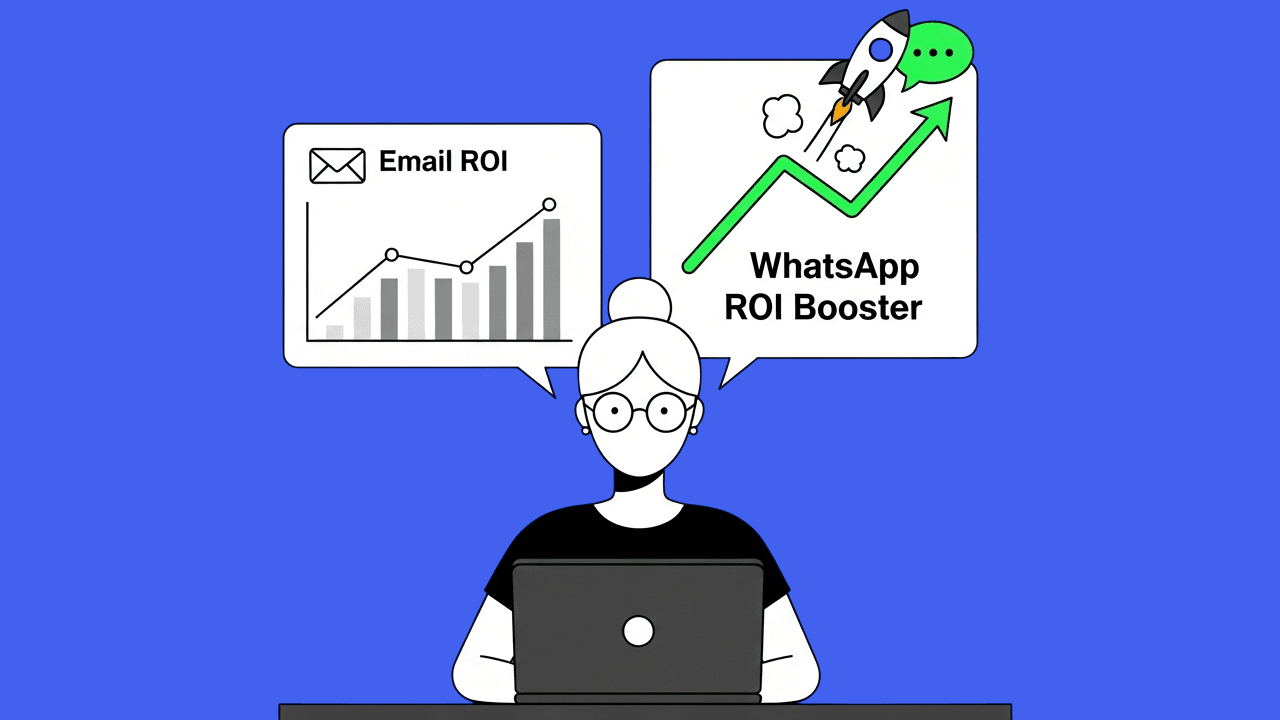
WhatsApp vs. Email: The Honest Comparison
| Metric | Email (industry average) | WhatsApp (Chatarmin data) |
|---|---|---|
| Open rate | ~20–25% | 79.0% (Mar–May 2026) |
| Visibility | Inbox, promotions tab, spam | Lock screen |
| Recipient response time | Hours to days | Minutes |
| Unsubscribe rate | ~0.1–0.3% per send | 0.37% per message |
The counterpoint still belongs here: WhatsApp does not replace email. Email remains the channel for long-form content, for the broad base, and for the cheapest CRM touchpoint. WhatsApp is the channel for your most important messages to your most valuable customers, where opens and reactions really count. The strongest setups we see run both.
WhatsApp Trends 2026: What's Coming Next
Three developments you should have on your radar in 2026:
- AI takes over the conversation. AI agents answer product questions, qualify leads, and handle support requests directly in the chat, around the clock. This turns the push channel into a real conversational commerce channel.
- Click-to-WhatsApp ads connect paid and CRM. Instead of a landing page, the ad leads straight into the chat, including an instant opt-in. For D2C brands, currently one of the most efficient ways to grow the subscriber list.
- RCS enters the race and stays behind for now. Google and Apple are pushing RCS as a messenger alternative. But for DACH in 2026, the picture is: patchy reach, no established benchmarks, unclear pricing.
Conclusion: The Reach Is Real, the Myths Are Not
In 2026, WhatsApp is the highest-reach direct channel in the DACH region: over 3 billion users worldwide, over 90% penetration in your home market, daily usage as the default. That's the vibe. And the facts from 382 brands back it up: a 79.0% volume-weighted open rate since the measurement change, €1.02 in revenue per campaign message, around €96 million in attributable revenue in one year.
What you don't need: the 98% folklore. What you do need: a clean opt-in setup, good flows, and realistic benchmarks to compare against. You now have them.
If you want to know what these numbers could look like for your store: Book a demo. We'll run the math on your actual data.
FAQ: Common Questions About WhatsApp Statistics
How many people use WhatsApp in 2026?
Over 3 billion people worldwide use WhatsApp every month. Meta officially confirmed this milestone in 2025. More than 100 billion messages are sent daily. That makes WhatsApp the most used messenger in the world by a wide margin.
How many WhatsApp users are there in Germany?
Depending on the source and methodology, between 44 and 60 million active users. Even the most conservative estimate means more than every second person in Germany is reachable via WhatsApp, over 90% of internet users.
What open rate is realistic for WhatsApp marketing?
Since the measurement change to delivered messages (March 15, 2026), the volume-weighted open rate sits at 79.0%, measured across 13.9 million campaign messages from March through May 2026. The frequently cited 98% is a myth without a credible source. No account reaches it as a campaign average.
What is a good click rate for WhatsApp campaigns?
Since the measurement change (March through May 2026), the click rate sits at 11.8%. This counts all link and button clicks per delivered message, not unique recipients. More important than the click rate on WhatsApp, however, is revenue per message: across the full year, €1.02 per campaign message sent.
How many businesses use WhatsApp Business?
There are over 200 million active WhatsApp Business accounts worldwide. The business app has been downloaded over 1.3 billion times cumulatively. The trend is still upward, especially in e-commerce and customer service.
Is WhatsApp marketing GDPR-compliant in Germany?
Yes, with a clean double opt-in and the official WhatsApp Business API. Newsletters without consent, on the other hand, are legally actionable in Germany.
Sources & Data Basis
Market figures are based on current reports from Statista, Business of Apps, World Population Review, and official Meta announcements (2025). Marketing benchmarks: aggregated and anonymized Chatarmin platform data from 382 brands with campaigns (591 active accounts with a WhatsApp display name), window June 2025 through June 2026. Revenue attribution: An order counts when it matches a WhatsApp touchpoint, meaning a discount code from a campaign or flow, a tracked link click within the brand attribution window (default: 24 hours), UTM parameters on the order URL, or WhatsApp chat activity within 24 hours. Each order is counted once per brand, so campaign and flow revenue are deduplicated against each other. Open and click rates refer to the period since the measurement change of March 15, 2026 (delivered basis: undelivered messages are excluded from the calculation; March partly contains the old measurement). Volume, revenue, and order figures cover the full-year window.