
Most service requests in an online shop revolve around a handful of topics. "Where is my parcel?" "Can I still cancel?" "Does this come in size M?" Yet in many shops a human still sits on the line, typing the same answer for the hundredth time. Conversational AI changes that.
The term is everywhere, but hardly anyone explains what it actually means and how it differs from a dumb chatbot that only shows buttons.
This article clears that up. What sits behind the term, which examples really exist, and where Conversational AI pays off in e-commerce.
What Is Conversational AI, Really?
Conversational AI is the umbrella term for systems that understand language and reply in natural form. You speak or type normally, the system grasps the meaning and responds appropriately. Instead of a rigid menu like "Press 1," you get an actual conversation.
Several building blocks sit underneath:
- NLU (Natural Language Understanding): detects the intent behind the sentence.
- Dialogue management: controls what happens next.
- NLG (Natural Language Generation): phrases the answer.
- Speech recognition (ASR) and speech synthesis (TTS): only needed for voice.
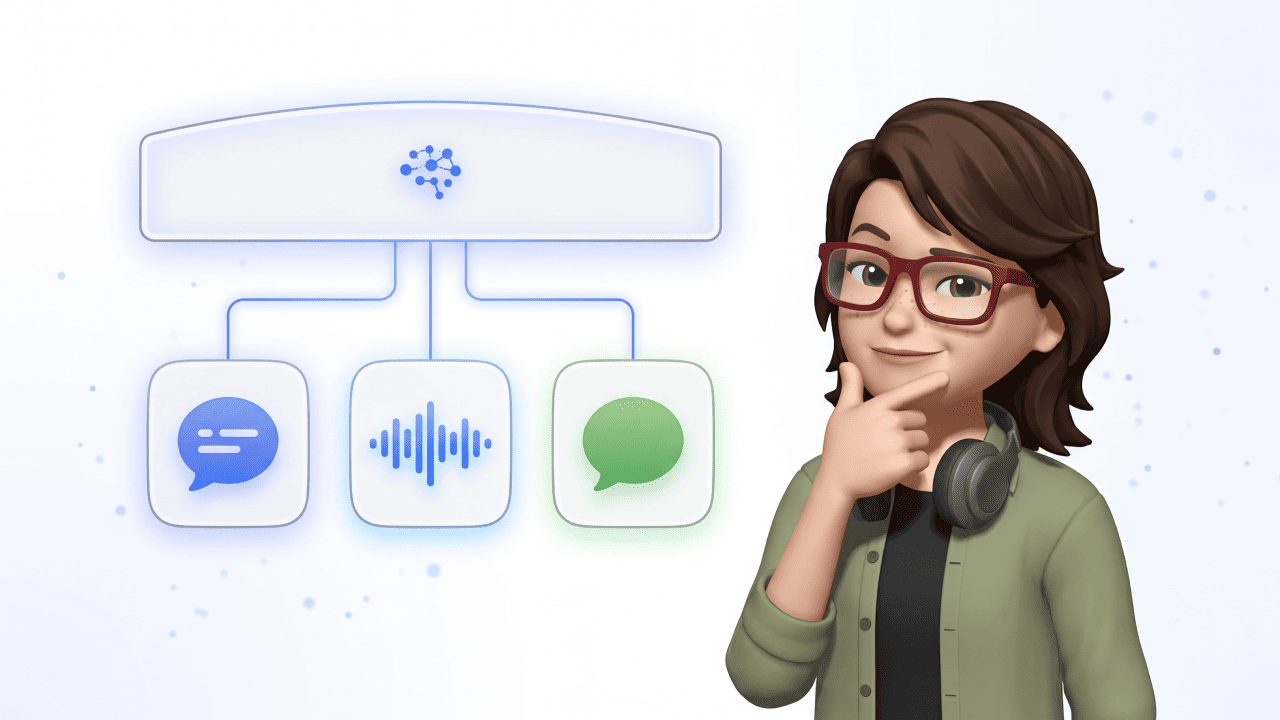
In practice: Conversational AI is the umbrella over chatbots, voicebots, and WhatsApp automation. A rule-based chatbot only knows predefined paths. Conversational AI also understands phrasings nobody typed in advance.
Conversational AI in German: Does It Work Well?
Short honest answer: yes, by now it does. For a long time German was the stepchild of language models. English got trained, German lagged behind.
That has changed. Current language models understand German colloquial speech, dialect coloring, and typos far better than two years ago. Austrian and Swiss-German vocabulary mostly lands today, too.
The catch: with voice, strong dialect stays a hurdle. Deep Tyrolean or broad Swiss German makes any speech recognition struggle. For standard German and light regional coloring, though, it runs cleanly.
If you pick a German system, watch for one thing: was it trained on DACH data, or is it just an English model with a translation layer? You notice the difference in the first real conversation.
Conversational AI: Examples From Everyday Life
Theory isn't enough. Here are a few concrete examples you have probably run into yourself:
- Voice assistants like Siri or Alexa. The best-known touchpoint, but only of limited use for businesses.
- WhatsApp bots that pass on order status or schedule appointments.
- Website chat windows that understand real follow-up questions and respond appropriately.
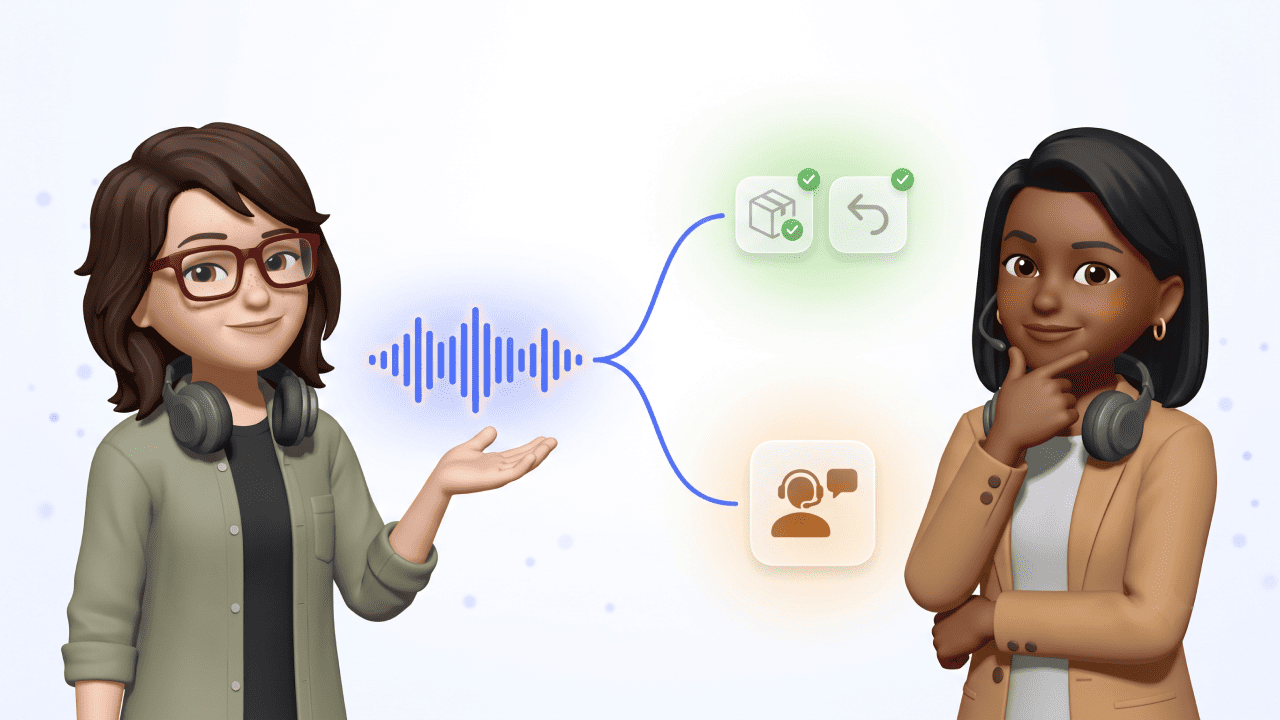
- Phone assistants that take calls, recognize the request, and either solve it themselves or route it deliberately.
In short: Conversational AI has long been everyday reality. It already sits in your phone and on many service hotlines. The only question is how well it's implemented.
Conversational AI in E-Commerce: Where the Lever Sits
Now it gets interesting. In online retail, Conversational AI is a math problem.
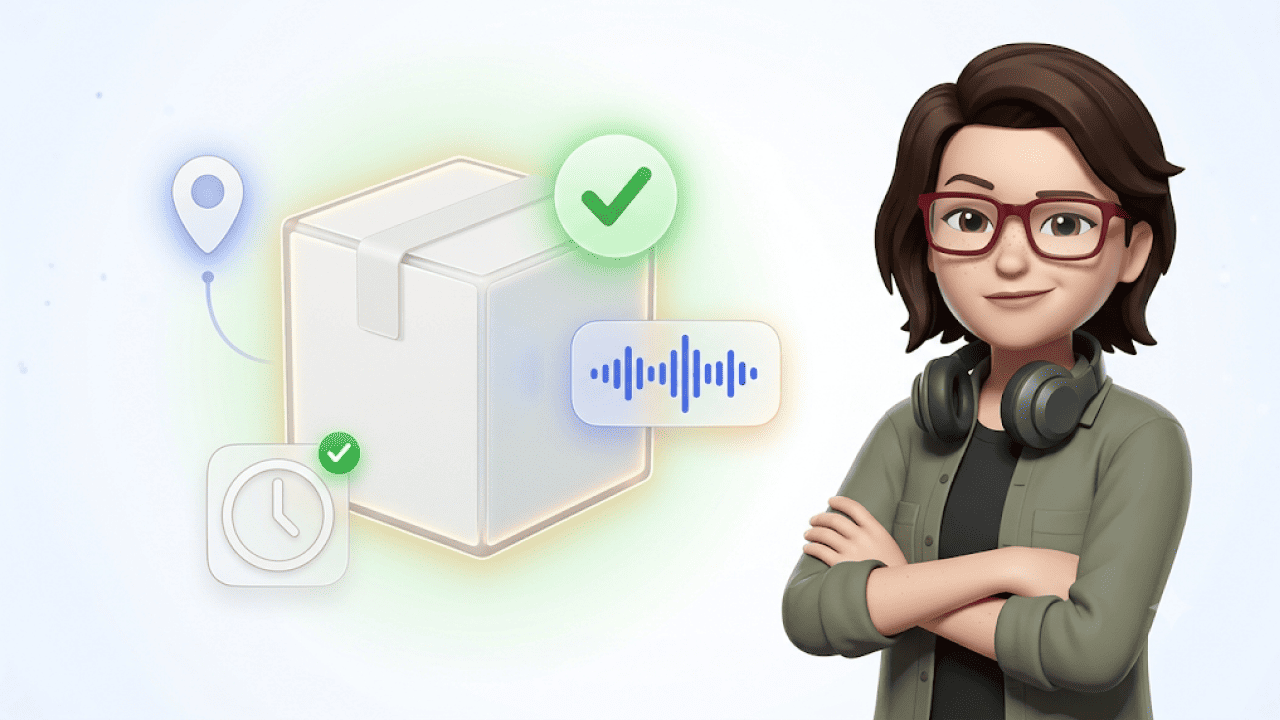
Look at your ticket volume. How many requests are pure routine? In an analysis across 131 armincx merchants, WISMO ("Where is my order?") was by far the most common topic: a good half of the clearly classifiable tickets, and across all requests roughly one in four. These are questions no human needs to answer.
When a system clears these requests automatically, your team gains time for the cases that truly need a human. Complaints, disputes, special requests.
Typical e-commerce use cases for Conversational AI:
- Order status and shipment tracking
- Starting returns
- Availability and size questions
- Address changes before shipping
- Cancellations within the deadline
This works across every channel. Chat, voicebot, and WhatsApp. The one thing that matters: the system needs access to your shop system. Without a connection to Shopify, Shopware, or your ERP, the AI is only guessing. And the customer notices instantly.
Conversational AI Over WhatsApp: Why This Channel?
In the DACH region, WhatsApp has a penetration other channels dream of. Almost everyone has the app. Nobody has to install something new.
For Conversational AI that's ideal. The customer writes the way they do anyway: casually, in full sentences or in keywords. The AI understands both. And unlike email, nobody expects a formal reply. That lowers the barrier.
In practice: WhatsApp lets you bundle order confirmations, shipping updates, and follow-up questions in one thread. The customer sees the whole history without digging through old emails.
The trade-off: WhatsApp Business has rules. You can't send messages at will, and proactive messages outside the 24-hour window cost fees. Ignore that and you risk getting your account banned. So: strong channel, but with rules of play.
Chat, Voice, or WhatsApp: What When?
A question almost every shop gets wrong. They pick one channel and ignore the rest.
Better: think about where your customers actually reach out.
- Phone for urgent cases and for an audience that prefers talking to typing. An AI phone assistant picks up at night, too.
- Website chat for customers who have a quick question mid-purchase.
- WhatsApp for everything asynchronous: updates, follow-ups, scheduling.
The real point is the connection behind it. If a customer writes on WhatsApp first and then calls, the system should know what it was already about. That's the omnichannel idea. This is exactly where our armincx suite comes in: Conversational AI across all three channels, with shared context and a connection to your shop system.
What Does Conversational AI Cost, and Who Is It Worth It For?
You can't put a flat number on it. Pricing models range from per-minute billing to per-call to credit packages.
The math behind it is simple: call volume times automation rate. If you have 2,000 service requests a month and automate half, you save 1,000 manual handlings. At a per-minute price in the cent range against an employee's hourly wage, that adds up fast.
In short: the higher your volume and the higher your routine share, the clearer the business case. Whoever has ten requests a week, on the other hand, doesn't need Conversational AI. A human is enough there.
For local service providers and doctor's offices, tools like fonio are often the better starting point. They're built for call answering and appointment booking. Online shops with a shop connection need a tool that pulls real order data.
Who Is Conversational AI Really Worth It For?
If you're a private user: then Conversational AI mostly means Siri, Alexa, and your bank's chatbot. Nice, but limited. These consumer tools aren't built to manage your orders across several shops. For home use, what your phone brings along is enough.
If you run an online shop: then it's worth a close look. Three questions decide:
- Do you have meaningful request volume? (Rule of thumb: from a few hundred tickets a month)
- Is a large share of it routine like WISMO, returns, or availability?
- Do you have a shop system the AI can dock onto?
Three times yes means: Conversational AI pulls out measurable time and money. A no on the first question means: wait a bit longer.
FAQ — Conversational AI
What's the difference between Conversational AI and a chatbot?
A classic chatbot follows fixed rules and buttons. Conversational AI understands free language, including phrasings that weren't programmed in advance. Chatbots are therefore a subcategory.
Does Conversational AI work reliably in German?
Yes. Current models understand standard German including Austrian and Swiss terms well. With strong dialect in the voice area, though, limits remain.
Can Conversational AI be connected to my shop system?
Yes. Without a connection to Shopify, Shopware, or your ERP, the system can't deliver real order data. The integration is the prerequisite for it to make sense in e-commerce at all.
Does Conversational AI replace my entire service team?
No. It takes over routine like WISMO and returns. Complex cases, complaints, and sensitive topics still go to a human.
Which channels does Conversational AI cover?
Phone, website chat, and WhatsApp are the main ones. Ideally these channels share the same context so a customer doesn't have to explain their request twice.
Is WhatsApp useful for Conversational AI in e-commerce?
Yes. Penetration in the DACH region is high and the barrier is low. You do have to mind the 24-hour window and the WhatsApp Business rules for proactive messages.
From what request volume is Conversational AI worth it?
As a rule of thumb, from a few hundred service requests a month with a high routine share. At very low volume, a human is cheaper and more flexible.
What does Conversational AI cost?
That depends on the model: per minute, per call, or per credit package. The actual market prices differ noticeably from provider to provider.
Does Conversational AI also understand typos and slang?
Yes. That's exactly what sets it apart from the rule-based bot. It recognizes the intent behind the sentence, even when the phrasing is messy.
Is Conversational AI the same as a voicebot?
No. A voicebot is the voice variant of Conversational AI. The umbrella also covers text channels like chat and WhatsApp.
Conclusion: Above a Certain Volume, Conversational AI Is a Clear Business Case
Conversational AI is the umbrella over chat, voice, and WhatsApp. For private users it stays a nice add-on. For online shops with a high routine share, it pulls out measurable time and money: fewer standard tickets, more capacity for the team. The prerequisite is always the connection to your shop system. Without it, the AI can't deliver real order data.
If you want to see how AI customer service across chat, voice, and WhatsApp works in practice, take a look at how we do it with armincx. Understand first, then decide.