
"AI Voice Agent" — two years ago, almost nobody typed those words. Today it's standard vocabulary: in tech teams, at agencies, in board meetings. The trend: still climbing.
The problem? Almost nobody means the same thing by it. For some, it's a dressed-up IVR menu. For others, a full-blown phone assistant that cancels orders and reads out shipping status. And for marketing departments, often just: the next buzzword.
Let's clear this up. What an AI Voice Agent is. What it isn't. And whether you actually need one in your online shop.
What is an AI Voice Agent — and how is it different from the old voicebot?
An AI Voice Agent is software that holds phone conversations. It doesn't play them back. It holds them. It understands spoken language, recognizes the intent behind it, responds in real time with a natural voice — and, when it works well, resolves the request without a human stepping in.
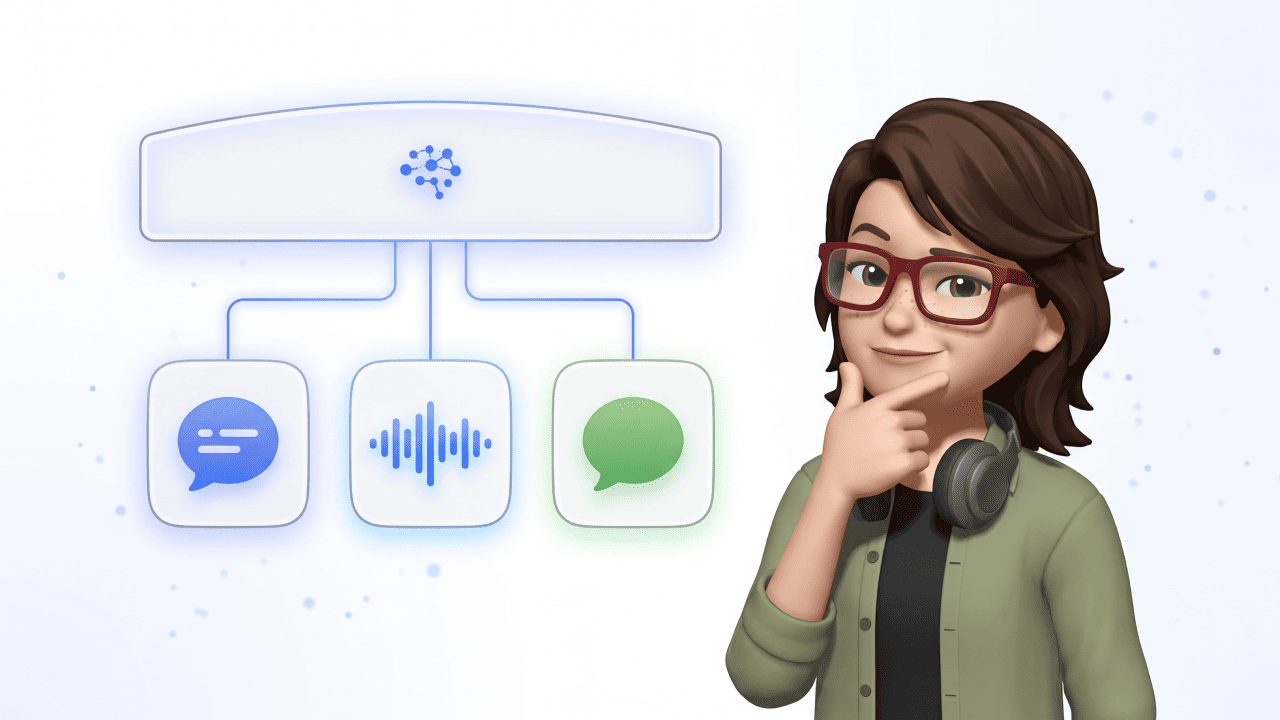
The difference from classic systems sits under the hood. Three components mesh together:
- Speech-to-Text (STT): turns your voice into text.
- A language model (LLM): understands the context and decides what to do.
- Text-to-Speech (TTS): speaks the answer out loud.
Sounds simple. The decisive factor is speed. A fluid conversation needs response times under roughly 800 milliseconds. Anything slower feels like a bad overseas call — those awkward pauses where both sides start talking at once.
Voice Agent, voicebot, IVR: where's the line?
The terms get thrown around wildly. Here's the honest distinction.
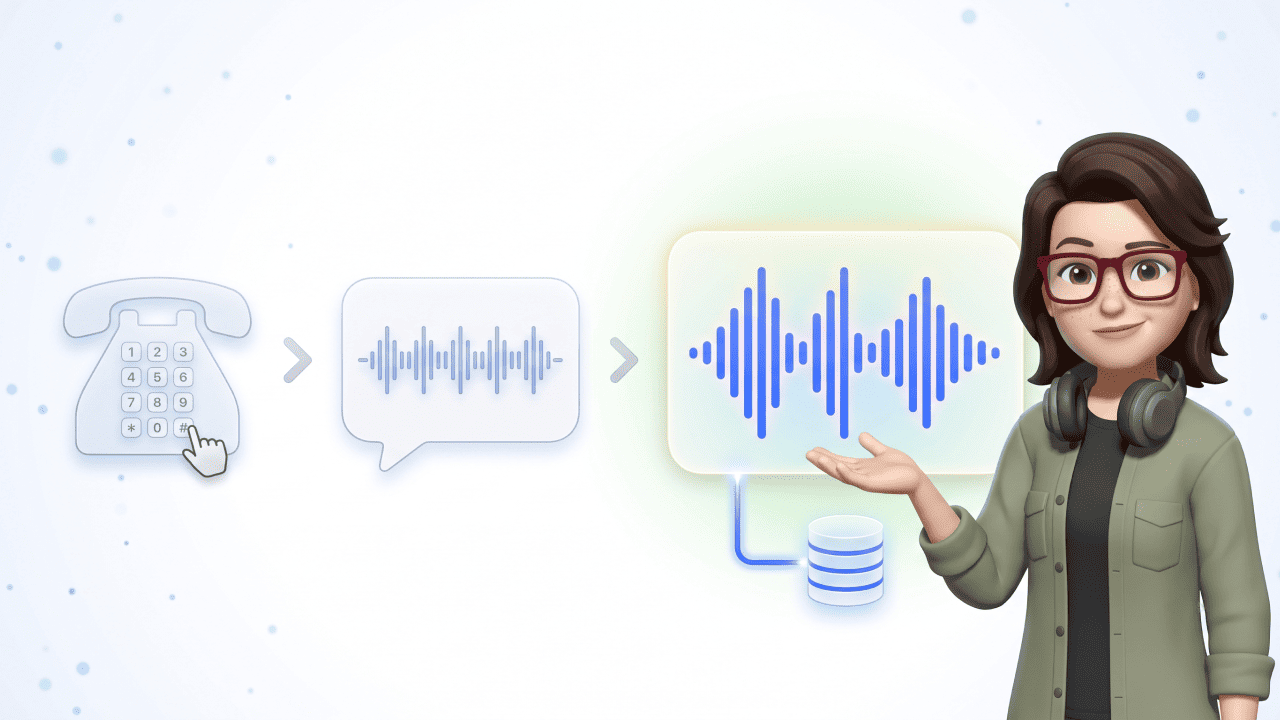
IVR (Interactive Voice Response): This is the "Press 1 for orders." Rigid menu trees. No intelligence. You work your way through options some product manager defined back in 2012. If your request doesn't fit the tree — tough luck.
Voicebot: One step further. Understands simple spoken commands, but often works with fixed scripts and keywords. Say something unexpected, and it bails.
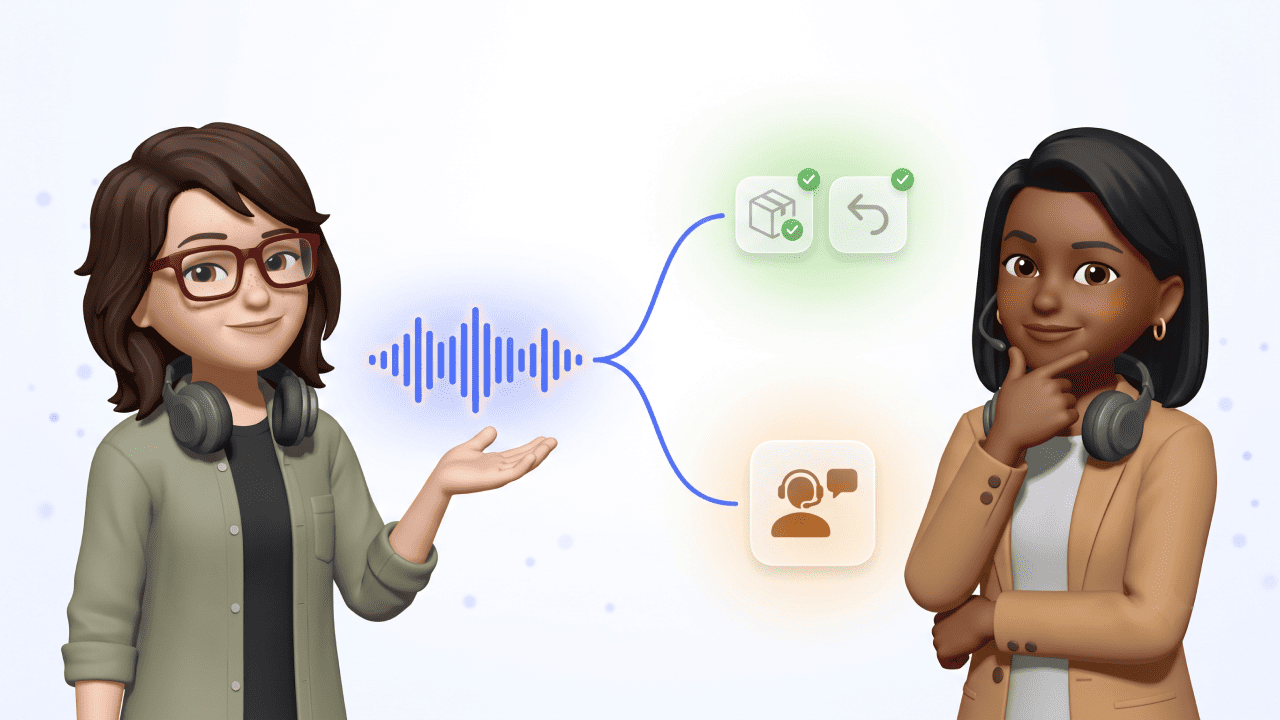
AI Voice Agent: Understands free speech. Reacts to follow-up questions. Can hit an API mid-conversation — pulling your shipping status straight from the shop system, for instance. In other words: it holds a conversation instead of running a query process.
The catch: in practice, the line between "good voicebot" and "weak Voice Agent" is blurry. Plenty of providers slap the "AI Voice Agent" label on a slightly improved script system.
Why the term is blowing up right now in 2026
Three things came together.
First: the language models got good enough. Latency down, voice quality up. An AI voice today no longer sounds like a 2009 sat-nav.
Second: the integrations. A Voice Agent is only as useful as its connection. Only once it can reach your ERP or shop system can it solve real requests — not just talk.
Third: the pressure in customer service. Staff is expensive and hard to find. Call volume swings brutally — think Black Friday. A system that picks up many calls at once, with nobody stuck in a queue, gets interesting fast.
The result? "AI Voice Agent" is the word everyone uses in 2026 — because the tech finally delivers what marketing has been promising for years.
AI Voice Agent in German: does it actually work cleanly?
Short, honest answer: yes — but with caveats.
German is harder for speech AI than English. Longer words, more complex grammar, regional dialects. A "Grüezi" from St. Gallen or a broad Saxon accent trips up poorly trained systems.
In other words: a generic English Voice Agent that was somehow switched to German often sounds wooden and struggles with dialects. A system trained on the DACH region makes the difference here. When you compare providers, check whether they have German-language training data and real DACH references — not just a German language pack in the menu.
Concrete use cases in E-Commerce
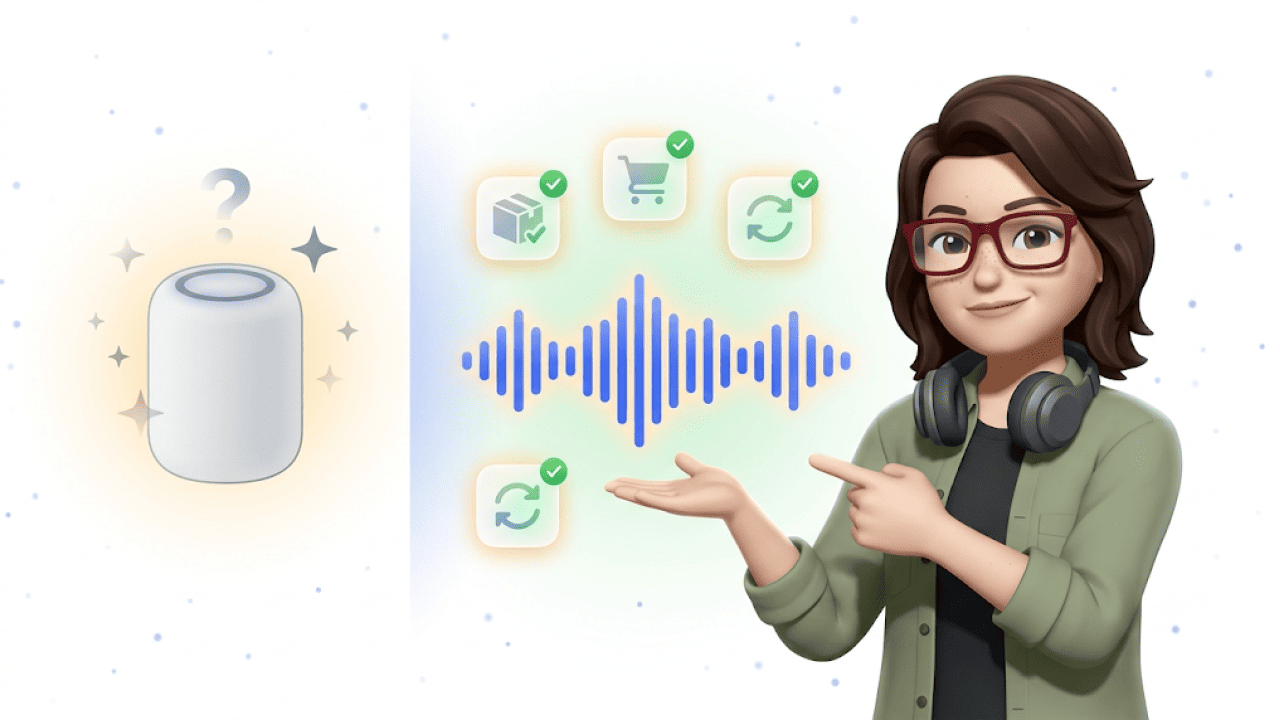
This is where it gets practical. A Voice Agent isn't an end in itself. It has to solve requests that cost humans time today. The classics in an online shop:
WISMO — "Where is my order?": By far the most common support reason. In an analysis across 131 armincx merchants, 54.6% of thematically classified tickets came down to WISMO requests — the clear front-runner across all channels. On the phone, it's no different. A Voice Agent pulls the tracking info live and reads it out. No agent needed.
Order changes and cancellations: Wrong address, swapped size, order no longer wanted. Standard cases an integrated agent runs straight through the system.
Taking calls outside business hours: Calls at 10 p.m. go nowhere today — or to a voicemail nobody checks. An agent picks up around the clock.
Returns handling: Create a label, capture the return reason, kick off the process.
Where the AI Voice Agent hits its limits
Stay honest. A Voice Agent is no cure-all.
For emotional or escalated cases, a human has to step in. An angry customer whose wedding dress never arrived doesn't want an AI — she wants a solution and empathy. Good systems recognize that and hand off cleanly.
For complex edge cases outside its training scope, a decent agent doesn't guess. It escalates. A system that hallucinates and gives false information is worse than none at all.
And: a poorly trained or poorly connected agent frustrates more than it helps. The tech is only half the battle. Without a clean interface to the shop system, even the slickest agent is a chatterbox with no data.
What does it cost — and who is it worth it for?
Here it splits, honestly.
Are you a private individual looking for something to take your calls when you can't? Then a simple AI answering machine is usually enough. A full Voice Agent with system integration is overkill for you — and not worth the money.
Running an online shop? Then the math is simple: call volume times automation rate. Get 2,000 calls a month and automate 60% of them, and you save 1,200 agent conversations. Depending on the model, providers bill per minute, per call, or per credit.
Rule of thumb: high call volumes, lots of WISMO, an existing shop system to connect — then it's worth it. A niche hotline with ten calls a week? Leave it alone. The effort eats the benefit.
armincx focuses on exactly this E-Commerce DACH case: deep shop-system integration, trained in German. Whether it fits you depends on exactly the factors above — not on the hype.
FAQ — AI Voice Agent
Is an AI Voice Agent the same as a voicebot?
No. A voicebot often works with fixed scripts and keywords. An AI Voice Agent understands free speech and reacts flexibly to follow-up questions.
Does an AI Voice Agent work reliably in German?
Yes — provided the system is trained on German-language data. Generic systems with a bolted-on German pack understand dialects and complex sentences noticeably worse.
Will a Voice Agent replace my staff entirely?
No. It handles standard requests on its own; emotional or complex cases belong with a human. Good systems escalate exactly those cases cleanly.
How fast does a Voice Agent have to respond?
Under about 800 milliseconds. Anything slower feels unnatural and leads to awkward pauses in the conversation.
Which online shops is an AI Voice Agent worth it for?
Shops with high call volume, lots of shipping-status (WISMO) requests, and a connectable shop system. At low volume, it rarely pays off.
What does an AI Voice Agent cost?
Depending on the provider, per minute, per call, or per credit. The economics come down to call volume times automation rate.
Can a Voice Agent access my order data?
Yes — as long as it's connected to your shop or ERP system. Without that interface, it can talk, but can't solve concrete requests.
What's the difference from an IVR system?
An IVR works with rigid menu trees ("Press 1"). A Voice Agent understands free speech and needs no predefined options.
Do I need an AI Voice Agent as a private individual?
No. For private use, a simple AI answering machine is usually enough. A full Voice Agent with system integration is oversized here.
Conclusion: AI Voice Agent — more than a buzzword, when the integration is right
In short: "AI Voice Agent" is more than a buzzword — but only when the tech delivers and the connection to your shop system holds up. If you run a high call volume in E-Commerce and your service team is drowning in WISMO requests, it's worth a closer look. You can see what German-language AI customer service with voice looks like in practice with armincx Voice — whether it fits your shop comes down to the factors above: call volume, WISMO load, and a connectable shop system.