
A customer wants to order. They pick up the phone. Ring. Ring. Ring. Nobody answers. Thirty seconds later they're gone – and so is the full cart.
Every missed call is a lost cart. Sounds harsh, but it's just maths. Many callers who get stuck in a queue or reach nobody never call back. They buy elsewhere. On Amazon. From a competitor. Anywhere but from you.
Now scale that up. If your shop gets 100 calls a day and you miss 20 of them, that's 20 potential orders evaporating into nothing. At an average cart value of 60 euros, that's up to 1,200 euros a day. Over 30,000 euros a month. Not every one of those callers would have bought – but every missed call is a missed chance.
The good news: you don't have to solve this manually anymore. Automatic call answering picks up every call. Instantly. Around the clock. Let's walk through it step by step.
What Automatic Call Answering Really Means in E-Commerce
First, let's clear up the terms, because there's a lot of confusion here.
Automatic call answering doesn't mean: voicemail. A classic AI answering machine or an old-school recording picks up the call and says "Please leave a message." That's a dead end. The customer wants an answer now, not a callback tomorrow.
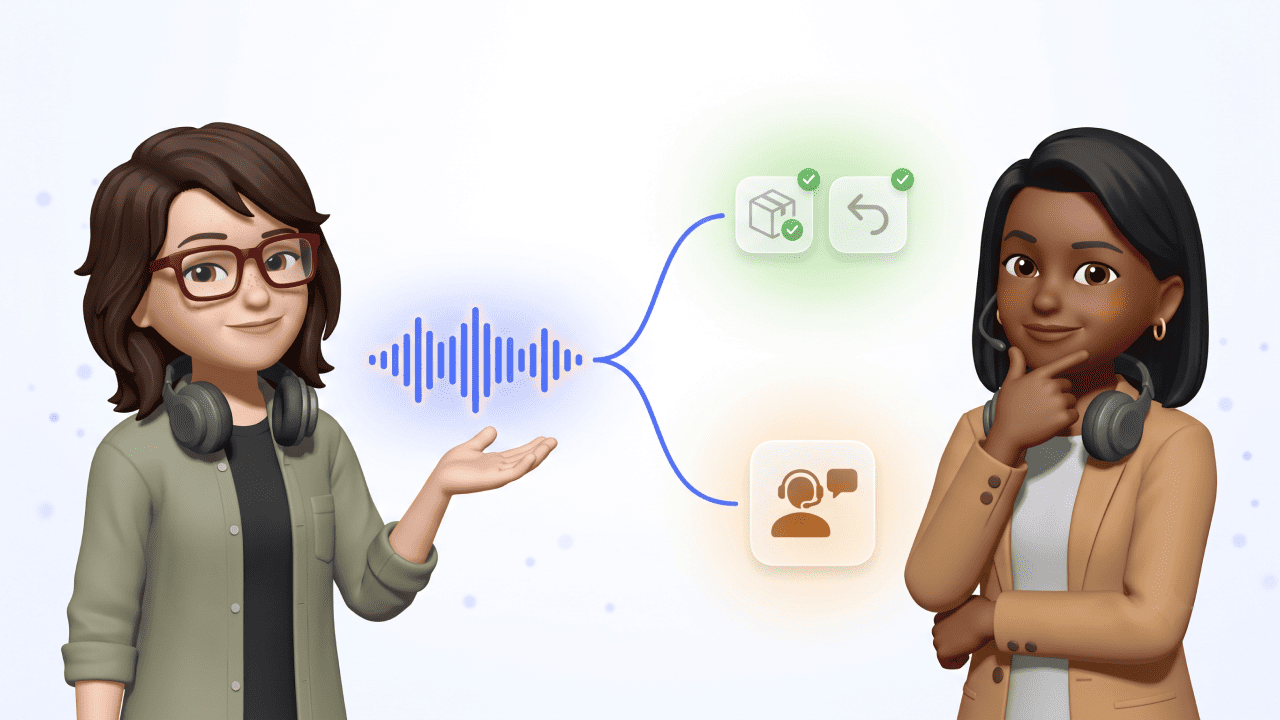
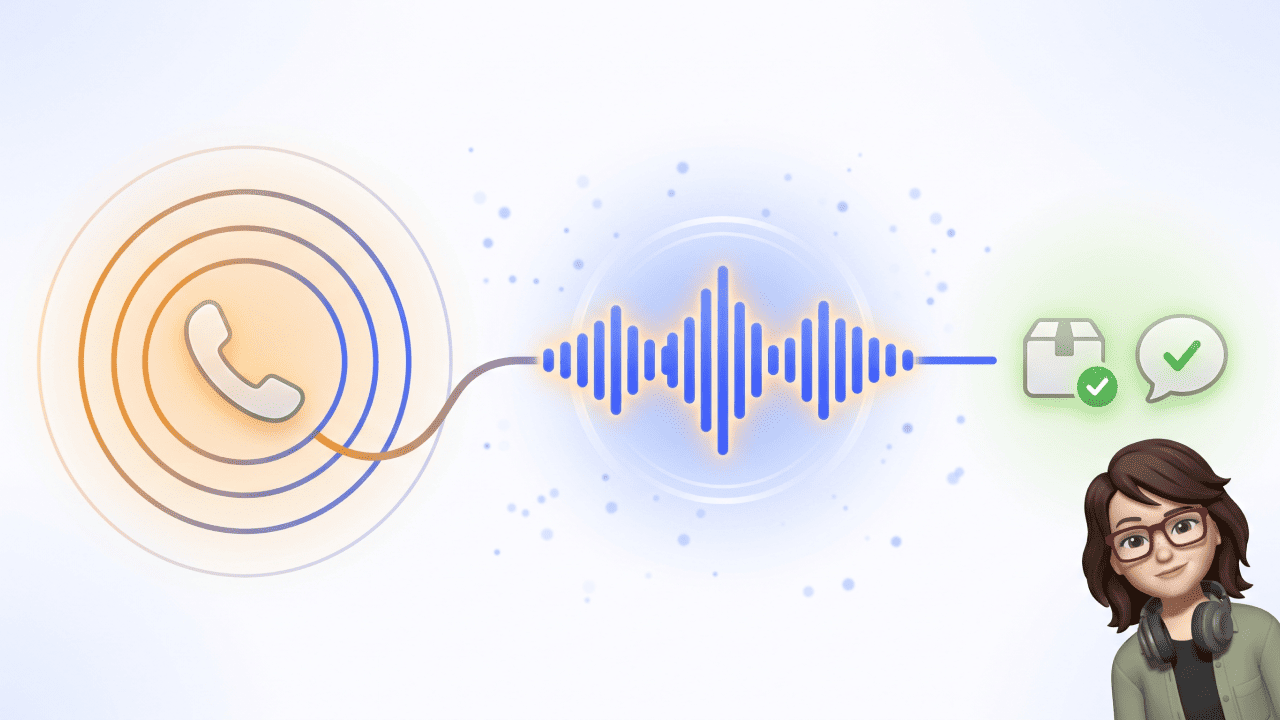
Modern automatic call answering in the online-shop context means: an AI phone assistant picks up, understands the request and resolves it. Right there in the conversation.
In concrete terms: the customer asks "Where's my order?", the AI checks the order status and reads out the tracking number. The customer asks "Do you have this T-shirt in size L?", the AI checks stock and answers. No human needed. No waiting. No lost cart.
Which means: the gap between a voicebot and a dumb answering machine is enormous. One sells. The other manages frustration.
Step 1: Analyse Call Volume and Reasons
Before you automate anything, you need to know why people are calling in the first place.
Pull the data from your phone system. How many calls per day? When are the peaks? And above all: what are the conversations actually about?
In many online shops, calls roughly break down like this (figures vary by product range and season):
- WISMO ("Where is my order?") – Where's my parcel, when's it coming, why isn't it here yet
- Product questions – Availability, size, material, compatibility
- Returns and complaints
- The rest: Order changes, invoice questions, other
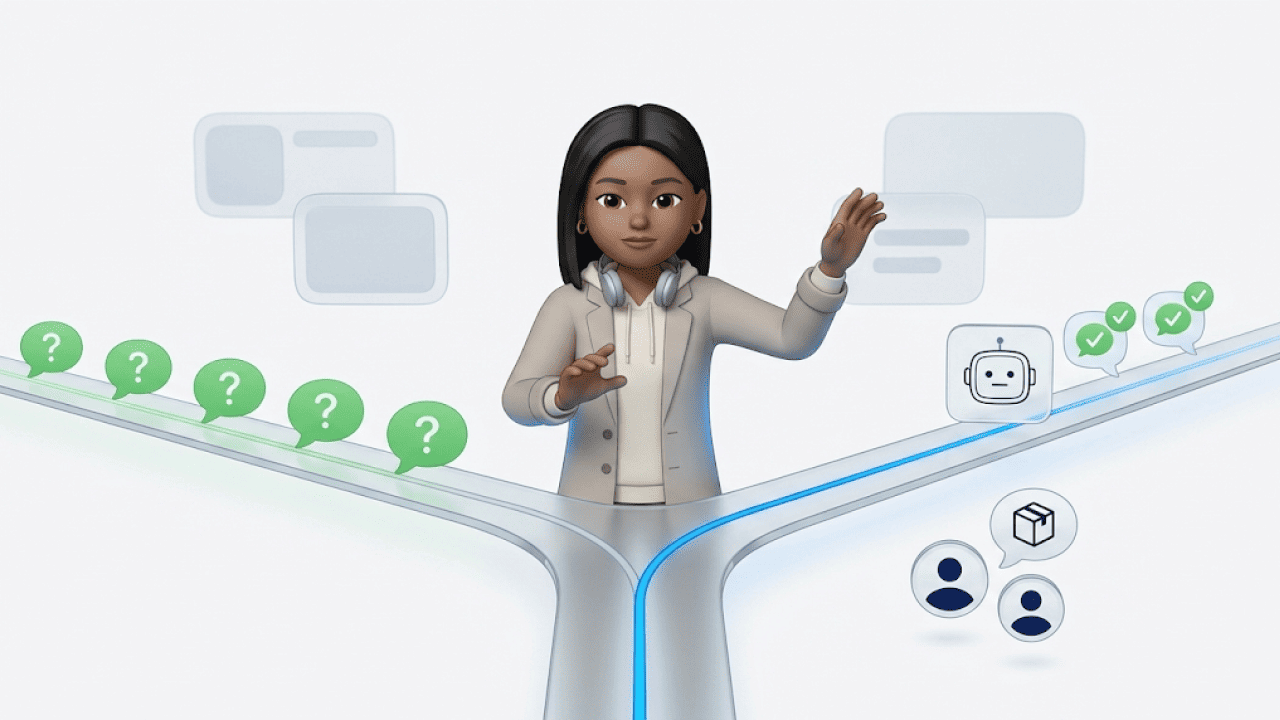
This is gold. Because the first two blocks – WISMO and product questions – are exactly the cases an AI handles brilliantly. Recurring, structured, data-based.
Which means: if a large share of your calls falls into these two categories, you can theoretically automate that exact share. That's your automation rate – and it pays off.
Step 2: Prioritise Use Cases
You don't start with everything at once. That goes wrong.
Start with the biggest, simplest block: WISMO. Order-status requests are high-frequency and only need a connection to your shop system and the shipping carrier. The AI pulls the tracking number, reads out the status, done.
Next comes phone-based product advice. This gets harder, because the AI has to know your product catalogue. But the leverage is huge: a customer who calls and asks "Will this battery fit my model?" is on the verge of buying. Answer that instantly, and you've got the order.
Only after that do you tackle complaints and special cases. Those are more emotional and often need a human.
Here is the catch: anyone who tries to automate everything at once builds a voicebot that does nothing properly. Three use cases done cleanly beat ten done half-baked.
Step 3: Choose a Provider and Check Integration
Now for the technical question. With what?
There are plenty of AI phone assistant providers on the market by now. They differ brutally on one point: integration.
A voicebot that doesn't know your shop system is useless for e-commerce. It can chat nicely, but it can't retrieve an order status. So look for real integration with Shopify, WooCommerce, Shopware – and with your shipping and helpdesk tools.
What else to watch for:
- German speech recognition – Many tools are trained on English and fall apart on dialects. Test the AI speech recognition with real calls, not demo scripts.
- GDPR and EU server location – You're processing customer data over the phone. This has to be clean.
- Escalation to humans – When the AI hits a wall, it has to hand over cleanly to your team. Including conversation context.
- Transparent pricing – Per minute, per call or per credit? Run it against your volume.
Tools like fonio target local service providers and medical practices more. For e-commerce with deep shop-system integration, you need something else.
Step 4: Train the Voicebot
A voicebot is only as good as its training. Full stop.
You feed it:
- Your product catalogue – Names, variants, availability, common questions
- Your FAQs – Shipping times, return conditions, payment methods
- Your tone of voice – Does your shop use the informal address? Then the AI does too.
Important: listen to real conversations. The first 100 calls after launch are your best training material. Where did the AI stumble? Where did it misunderstand? Where did it escalate to a human unnecessarily?
The result? With every iteration, the automation rate climbs. What starts low rises noticeably after a few weeks of fine-tuning.
Step 5: Set Up Clean Escalation to Humans
Let's be honest here: an AI can't do everything. And it shouldn't.
Certain cases belong in human hands:
- Emotional complaints ("My parcel is broken and I'm furious")
- Complex special cases with no clear data
- Legal or payment-sensitive topics
The decisive point: the handover has to be smooth. The AI gathers the request, identifies the customer and passes the conversation along with context. The agent doesn't start from zero.
A well-built voicebot customer service solution recognises on its own when it's reached its limit. It doesn't pretend to know everything. That's the difference between an AI that helps and one that drives customers up the wall.
Step 6: Measure, Optimise, Scale
Live? Nice. But the work starts now.
Keep an eye on these metrics:
- Answer rate – Are 100% of calls now picked up? (They should be.)
- Automation rate – How many cases does the AI resolve on its own, without a human?
- Call duration – Resolved faster than before?
- Escalation rate – And above all: for what reasons?
- Conversion after call – How many advice calls end in an order?
That last number is the most important one for e-commerce. Because in the end it's not about "nice AI" – it's about revenue.
The short version: what you don't measure, you can't improve. And automating an order hotline isn't a project you set up once and forget. It's an ongoing process.
What's the Bottom Line?
Let's do the maths. Say your shop gets 100 calls a day, you currently answer 80 of them, and 20 are lost.
With automatic call answering, you answer all 100. Those 20 lost calls? Now handled. The 30,000 euros from the intro was the maximum case – let's get realistic. At a 60-euro cart and – conservatively – a 30% conversion rate, that's 6 extra orders a day. 360 euros. Over 10,000 euros a month that was simply gone before.
On top of that, your team gets relief. When the AI catches the bulk of WISMO and product questions, your support has time for the cases that genuinely need humans.
Here is the catch: a poorly trained AI does the opposite. It annoys, misunderstands and scares customers off. The technology alone isn't enough – training and ongoing optimisation decide whether it works.
FAQ — Automatic Call Answering
Can an AI really answer every call automatically?
Yes. The pickup itself is always 100% automatable – no call gets lost anymore. How many requests the AI resolves without a human depends on training and use cases.
Does automatic call answering replace my support team entirely?
No. It takes over recurring standard cases like order status and product questions. Emotional complaints and complex special cases still belong in human hands.
How long does setup take?
That depends on the provider and your shop system. With good integration, first use cases like WISMO are often live within a few days. Fine-tuning then runs continuously after that.
Does the AI understand dialects and colloquial speech?
Partly. Modern German speech recognition copes with most accents but hits its limits with strong dialects. Test this before launch with real calls.
What does automatic call answering cost for an online shop?
Billing is usually per minute, per call or per credit. What pays off depends on your call volume.
Is it GDPR-compliant?
Yes. If the provider offers an EU server location and handles data processing properly, it's cleanly covered. You're processing customer data over the phone, so this is a must-have criterion when choosing.
Can the AI actively sell products too?
Yes. With phone-based product advice, it can name availability, suggest alternatives and guide towards a purchase. Advice calls often have high conversion, because the customer is close to closing.
What happens when the AI hits a wall?
It escalates to a human – along with the conversation context. A well-built solution recognises its own limits and hands over cleanly, instead of sending the customer in circles.
Is it worth it for small shops too?
Depends on call volume. For a niche hotline with a handful of calls a day, the effort is often too high. From a noticeable volume with lots of WISMO requests, it pays off quickly.
What's the difference from a chatbot?
A chatbot handles text, a voicebot handles the phone. Both solve similar cases, but over different channels.
Conclusion: Reachability Is Revenue
Phone reachability isn't a nice-to-have. It's tied directly to your revenue. If you're thinking about what an AI customer service could look like in your shop: start small. One use case, built cleanly, well tested. Then you scale further.
That's exactly the e-commerce case armincx is built for – WISMO, order status, product advice on the phone, all shop-integrated. In 2026, you can't afford to lose calls anymore.