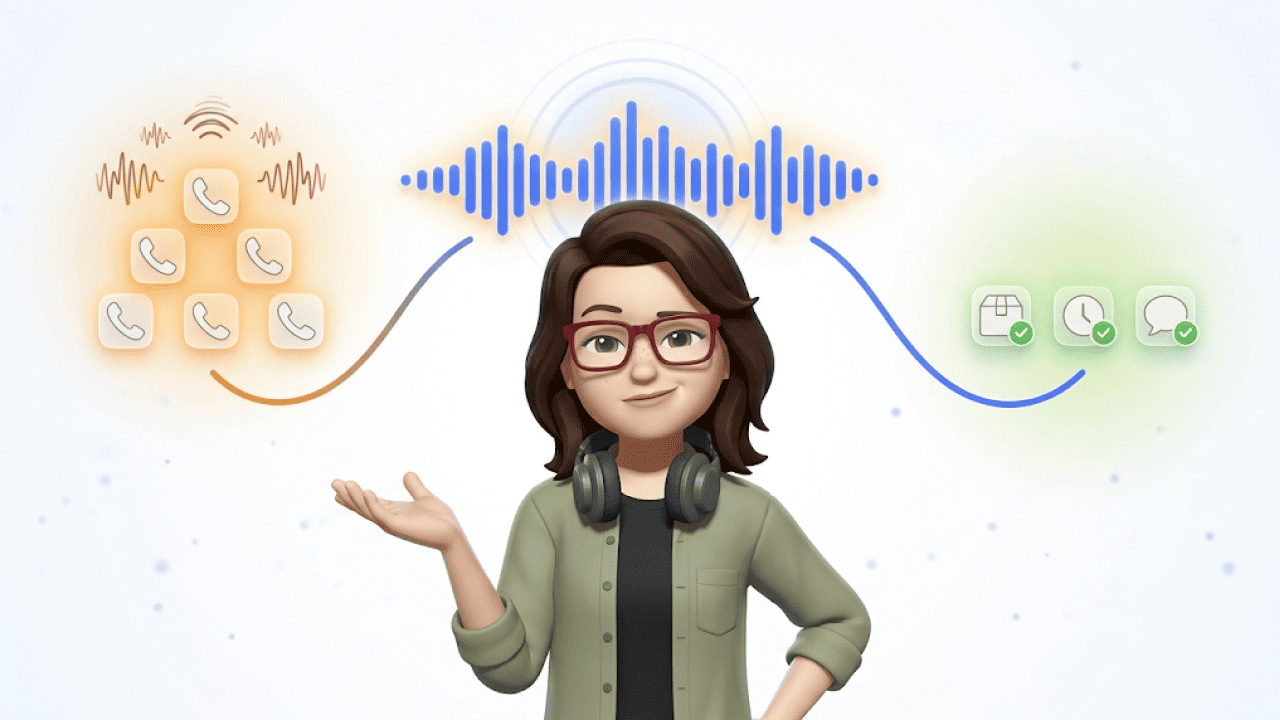

Black Friday, 11:47 a.m. 340 calls in the queue. Average wait time: 9 minutes. Abandon rate: over 40 percent. And every one of those dropped calls is a customer who's just cancelling their cart or ordering from your competitor.
Sounds exaggerated? It isn't. This happens every year in shops that try to cushion their call volume with seasonal temps. They get hired in October, trained in November — and they're gone again in December. Expensive, slow, and the third day with a temp is reliably the worst support day of the year.
AI in the call center flips this logic. An AI phone assistant takes calls, answers the same questions over and over, and only escalates what truly needs a human. No onboarding, no shift planning, no lunch break. But — and this is the honest part — it doesn't make sense for every shop. Let's look at who it works for and who it doesn't.
What AI in the Call Center Can Actually Do Today
Forget the phone menus of 2015. "Press 1 for orders." That's not AI, that's a tape recorder with a branch.
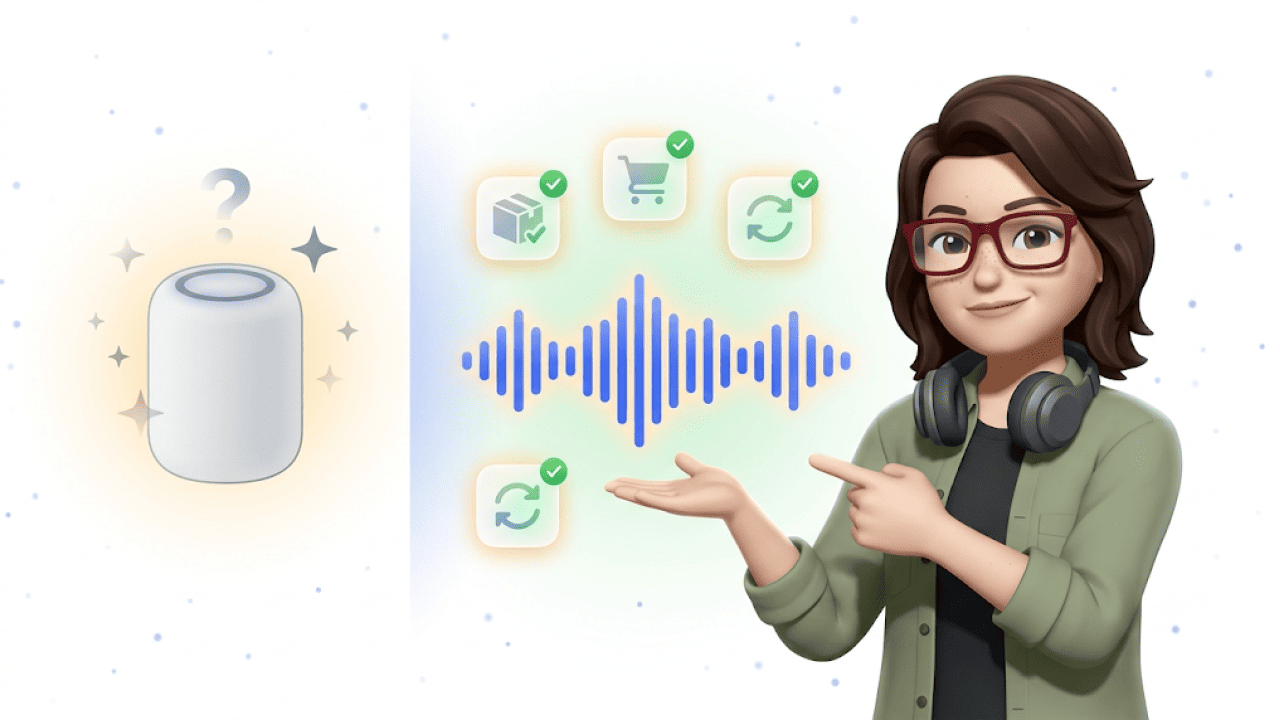
A modern AI phone assistant understands natural speech, accesses your order data and resolves requests right there in the conversation. The customer says "Where's my parcel?" — and the AI pulls the shipping status, names the delivery date and asks whether there's anything else. Done.
Here's the thing: the most common requests in e-commerce support are delivery status (WISMO — "Where Is My Order"), returns and invoice questions. How big that chunk is shows in our own analysis of 131 armincx merchants: WISMO alone accounts for 54.6% of classified tickets — by far the largest share (directional, measured across all channels). Exactly these cases are highly repetitive. And repetitive means automatable.
When AI takes over these standard cases, your team is left with what humans are better at: complaints, special cases, the angry customer who needs a real solution.
The Framework: Who AI in the Call Center Works For — and Who It Doesn't
Before you buy a voicebot: answer these four questions honestly. At least three times "yes" — then it pays off. Two times "no" or more — skip it.
1. Do you have high call volume? Under 200 calls a month, automation rarely pays off. The effort for setup and training eats up the benefit. Over 1,000 calls a month? Then you're losing money to wait times every single day.
2. Are your calls WISMO-heavy and repetitive? If half or more of your conversations are "Where's my order?", that's an ideal case. If every call is an individual advisory conversation — tricky.
3. Do you have a connected shop system? Shopify, Shopware, WooCommerce — the AI needs data access to pull shipping status and orders. Without integration, the AI is a nice announcement device, but it solves nothing.
4. Do you have seasonal peaks? Black Friday, Christmas, sale campaigns. If your volume spikes at certain points, AI is your best buffer. It handles ten to hundreds of simultaneous calls without you hiring anyone.
In short: high-volume DACH online shop with a shop system and WISMO load? Clear case. Niche hotline with 30 calls a month and individual advice? Hands off — your human does that better and cheaper.
The Honest Decision Matrix
| Scenario | AI useful? | Reason |
|---|---|---|
| Online shop, >1,000 calls/month, WISMO-heavy | ✅ Yes | High automation rate, clear ROI |
| Seasonal shop with Black Friday peak | ✅ Yes | Handles peaks without temps |
| Shop with connected shop system | ✅ Yes | Data access = real solutions instead of announcements |
| Mid-size shop, 300–1,000 calls/month | ⚠️ Check | Depends on the share of repetitive cases |
| Advice-heavy sales (e.g. custom furniture) | ⚠️ Check | AI for routing, human for the conversation |
| Doctor's office / local service provider | ⚠️ Partly | Appointment booking yes, but specialized providers often better |
| Niche hotline, <200 calls/month | ❌ No | Setup effort > benefit |
| Highly sensitive cases (debt collection, health) | ❌ No | Escalation to humans mandatory |
One thing for honesty's sake: if you run a doctor's office or a local trade business, specialized tools are often the better choice. They're optimized for appointment booking and local service providers. For e-commerce in DACH with shop-system integration, you need different tools — ones that actually dig into your order data.
The ROI: How to Calculate Whether It Pays Off
Let's not beat around the bush. The math is simple.
Input: call volume × automation rate × cost per manual call.
Example. Your shop gets 2,000 calls a month. An agent averages 6 minutes per call including wrap-up. At a fully loaded hourly rate of around €30, one call costs you about €3. That's €6,000 a month for the phone alone.
How much your AI actually takes off depends on training and data connection. For the math, let's conservatively assume half: 1,000 calls run through the AI, 1,000 stay with the team. Even if the AI costs €0.50 to €1 per call, you save a four-figure amount per month — and your team won't dread the worst peak hours anymore.
The catch: this math only works if your automation rate holds up. A poorly trained AI that ends up routing every second call to a human anyway costs you twice — once for the AI, once for the agent. More on that in a moment.
What the data says: in our analysis of 131 armincx merchants, total automation rises to 35.2% during the Black Friday peak — across all channels, not just on the phone, because workflows catch the wave in the background. Meaning: exactly when volume explodes, automation absorbs the most.
The result? For shops with a high WISMO share, call-center automation often pays for itself within a few months. For pure advisory hotlines, it may never pay off.
Where Humans Have to Step In — Always
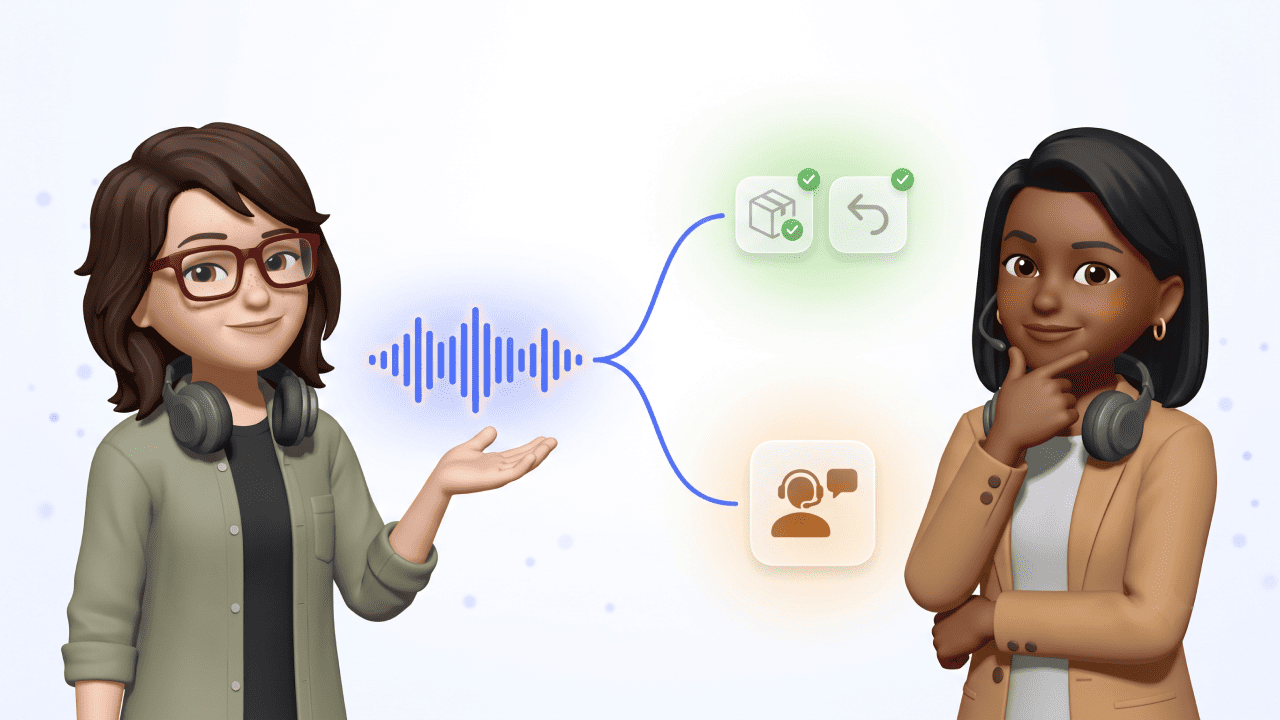
Here's where it branches honestly. AI in the call center is no cure-all. There are cases where a human belongs — immediately:
- Complaints with escalation potential. Customer's angry? The AI picks up the tone and routes onward. Anything else is an accelerant.
- Sensitive topics. Refunds over certain amounts, legal questions, personal data in a delicate context.
- Edge cases with no clear answer. If the request isn't among the trained cases, the AI shouldn't guess. It should hand over.
A good AI knows what it doesn't know. That's the most important quality marker. A voicebot that pretends to have an answer for everything produces frustrated customers and bad reviews. Honest escalation to a human isn't a failure — it's part of the design.
Setup: What You Need to Make It Work
Three things decide between success and flop.
First: a clean data connection. The AI has to access order status, tracking and customer data live. Without that integration via your shop system, it's a dead end. It doesn't just have to understand what the customer wants — it has to be able to act.
Second: realistic training on your actual cases. Not generic blah, but your top 20 requests, your tone, your shipping terms. The more specific, the higher the automation rate.
Third: clear escalation rules. When does the AI hand over to a human? At which keyword, at which mood, after how many follow-up questions? You have to define that upfront.
The difference between voice and text isn't trivial here. In short: voice is closer to the customer, but less forgiving of mistakes. On the phone, a misunderstanding shows immediately — in chat, the customer can re-read and ask again.
What to Look For When Choosing a Provider
The market is crowded. Generic voicebots, local specialists, e-commerce-focused solutions. What matters:
- DACH language quality. Does the AI also understand dialect and natural German — not just textbook High German?
- Deep shop-system integration. A surface-level API connection isn't enough. The AI has to genuinely dig into your order data — Shopify, JTL, Xentral, Shopware.
- Transparent pricing. Per minute, per call, per credit? Hidden setup costs?
- Escalation handling. How cleanly does the system hand over to your team?
These four points are exactly where the difference lies between a generic voicebot and one that actually solves things in e-commerce. We at armincx built the Voice Agent precisely for that: DACH online shops with real shop-system connectivity, not appointment booking for service providers.
FAQ — AI in the Call Center
Does AI in the call center completely replace my support team?
No. The AI takes over repetitive standard cases like WISMO, returns and invoice questions. Complaints, special cases and sensitive topics stay with humans — and that's a good thing.
Does an AI phone assistant work reliably in German?
Yes. Modern systems understand natural German including dialect coloring well. What matters is that the AI is trained on DACH language use and not just generic.
How fast is a system like this ready to go?
That depends on the data connection. With an existing shop system and cleanly defined top cases, often within a few weeks. Not overnight, but much faster than onboarding a temp.
Is AI in the call center worth it for small shops?
No, usually not. Under 200 calls a month, the setup effort eats up the benefit. From around 1,000 calls it gets interesting.
What happens during Black Friday peaks?
The AI instantly handles a few to hundreds of simultaneous calls. That's exactly where the biggest advantage lies: no seasonal staff, no hold-queue disaster.
Can the AI access my order data?
Yes, with proper integration. It pulls shipping status, delivery dates and order info live from your shop system. Without that connection, it can't solve WISMO requests.
What does AI in the call center cost?
The models vary — per minute, per call or per credit, often plus a one-time setup cost. Which model pays off depends mainly on your call volume.
How does the AI know a human needs to take over?
Through defined escalation rules: keywords, detected frustration in tone, missing answers after follow-ups. Configured well, it hands over cleanly instead of guessing.
Is voice better than a chatbot?
It depends. Voice is closer to the customer and lower-threshold, but more error-prone — on the phone a misunderstanding stands out more than in chat.
What if the AI can't answer a question?
It shouldn't guess, it should hand over to a human. That honest escalation is a quality marker, not a flaw.
Conclusion: Your Call Center That Doesn't Collapse at Peak
AI in the call center is no end in itself. It's a tool for one clear case: high call volume, lots of repetitive WISMO requests, a connected shop system and seasonal peaks that otherwise cost you temps and nerves.
Does that describe you? Then call-center automation often pays off faster than you think. Doesn't describe you — like a small advisory hotline? Then keep your hands off. Honestly.
If you want to know whether your shop fits the first case: take a look at the AI phone assistant from armincx for online shops and book a demo. We'll go through your call volume and tell you honestly whether it pays off for you — or not.