Our internal data over the last few months shows: mobile pop-up lead-gen via WhatsApp performs roughly 50 % better than classic email lead-gen forms on mobile. Three reasons:
- No form to fill in. One tap on the CTA, and the WhatsApp welcome flow takes over.
- No double-opt-in losses. Email DOI typically loses 20–25 % of leads at the confirmation step. With WhatsApp, the DOI is built into the chat flow.
No inbox issues. Bounces, spam filters, "Promotions" tabs — none of that exists in WhatsApp.
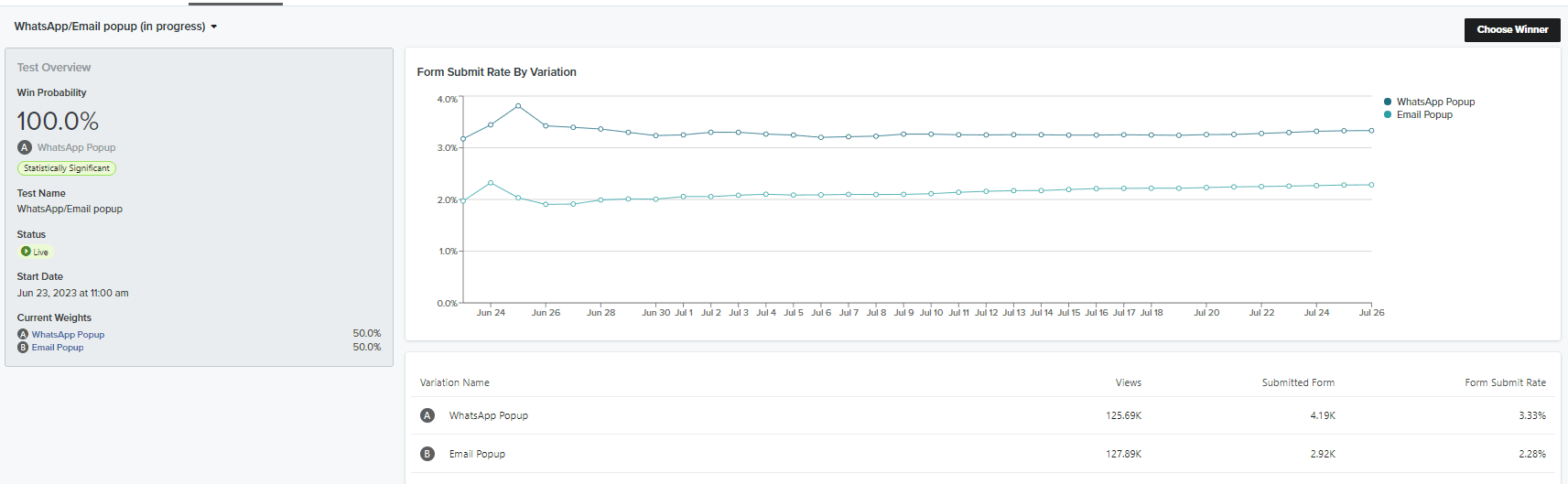
Chatarmin data: WhatsApp mobile pop-ups beat email forms by roughly 50 % on mobile traffic.
Here's how the German weight-management brand "Metaflow" runs it:
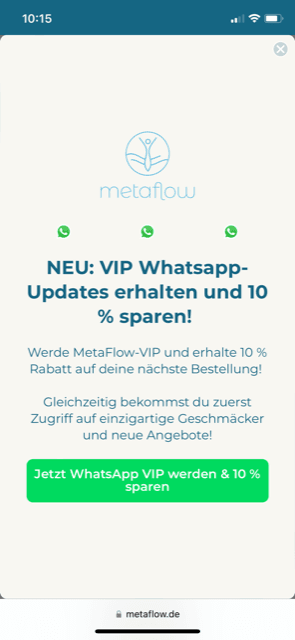
Delay mobile pop-up for WhatsApp lead-gen at Metaflow.
And the best part: through our Klaviyo-WhatsApp integration, you sync cold leads back into your email stack at their very first touchpoint. Email and WhatsApp lists grow in parallel, no silos. Anyone who shares their email in the WhatsApp welcome flow lands automatically in Klaviyo. Anyone who ignores a Klaviyo newsletter can be re-engaged via WhatsApp after 48 hours. Conversion rates on email non-openers go up by 15–25 % this way.

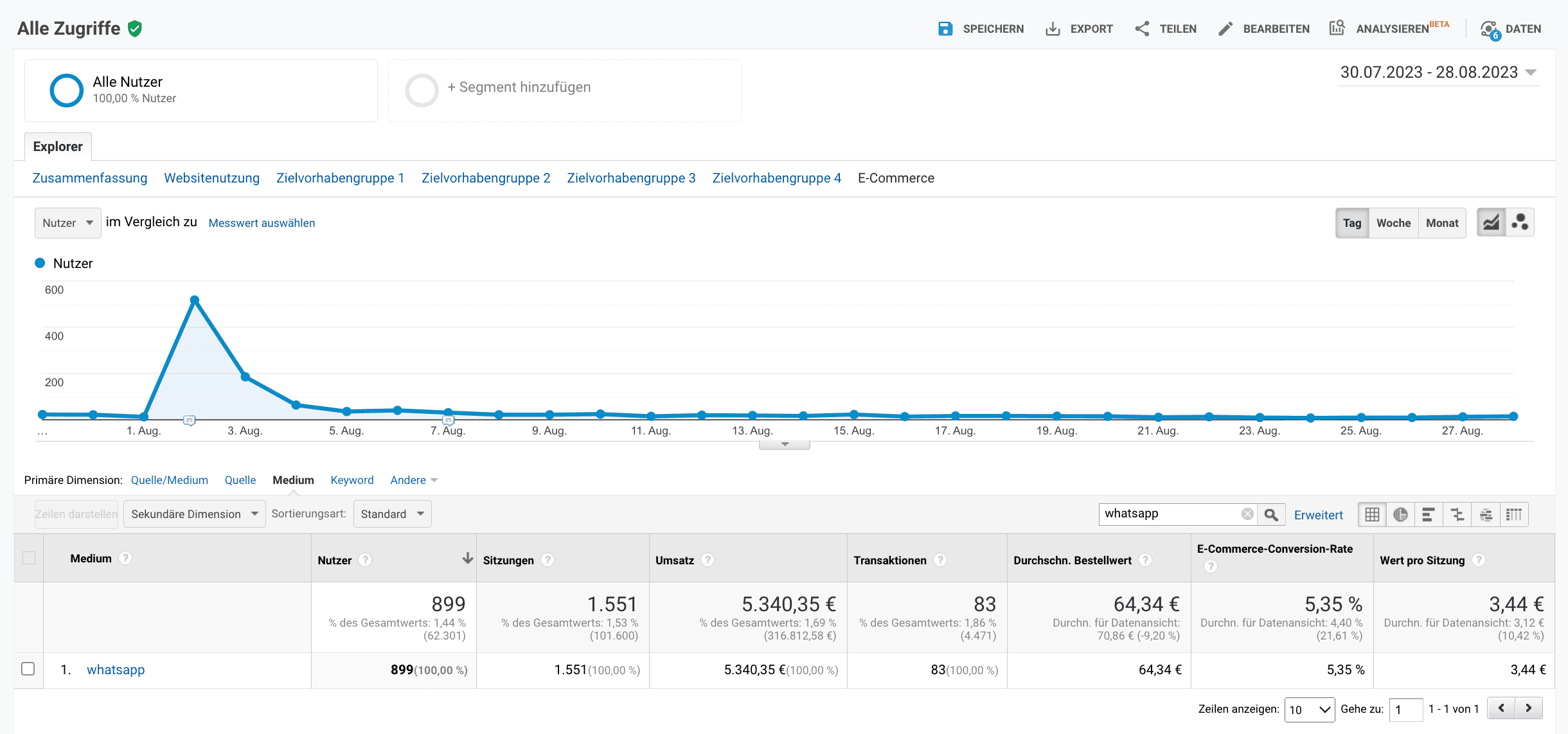
Welcome-flow performance for a supplements brand after mobile pop-up lead-gen.
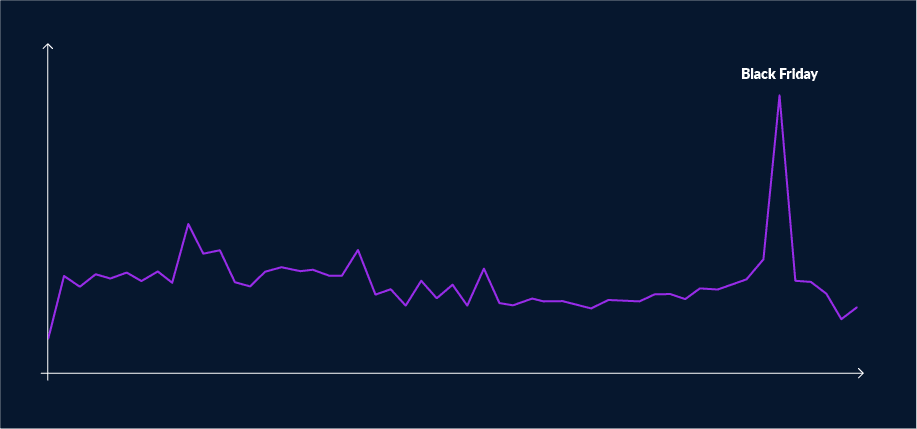
This is where it gets interesting for any Shopify or Shopware shop above the minimum revenue threshold for WhatsApp marketing. Abandoned carts are the highest-leverage flow you can run — especially during Black Week when traffic goes through the roof.
The mechanic: someone adds a product to cart, bounces, and Chatarmin sends a WhatsApp message after a configurable delay (30 minutes, 1 hour, 24 hours) with the product image and a direct checkout link. Conversion rate: typically 3 to 10x higher than an abandoned-cart email. Why? The message lands on the lock screen instead of in the "Promotions" tab under 47 other ad emails.

Abandoned cart results for a D2C brand using Chatarmin's Shopify and Klaviyo integrations.
The one decision you have to make: do you message every abandoned-cart customer — or only the ones who already gave a WhatsApp opt-in? Option A is more aggressive but legally borderline for cold contacts under GDPR. Option B is cleaner but smaller in reach.
My take: during Black Week, the abandoned-cart engine runs for 7 days straight. For a brand with 2,000 monthly orders, an 8–15 % recovery rate means 160–300 additional purchases. At a €60 AOV, that's €9,600–18,000 in extra revenue from a single flow.
Hack #5: Post-purchase flows for higher AOV
If you treat Black Friday as a pure acquisition day, you're leaving 30–50 % of margin on the table. The real lever is the day after: what happens to the thousands of first-time buyers who came through between November 27 and 30?
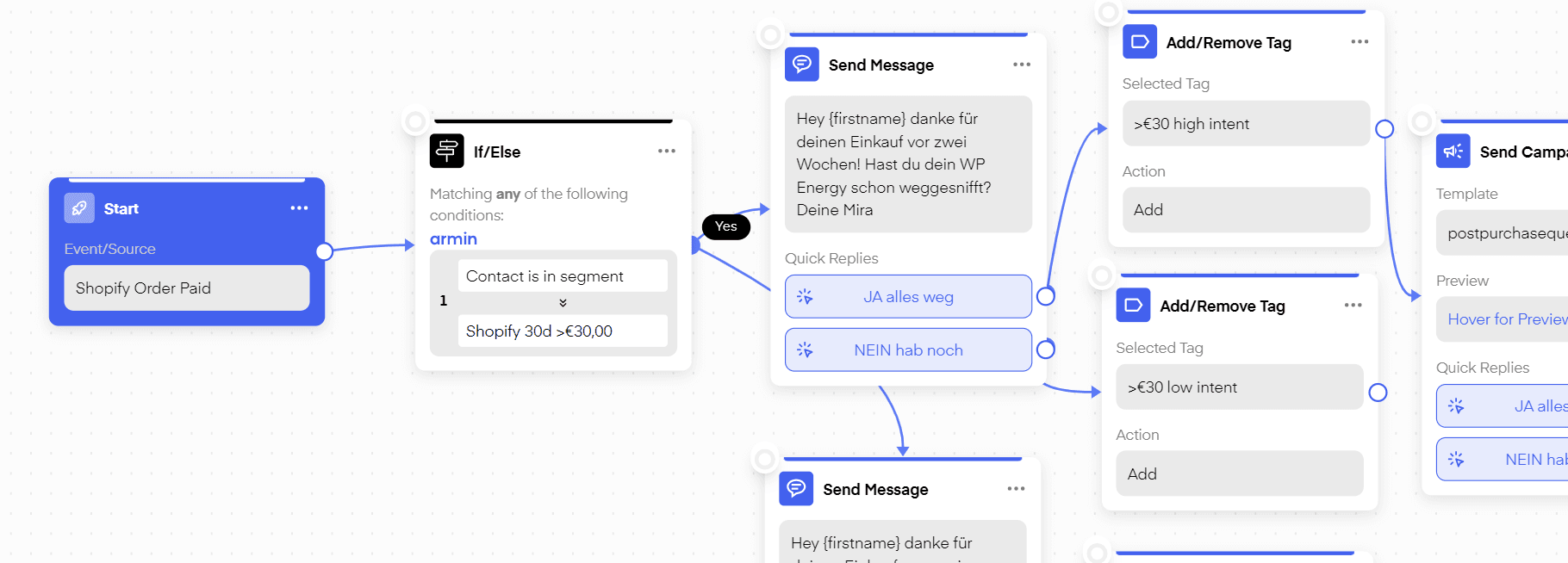
Post-purchase flow setup via the Chatarmin Shopify integration.
Concrete example: one of our customers segments by cart value. Threshold: €30. Below that, customers get a bundle-discount cross-sell. Above that, they get a loyalty touchpoint. This works because:
- WhatsApp messages are read within 24 hours — email takes 3–5 days
- Discount codes are redeemable directly in chat, no browser switch
The next order is 50–70 % more likely if it comes within 7 days
Prerequisite: a WhatsApp-Shopify integration that processes order webhooks in real time. With manual processing, the window's gone before the flow even fires.
Saving the best for last — the hack 99 % of shops still ignore in 2026: the shipping-info widget on the thank-you page.
Mechanic: after checkout, your customer sees a widget on the thank-you page — "Get shipping updates via WhatsApp". One tap, opt-in confirmed, done. Conversion on this widget runs at 30–40 %. That means: for every order, there's a 30–40 % chance you've gained a WhatsApp subscriber for lifetime marketing.
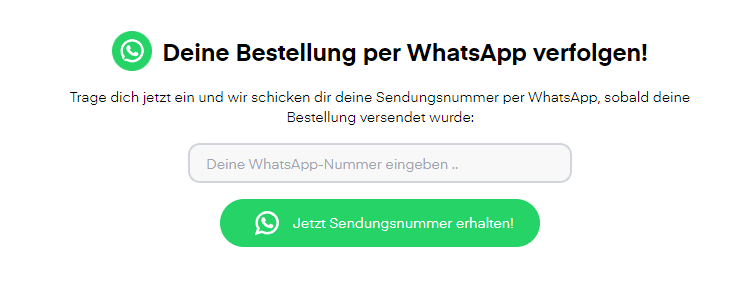
Thank-you-page widget for WhatsApp shipping updates — 30–40 % opt-in rate.
Why it works so well: the customer just bought, trust is at its peak, and the offer ("We'll track shipping for you") is a clear win. Nobody wants to log back into your shop later to check status.
What you do with those leads next: ship updates, then a cross-sell flow a few days later, eventually reactivation. In our data, leads from shipping widgets have a 2–3x higher customer lifetime value than subscribers from generic newsletter pop-ups.
Here's how the two CRM channels stack up head-to-head during the hottest period of the year:
| Metric | Email | WhatsApp |
|---|
| Open rate (Black Week) | 18–25 % | 80–92 % |
| Time to read after send | 6–24 h | 3–5 minutes |
| CTR | 1–3 % | 8–25 % |
| Cost per 1,000 recipients (DACH) | €5–15 | ~€110 (Meta fee, DE) |
| Abandoned cart recovery rate | 2–4 % | 8–15 % |
| Setup time per new flow | Hours to days | Minutes to hours |
What makes this table honest: WhatsApp is more expensive per recipient than email. Sending a marketing message to 100,000 contacts costs roughly €11,000 in WhatsApp fees — email costs a fraction of that. The point isn't "WhatsApp replaces email". The point is: WhatsApp reaches the 60–80 % of your contacts who've been ignoring your emails for months. Full breakdown of mechanics in WhatsApp Marketing Leads.
Before anyone thinks I'm selling the holy grail: WhatsApp isn't right for every Black Friday setup. Three scenarios where I'd advise against it:
- You're below €50,000 monthly revenue. Setup costs and onboarding effort only amortize from a certain order volume. Get email working cleanly first before adding WhatsApp on top.
- You're starting in November. WhatsApp marketing needs a list, and lists need 2–4 months of buildup to reach meaningful size. If you install Chatarmin on November 5, you'll hit Black Week with maybe 800 subscribers — too small for scale effects.
You're not on Shopify, Shopware, WooCommerce, or Klaviyo. The native integrations are the real lever. Without shop connectivity, abandoned cart goes manual — and that's too slow.
Also, a key compliance note for 2026: since January 15, 2026, general-purpose AI chatbots (ChatGPT wrappers) are banned on WhatsApp. If you want AI in your chat, it has to run as a Task-Specific Agent with clearly defined scope. More on this on our WhatsApp Flows feature page.
Black Friday 2026 is on November 27, 2026. Cyber Monday on November 30. If you start now — in May — you have seven months of runway. Here's the typical roadmap our customers follow:
| Period | What needs to happen |
|---|
| May – June 2026 | Tool setup, apply for WhatsApp Business API, get first templates approved, shop integration. Welcome flow live. |
| July – August 2026 | Mobile pop-ups & thank-you-page widget live. First 1,000 subscribers via organic traffic. Abandoned-cart flow live. |
| September 2026 | Click-to-WhatsApp Ads launch. List grows to 5,000–15,000 subscribers. First real campaign (e.g. late-summer sale). |
| October 2026 | Plan influencer campaign, design Black Friday templates, A/B test the welcome flow. |
| Nov 3 – 24, 2026 | "Pre-Black-Week" campaigns, list warm-up, last-chance opt-ins. |
| Nov 27 – 30, 2026 | Black Week campaigns, hourly abandoned-cart recovery, post-purchase upsell. |
Brands that execute this disciplined approach enter Black Week 2026 with 30,000–80,000 WhatsApp subscribers. What that translates to in real revenue, you'll see in the next section — with concrete brand numbers from 2025.
So this doesn't stay in the conditional: Smilodox generated over €481,000 in WhatsApp revenue during Black Week 2025. YFM hit €225,000 in 30 days. Tates GmbH pulled a 275.9x return on ad spend with a single Halloween campaign. These aren't cherry-picks — they're typical results for brands above €200,000 monthly revenue that have been running WhatsApp cleanly for 6+ months.
A good starting point for comparable setups: our deep dive on the Snocks WhatsApp strategy, where we break down opt-in mechanics, event lists, and journey automations from an 8-figure D2C brand. And if you're looking for industry-specific cases — supplements, beauty, fashion, FMCG — you'll find the full brand spectrum in the Chatarmin case studies.
When should I start with WhatsApp marketing for Black Friday 2026?
By July at the latest. A subscriber list needs 3–4 months of buildup before it reaches a meaningful size for Black Week. If you start in November, you've missed the window.
Is WhatsApp marketing only worth it for big Shopify shops?
No, but €50,000 monthly revenue is a sensible minimum threshold. Below that, the setup and compliance overhead outweighs the lever. Above it, WhatsApp quickly becomes the most profitable owned channel.
Do I need a dedicated WhatsApp flow for Black Friday?
Yes. A Black Friday flow differs from a standard welcome flow in timing, discount logic, and frequency cap. Plan at least one dedicated pre-sale flow, one sale flow, and one post-purchase cross-sell flow.
What does WhatsApp marketing cost during Black Week?
Meta's fee for marketing templates in 2026 runs at around 11 cents per recipient in Germany and roughly 5 cents in Austria and Switzerland. Service conversations (initiated by the customer) have been free since November 2024. Click-to-WhatsApp Ads open a 72-hour free window.
Is WhatsApp marketing GDPR-compliant during Black Friday?
Yes, as long as you maintain double opt-in and run everything through the official WhatsApp Business API. Chatarmin is ISO 27001 certified, hosts on EU servers, and provides a Data Processing Agreement. More in our WhatsApp GDPR guide.
If you want to sell profitably during Black Week 2026, you need an audience that belongs to you. Not one that Meta rents to you. The six hacks above aren't magic — they're the standard playbook 450+ e-commerce brands are running on Chatarmin right now.
Start now and you have seven months. Start in October and you have six weeks — enough for the basics, nothing more. Start in November and it's too late.
Want to actually math out what WhatsApp marketing would deliver in your setup? Use our WhatsApp ROI calculator for an honest estimate. Or book a demo slot directly — we'll build a Black Week roadmap together that fits your revenue volume.
15 minutes, no bullshit, no slides.