
11 billion dollars. That's how much companies worldwide saved through chatbots in 2023 alone – up from 6 billion dollars in 2018 (Source: Tidio Chatbot Statistics). The question is no longer "Do we need a bot?" but rather: "Which bot delivers the best ROI?"
And this is where it gets interesting. Because between a €49 DIY builder and an enterprise solution, there are worlds of difference – not just in price, but especially in results. Professional sales bots increase chat conversion rates by 30–38% (Reference: Velux/moinAI Case Study). A support bot that just deflects tickets? It saves costs at best. An AI Agent that actively sells and executes processes? It generates revenue.
There's another factor many underestimate: Opportunity costs. Every lead who has a question at 11 PM and gets no answer is a lost customer. An AI Agent never sleeps – and captures these "night owls" while your team is asleep.
In this guide, I'll show you transparently what chatbots really cost in 2026 – including the hidden cost traps that most providers don't mention.
Chatbot vs. AI Agent: Why the Difference Is Worth Money
Before we talk about costs, an important distinction:
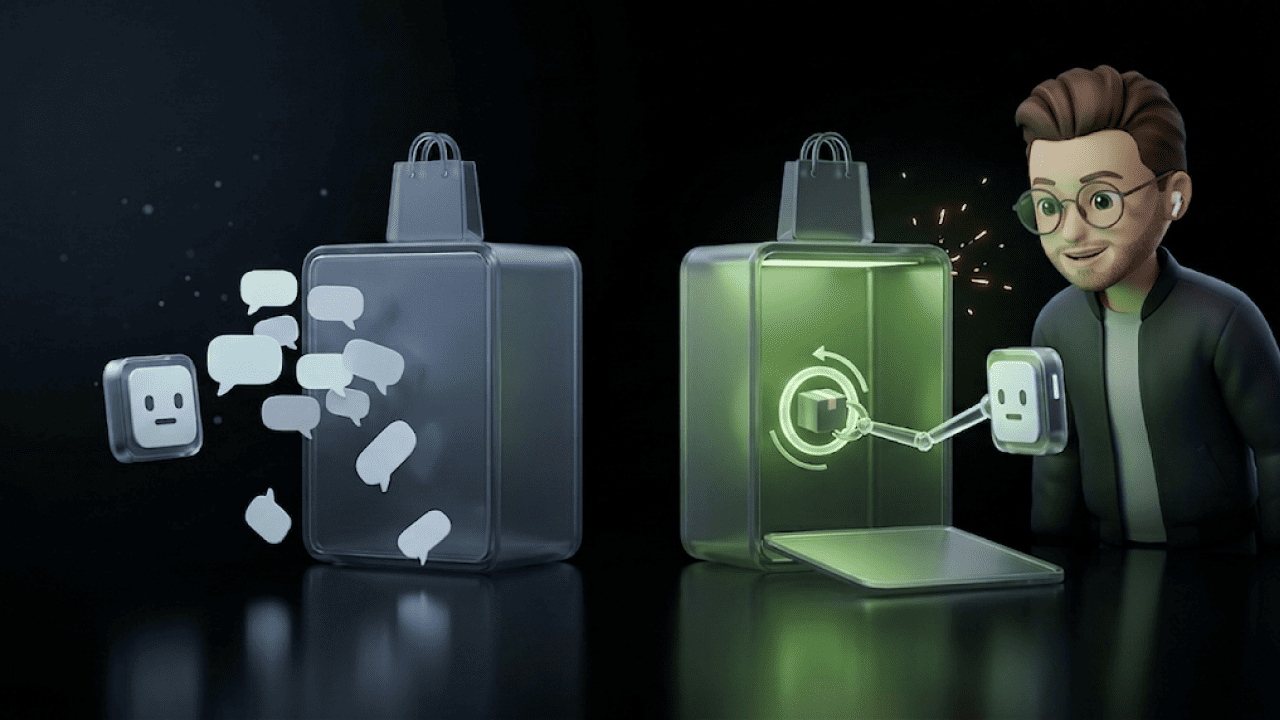
A chatbot answers questions. It reads text, understands the query, and provides an answer. Period.
An AI Agent takes action. It doesn't just answer "Where's my package?" – it checks the shipping status, creates a return label, changes the delivery address, or triggers a refund. All automatically, without human-in-the-loop.
The price difference? Significant. But the ROI difference even more so. A chatbot saves support time. An AI Agent replaces entire processes.
At Chatarmin, we build AI Agents – not chatbots.
What Does a Chatbot Cost in 2026? Market Overview
The chatbot market has split into three clear categories in 2026. The price is determined not just by the software, but primarily by two factors: Agent licenses (what does your team pay per seat?) and Integration depth (does the bot just talk, or does it take action?).
| Category | Monthly Costs | Setup Costs | Agent Licenses | Examples |
|---|---|---|---|---|
| DIY / Builder | €0–200 | Usually €0 | Often included | ChatBot4You (€49–199), ManyChat |
| Professional SaaS | €500–2,500 | €2,000–15,000 | €40–80/seat extra | moinAI (from €790), Userlike AI Hub (from ~€200), Qualimero |
| Enterprise / AI Agents | Custom | Done-for-you | Included | Chatarmin ✓ (incl. Function Calling & PIM Integration) |
DIY Bots: Cheap to Start, Expensive to Operate
Tools like ChatBot4You or ManyChat attract with entry prices from €49/month. The catch: These bots work rule-based – they follow rigid if-then logic and fail as soon as customers go "off-script."
What it really costs you:
2–5 hours per week for manual maintenance ("human-in-the-loop")
Frustrated customers who still end up at support
Zero upselling potential because the bot doesn't know your product data
Missed leads outside business hours – your "night owls" go to competitors
Professional SaaS: The Middle Ground – With Hidden Costs
Providers like moinAI (from approx. €790/month), Userlike, or Qualimero offer real AI capabilities. Setup costs typically range from €2,000 to €15,000.
Important clarification on Userlike: The basic tier is affordable, but the "AI Automation Hub" – the actual AI functionality – starts at around €200/month. Without AI, you only have a live chat tool, not a chatbot.
What many overlook: Many providers – such as Userlike or Zendesk – charge per employee license ("seat") an additional €40–80 per month. For a 5-person support team, that's quickly €200–400 extra – every month.
A solid entry point for many companies. But: Most of these tools are optimized for support, not sales. And: They only talk – they don't act.
Enterprise & AI Agents: When the Bot Generates Revenue and Executes Processes
This is where providers like Chatarmin operate. The difference: It's not about "cheaper support," but about measurable revenue and automated processes.
What Enterprise AI Agents do differently:
Function Calling: The bot checks live in the shop whether the red pants in size M are in stock – and reserves them
Deep integrations with Shopify, Klaviyo, SAP – not just superficial webhooks
The agent creates return labels, changes delivery addresses, triggers refunds
Dedicated Customer Success Manager instead of ticket support
WhatsApp as a revenue channel, not just a support channel
No separate agent licenses – everything in one package
This justifies individual pricing based on the specific business case.
The Underestimated Cost Blocks
The monthly software price is just the tip of the iceberg. Most people overlook these four cost blocks:
A) Setup & Onboarding: Why "Self-Service" Often Fails
An AI Agent is only as good as its training and connections. You need:
Clean product data (PIM)
Defined conversation flows
Function Calling to your systems (shop, CRM, shipping)
Someone who knows how customers really ask questions
With DIY tools, you do this yourself – and massively underestimate the effort. At Chatarmin, we handle the setup completely (Done-for-you). It takes time during onboarding but saves months of trial-and-error.
B) WhatsApp Fees: The Meta Cost Trap
This is where it gets surprisingly expensive for many. Meta charges fees for every WhatsApp conversation – and they vary significantly:
| Message Type | Cost (Germany) | Example |
|---|---|---|
| Marketing (you message the customer) | approx. 11 cents/conversation | Newsletter, campaigns |
| Utility/Transactions | approx. 4.5 cents | Shipping info, order confirmations |
| Service (customer messages you) | Free (24h window) | Support inquiries |
Example calculation: 10,000 marketing messages per month = €1,100 just in Meta fees. A "free" bot quickly becomes a cost drain.
C) Token Costs: Why Real Intelligence Requires Computing Power
Modern AI Agents use Large Language Models like GPT-5.2 Thinking or o4-mini. These models charge per "token" (roughly: per word). The smarter the answer, the more expensive.
Current Models and Their Use Cases (2026):
| Model | Type | Cost (per 1M Tokens) | Use Case |
|---|---|---|---|
| o4-mini | Fast & cheap | ~$0.15–$2 | Simple FAQ, routing |
| GPT-4o | Standard | $2.50 (input) / $10 (output) | Product questions, support |
| GPT-5.2 | Advanced | $10–$20 | Complex consultation |
| GPT-5.2 Thinking | Reasoning | $20–$40 | Purchase advice, configurations |
What does "Thinking" mean? GPT-5.2 Thinking is a reasoning model – it "thinks" before answering. This costs more tokens (and therefore more money) but delivers significantly better results for complex purchase decisions.
Our approach at Chatarmin: We use intelligent routing – simple questions are answered by o4-mini (cheap), complex purchase consultations are handled by GPT-5.2 Thinking (precise). This optimizes both cost and quality.
D) Data Privacy as a Cost Factor: Why "Free" Can Become Expensive
What most don't know: With free and cheap OpenAI plans (Free, Plus), your data is used by default to train the models.
Only from ChatGPT Business (from $25/user/month) and Enterprise is training on customer data disabled.
For B2B, this means:
Free bot + customer data = potential GDPR problem
When customer inquiries flow into model training, you lose control
Enterprise plans cost more – but they're the only way to guarantee data privacy
At Chatarmin, we use enterprise-grade infrastructure. Your customer data stays your customer data – guaranteed.
E) Agent Licenses: The Cost Factor Nobody Mentions
Many chatbot providers charge per employee who accesses the platform.
Typical market prices:
Userlike: Basic is cheap, AI Hub from ~€200/month, plus seat fees
Zendesk: €55–115/agent/month
Freshdesk: €15–79/agent/month
At Chatarmin: No separate agent licenses. Your entire team can use the platform – pricing is based on WhatsApp volume and integration depth, not headcount.
Why PIM Integrations Cost Money (And Why You Need Them)
Here lies the biggest difference between a "dumb" FAQ bot and a real AI Agent.
The FAQ Bot: Only Reads Text
Answers predefined questions from a PDF or knowledge base
Knows no inventory levels, no sizes, no variants
Cannot say: "This jacket is still available 3x in size M"
Technically: No Function Calling, just text matching
Setup costs: Low (often self-service possible)
Result: Relieves support, but doesn't sell
The AI Agent: Knows Your Inventory Live and Takes Action
Connected to your shop (Shopify, WooCommerce) or PIM system via Function Calling
Knows in real-time which products are available
Can actively recommend: "Based on your inquiry, Product X fits – 5 pieces left in stock"
Acts: Creates return labels, changes addresses, triggers processes
Understands variants, bundles, personalizations
Setup costs: Higher (structured data connection + Function Calling required)
Result: Actively sells, increases conversion rate by 30–38%
What is Function Calling? This is the technique that allows an AI Agent to check live in your shop whether the "Red Pants in Size M" is in stock – and reserve them directly. Without Function Calling, a bot is blind to your real-time data.
At Chatarmin, Function Calling is standard. We connect your AI Agent with Shopify, Klaviyo, or your PIM – so it doesn't just answer, but acts.
Why Chatarmin Doesn't Have a Price List on the Website
Short, honest answer: Because we don't sell off-the-shelf software.
Chatarmin is infrastructure for revenue. The price depends on how much revenue we can generate for you. Specifically, we calculate based on:
WhatsApp volume: How many conversations do you expect per month?
Integration complexity: Standard Shopify or SAP with custom Function Calls?
Process automation: What actions should the agent be able to execute?
Service level: Do you need a dedicated Customer Success Manager?
This sounds more complicated than "€499/month" – and it is. But it's more honest. Because in the end, what matters isn't what you pay, but what you get out of it.
The ROI Calculation: Cost Center vs. Profit Center
This is where the wheat separates from the chaff. A bot can be two things:
Cost center: Support bot that reduces tickets (saves money)
Profit center: AI Agent that increases conversions and executes processes (makes money)
📊 Example Calculation for an E-Commerce Shop:
- Monthly revenue: €500,000
- Current conversion rate: 2.0%
- Conversion rate with WhatsApp AI Agent: 2.5% (+0.5 percentage points)
- Additional monthly revenue: €125,000
At 10% margin = €12,500 additional contribution margin per month.
An AI Agent that costs €2,000 pays for itself in 5 days.
Plus: The Opportunity Costs of "Night Owls"
Imagine: 15% of your website visitors come between 8 PM and 8 AM. These are potential buyers with questions – but no one to reach. An AI Agent is there 24/7. It answers the question at 11:47 PM just as competently as at 10:00 AM.
Example calculation: With 100 nightly inquiries per month and 10% conversion = 10 additional orders. At €150 average basket value = €1,500 additional revenue – just from the night shift.
So the question isn't: "What does the agent cost?" – but: "What does it cost not to have one?"
The Hidden Costs of Budget Solutions
Buy cheap, buy twice. For chatbots, this means specifically:
| Cost Factor | DIY Bot (€49/month) | AI Agent (Enterprise) |
|---|---|---|
| Software | €49 | Custom |
| Agent licenses (5 seats) | +€200–400 | Included |
| Internal maintenance effort | 10–20 hrs/month | 0 (Done-for-you) |
| Data privacy risk | High (trains on data) | None (Enterprise-grade) |
| Lost revenue (no sales) | ??? | +€X revenue |
| Missed night leads | ??? | Captured |
| Hidden total costs | High | Transparent |
Grants for Chatbot Projects
What many don't know: Chatbot and AI Agent projects can be subsidized through digitalization grants.
Relevant programs in DACH region:
Digital Jetzt (BMWK): Up to 50% funding for digital technologies
KfW Digitalization Credit: Favorable financing for digitalization projects
State funding: Bavaria, NRW, Baden-Württemberg, Austria have their own programs
Tip: At Chatarmin, we support you with the application process. Just mention it during your demo call.
Conclusion: Invest in Revenue, Not Software Rental
Chatbot costs in 2026 range from €0 to "it depends." What matters isn't the price – it's the return.
A cheap bot that doesn't perform is more expensive than an AI Agent that generates revenue and automates processes. It's that simple.
At Chatarmin, we calculate your individual case – transparently and without sales fluff. Because we know: When you win, we win too.
FAQ: Common Questions About Chatbot Costs
1. What does a chatbot cost per month on average?
DIY builders cost €49–200/month. Professional SaaS solutions with real AI run €500–2,500/month, plus setup (€2,000–15,000) and agent licenses (€40–80/seat). Enterprise AI Agents are priced individually – based on volume, integrations, and ROI potential.
2. Why are WhatsApp chatbots more expensive than web chatbots?
WhatsApp bots have additional Meta fees: Marketing messages cost approx. 11 cents, utility messages approx. 4.5 cents per conversation. Service messages within the 24h window are free. For 10,000 marketing messages, that's €1,100 extra – regardless of provider.
3. What's the price difference between rule-based bots and AI Agents?
Rule-based bots (from €49/month) follow if-then logic and require 2–5 hours of weekly maintenance. AI Agents with GPT-5.2 Thinking cost €500–2,500/month, understand natural language, and execute actions (create returns, change addresses). The ROI difference is enormous.
4. Are there hidden costs when implementing a chatbot?
Yes: Agent licenses (€40–80/seat), maintenance effort (2–5 hrs/week with DIY), setup (€2,000–15,000), WhatsApp fees (11 cents/message), token costs for AI. At Chatarmin, licenses are included and setup is done-for-you.
5. What does it cost to develop a custom chatbot?
Custom development costs €20,000–100,000, plus ongoing maintenance. At €2,000/month SaaS costs, you reach the cost of a basic custom bot after 10 months – with professional support and no developer risk.
6. Are free chatbot providers worth it?
GDPR Warning: Free bots often train their AI on your customer data. Only Enterprise plans (from $25/user/month) guarantee that data doesn't flow into training. Fine for testing, not recommended for customer contact.
7. How do I calculate the ROI of a chatbot?
Support bot: (Saved hours × hourly rate) – costs = ROI. Sales agent: (Additional revenue × margin) – costs = ROI. Example: 0.5% conversion uplift at €500k revenue = €12,500 contribution margin/month. Use our Chatbot ROI Calculator.
8. Do AI models like GPT-5.2 cost extra?
Yes, charged by token usage. o4-mini is cheap (~$0.15–2/1M tokens), GPT-4o costs $2.50/$10, GPT-5.2 Thinking for complex consultation $20–40/1M tokens. One conversation costs 1–10 cents – but the revenue uplift justifies it.
9. What does integration with CRMs like HubSpot or Salesforce cost?
With SaaS providers, standard integrations (HubSpot, Pipedrive) are often included or cost €500–1,000 setup. Complex custom flows for Salesforce or SAP with bidirectional data sync run €3,000–10,000. At Chatarmin, this is part of the done-for-you package.
10. Are there grants for chatbot projects?
Yes: Digital Jetzt (up to 50% funding), KfW Digitalization Credit, and state funding in Bavaria, NRW, Baden-Württemberg, Austria.